
In the short term, the oil market is still trading less on classic supply-demand fundamentals and more on headline risk tied to the U.S.–Iran confrontation and the Strait of Hormuz.
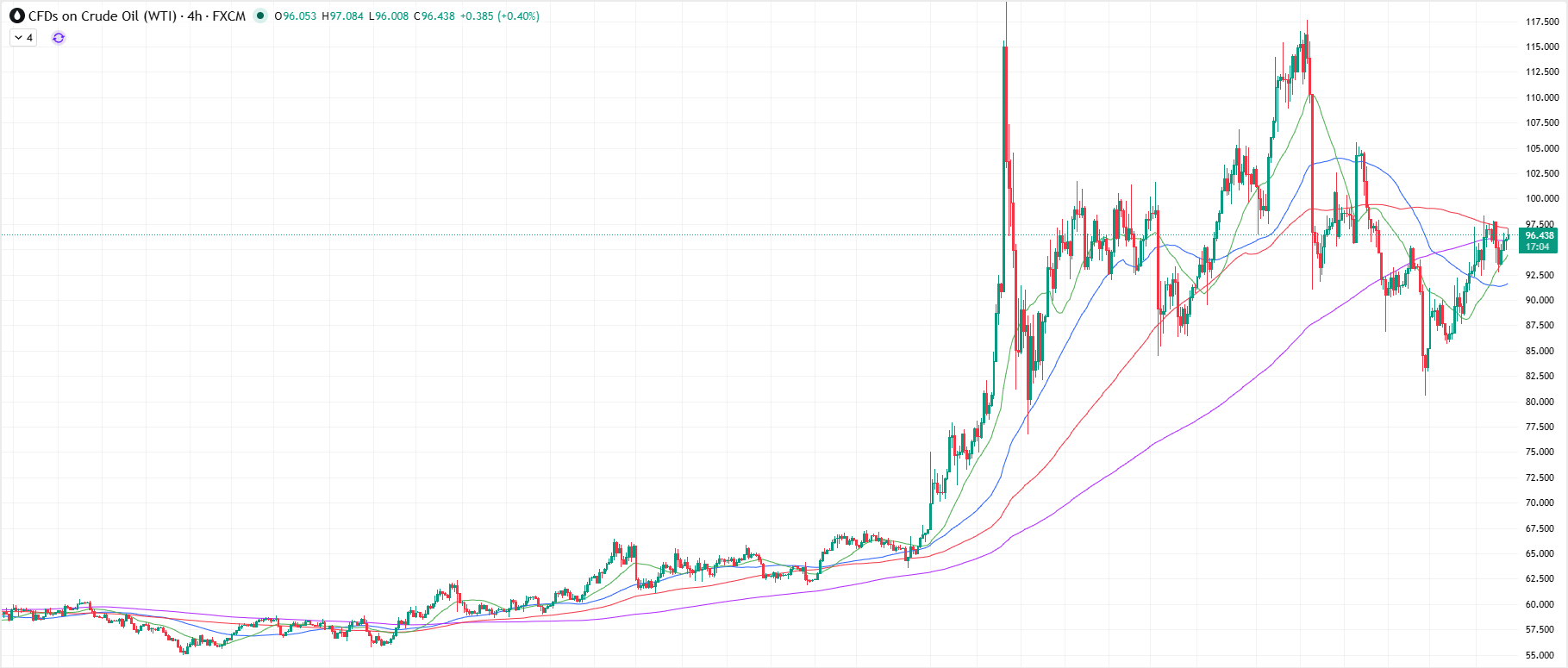
Following the breakdown in talks and ongoing shipping disruptions, WTI has been holding in the $95.5–100.5 range, with intraday volatility still elevated. That means the current price zone continues to include a sizable risk premium tied to the threat of supply interruptions.
The key issue is not just expectations, but an actual reduction in available supply. Market reports indicate that disruptions in Hormuz are limiting the flow of a meaningful share of Middle Eastern crude, while the strait remains the main choke point in the global supply system. At the same time, any signs of partial de-escalation trigger sharp corrections, which is exactly what the market has been showing on news about possible route normalization.
The U.S. market, however, is sending a counterbalancing signal. The latest EIA data showed commercial crude inventories rising by 1.9 million barrels to 465.7 million, roughly 3% above the five-year average, while imports increased and parts of the fuel balance remained mixed. That does not negate the broader global shortage impulse, but it does cap the case for an uninterrupted move higher, especially if the geopolitical premium starts to compress.
In the current environment, oil looks like a classic market of headlines: prices react quickly to any hint of escalation or de-escalation, while the fundamental data mainly define the lower and upper bounds of the move. After sharp spikes and pullbacks, the market remains in a high range where price reflects the probability of supply disruptions more than normal seasonal balance.
For now, the base case remains mildly bullish. If tensions around Hormuz persist, oil should be able to hold a premium zone; if negotiations shift toward de-escalation and routes gradually reopen, the market could fall sharply by tens of dollars per barrel. In other words, oil is currently a geopolitical asset first, not a standard commodity market.


Latest WTI News





-
 Afghanistan
-
 Albania
-
 Algeria
-
 Angola
-
 Argentina
-
 Armenia
-
 Australia
-
 Austria
-
 Azerbaijan
-
 Bahamas
-
 Bahrain
-
 Bangladesh
-
 Belarus
-
 Belgium
-
 Bolivia
-
 Botswana
-
 Brazil
-
 Brunei
-
 Bulgaria
-
 Cambodia
-
 Cameroon
-
 Canada
-
 Chile
Chile
-
 China
China
-
 Colombia
-
 Congo
Congo
-
 Costa Rica
-
 Cote d'Ivoire
-
 Croatia
-
 Cuba
Cuba
-
 Cyprus
-
 Czechia
-
 DR Congo
-
 Denmark
-
 Dominican Republic
-
 Ecuador
-
 Egypt
Egypt
-
 El Salvador
-
 Estonia
-
 Eswatini
-
 Ethiopia
-
 Finland
-
 France
-
 Georgia
-
 Germany
-
 Ghana
Ghana
-
 Greece
-
 Haiti
Haiti
-
 Hong Kong
-
 Hungary
-
 India
India
-
 Indonesia
-
 Iran, Islamic republic
-
 Iraq
Iraq
-
 Ireland
-
 Israel
-
 Italy
Italy
-
 Jamaica
-
 Japan
Japan
-
 Jordan
-
 Kazakhstan
-
 Kenya
Kenya
-
 Korea
Korea
-
 Kuwait
-
 Kyrgyzstan
-
 Laos
Laos
-
 Latvia
-
 Lebanon
-
 Lesotho
-
 Libya
Libya
-
 Lithuania
-
 Luxembourg
-
 Madagascar
-
 Malaysia
-
 Malta
Malta
-
 Mauritius
-
 Mexico
-
 Moldova
-
 Mongolia
-
 Montenegro
-
 Morocco
-
 Mozambique
-
 Myanmar
-
 Namibia
-
 Nepal
Nepal
-
 Netherlands
-
 New Zealand
-
 Nigeria
-
 North Macedonia
-
 Norway
-
 Oman
Oman
-
 Pakistan
-
 Palestine
-
 Panama
-
 Papua New Guinea
-
 Paraguay
-
 Peru
Peru
-
 Philippines
-
 Poland
-
 Portugal
-
 Puerto Rico
-
 Qatar
Qatar
-
 Reunion
-
 Romania
-
 Rwanda
-
 Saudi Arabia
-
 Serbia
-
 Singapore
-
 Slovakia
-
 Slovenia
-
 Somalia
-
 South Africa
-
 Spain
Spain
-
 Sri Lanka
-
 Sweden
-
 Switzerland
-
 Syria
Syria
-
 Taiwan
-
 Tajikistan
-
 Tanzania
-
 Thailand
-
 Trinidad and Tobago
-
 Tunisia
-
 Turkey
-
 UAE
UAE
-
 Uganda
-
 Ukraine
-
 United Kingdom
-
United States
-
 Uruguay
-
 Uzbekistan
-
 Venezuela
-
 Vietnam
-
 Yemen
Yemen
-
 Zambia
-
 Zimbabwe
- Forex
- Crypto












