
U.S. crude remains supported as geopolitical tensions sustain supply concerns

WTI crude continues to trade above the $100 per barrel mark, remaining under the influence of the largest geopolitical shock to the oil market in decades. The primary driver remains the ongoing crisis surrounding the Strait of Hormuz, through which roughly 20% of global oil supplies pass. 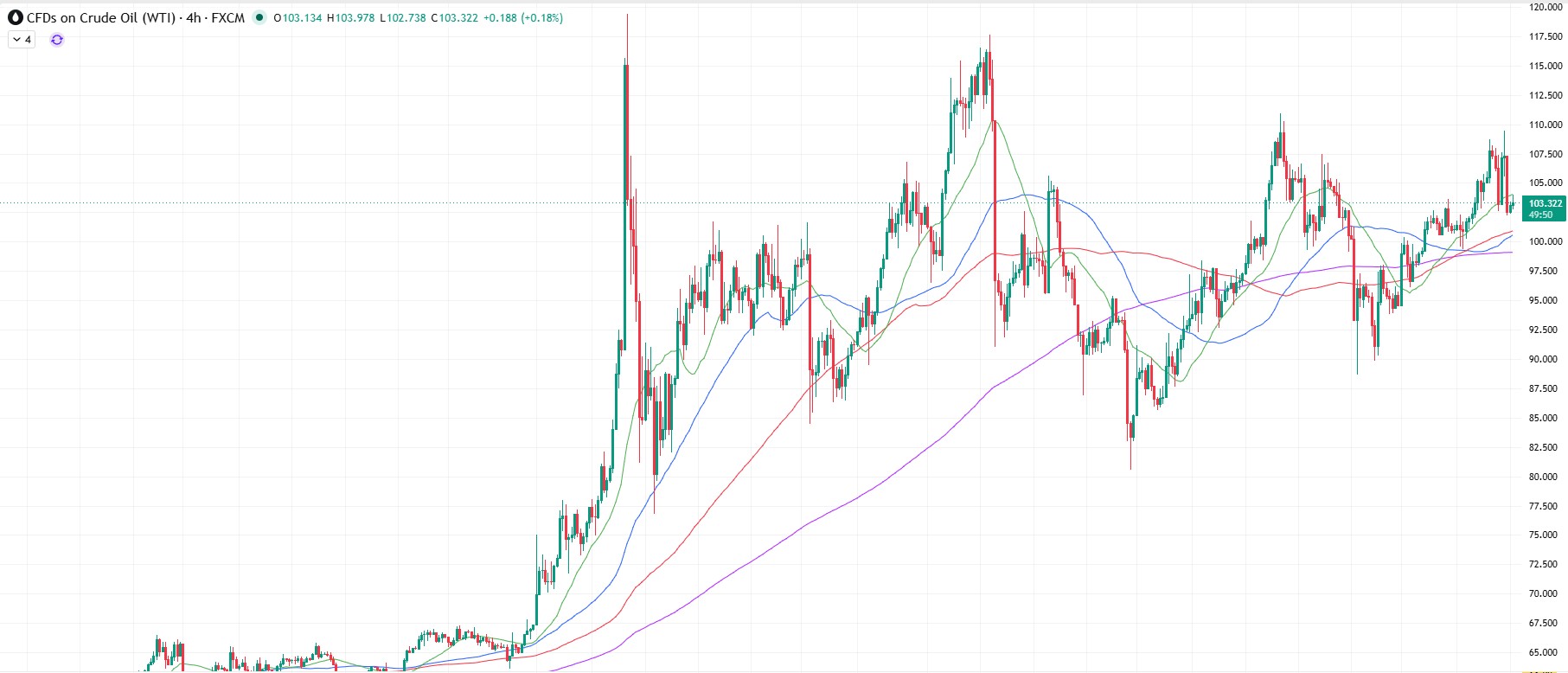
Despite periodic signals regarding possible negotiations between the United States and Iran, the market continues to price in a high risk of supply disruptions and maintains a significant geopolitical risk premium. According to the IEA, cumulative supply losses have already exceeded 1 billion barrels, while global inventories are declining at record pace.
Oil inventories decline as U.S. exports hit record highs
Additional support for prices comes from the continued drawdown in U.S. oil inventories. According to the latest EIA report, commercial crude stockpiles declined for the third consecutive week, while U.S. crude exports climbed to record levels above 5 million barrels per day. At the same time, refinery utilization remains elevated amid strong seasonal fuel demand in the United States. Markets are also closely monitoring strategic petroleum reserves, as several countries have already begun using reserves to offset disruptions in global supply flows.
OPEC+ and shale producers still unable to fully offset the deficit
Although OPEC+ countries continue gradually increasing production, analysts note that supply growth remains insufficient to fully compensate for lost volumes. Saudi Arabia and the UAE are partially redirecting exports through alternative routes outside the Strait of Hormuz, although logistical constraints remain significant. Meanwhile, U.S. shale output growth remains more moderate than during previous high-price cycles, despite increased drilling activity. EIA and Enverus expect oil prices to remain elevated at least through year-end unless the situation around the Strait of Hormuz stabilizes.
Market outlook and key levels to watch
From a technical perspective, WTI maintains a strong bullish structure despite extremely high intraday volatility. Following the recent rally above $100, prices remain highly sensitive to any headlines related to U.S.–Iran negotiations, with even isolated reports of potential de-escalation triggering intraday corrections of $4–6 per barrel. As long as prices hold above the $102–100 area, the market retains the potential to move back toward $106–109. However, any signs of restored oil flows through the Strait of Hormuz could quickly trigger a correction toward the $95–90 region.
In the near term, as previously highlighted in U.S. crude holds above $105 amid geopolitical risks, market direction will remain fully dependent on geopolitical developments, global inventory dynamics, and OPEC+ policy decisions.





Latest WTI News






-
 Afghanistan
-
 Albania
-
 Algeria
-
 Angola
-
 Argentina
-
 Armenia
-
 Australia
-
 Austria
-
 Azerbaijan
-
 Bahamas
-
 Bahrain
-
 Bangladesh
-
 Belarus
-
 Belgium
-
 Bolivia
-
 Botswana
-
 Brazil
-
 Brunei
-
 Bulgaria
-
 Cambodia
-
 Cameroon
-
 Canada
-
 Chile
Chile
-
 China
China
-
 Colombia
-
 Congo
Congo
-
 Costa Rica
-
 Cote d'Ivoire
-
 Croatia
-
 Cuba
Cuba
-
 Cyprus
-
 Czechia
-
 DR Congo
-
 Denmark
-
 Dominican Republic
-
 Ecuador
-
 Egypt
Egypt
-
 El Salvador
-
 Estonia
-
 Eswatini
-
 Ethiopia
-
 Finland
-
 France
-
 Georgia
-
 Germany
-
 Ghana
Ghana
-
 Greece
-
 Haiti
Haiti
-
 Hong Kong
-
 Hungary
-
 India
India
-
 Indonesia
-
 Iran, Islamic republic
-
 Iraq
Iraq
-
 Ireland
-
 Israel
-
 Italy
Italy
-
 Jamaica
-
 Japan
Japan
-
 Jordan
-
 Kazakhstan
-
 Kenya
Kenya
-
 Korea
Korea
-
 Kuwait
-
 Kyrgyzstan
-
 Laos
Laos
-
 Latvia
-
 Lebanon
-
 Lesotho
-
 Libya
Libya
-
 Lithuania
-
 Luxembourg
-
 Madagascar
-
 Malaysia
-
 Malta
Malta
-
 Mauritius
-
 Mexico
-
 Moldova
-
 Mongolia
-
 Montenegro
-
 Morocco
-
 Mozambique
-
 Myanmar
-
 Namibia
-
 Nepal
Nepal
-
 Netherlands
-
 New Zealand
-
 Nigeria
-
 North Macedonia
-
 Norway
-
 Oman
Oman
-
 Pakistan
-
 Palestine
-
 Panama
-
 Papua New Guinea
-
 Paraguay
-
 Peru
Peru
-
 Philippines
-
 Poland
-
 Portugal
-
 Puerto Rico
-
 Qatar
Qatar
-
 Reunion
-
 Romania
-
 Rwanda
-
 Saudi Arabia
-
 Serbia
-
 Singapore
-
 Slovakia
-
 Slovenia
-
 Somalia
-
 South Africa
-
 Spain
Spain
-
 Sri Lanka
-
 Sweden
-
 Switzerland
-
 Syria
Syria
-
 Taiwan
-
 Tajikistan
-
 Tanzania
-
 Thailand
-
 Trinidad and Tobago
-
 Tunisia
-
 Turkey
-
 UAE
UAE
-
 Uganda
-
 Ukraine
-
 United Kingdom
-
United States
-
 Uruguay
-
 Uzbekistan
-
 Venezuela
-
 Vietnam
-
 Yemen
Yemen
-
 Zambia
-
 Zimbabwe
- Forex
- Crypto











