

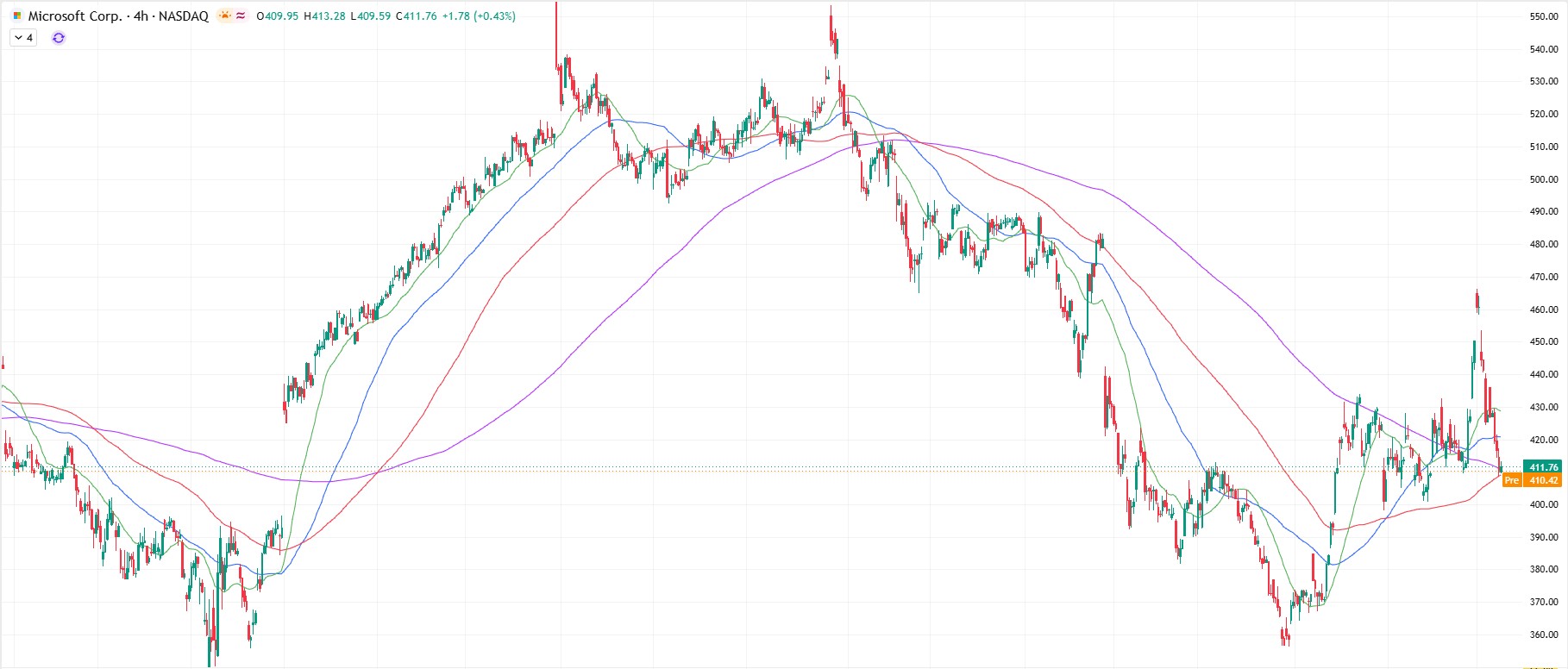
Microsoft shares remain under pressure following a broad correction in the technology sector. The stock is trading approximately 26% below its 52-week high, with recent sessions showing further downside driven by profit-taking in the AI segment and rising concerns about the return on record capital expenditures.
Despite strong financial results, investors are increasingly shifting their focus from growth rates to the efficiency of AI monetization.
AI remains a driver, but profitability concerns are rising
The key pressure factor is Microsoft’s unprecedented spending on AI infrastructure. The company expects capital expenditures of around $190 billion in 2026, significantly above previous guidance. The market is starting to demand clearer evidence that investments in data centers, Azure AI, Copilot, and the OpenAI ecosystem will translate into sustainable profit and cash flow growth. The balance between Azure growth and margin preservation is becoming the primary metric for investors.
OpenAI strategy shifts, Microsoft adapts
An additional source of volatility has been the change in the structure of the partnership between Microsoft and OpenAI. The market reacted negatively to the reduced exclusivity of Azure within this relationship, increasing concerns about Microsoft’s future competitive advantage in the AI race. At the same time, the company retains long-term access to OpenAI technologies and is accelerating the development of its own models and platforms, reducing reliance on a single partner. Microsoft’s management is focused on building a full-stack AI ecosystem for enterprise clients, from infrastructure to application-level services.
What matters for investors going forward
The fundamental picture remains strong: Azure continues to deliver high growth, and corporate demand for AI services remains robust. However, in the coming quarters, stock performance will depend less on new AI announcements and more on Microsoft’s ability to demonstrate accelerating commercial returns on its investments. If the company confirms strong cloud growth while stabilizing margins, the current correction may be seen as a repricing of expectations rather than the start of a long-term trend reversal.
Near-term outlook
Failure of MSFT to hold above the $432–430 levels has intensified downside pressure, pushing the stock toward support near $410. Bears may next test the $400 level, where buyers could re-emerge. Pullbacks toward $420–428 may be used for selling opportunities, but overall, as noted earlier in Microsoft declines amid AI expectation reset, but fundamentals remain strong, the long-term uptrend remains intact.


Latest Microsoft News







-
 Afghanistan
-
 Albania
-
 Algeria
-
 Angola
-
 Argentina
-
 Armenia
-
 Australia
-
 Austria
-
 Azerbaijan
-
 Bahamas
-
 Bahrain
-
 Bangladesh
-
 Belarus
-
 Belgium
-
 Bolivia
-
 Botswana
-
 Brazil
-
 Brunei
-
 Bulgaria
-
 Cambodia
-
 Cameroon
-
 Canada
-
 Chile
Chile
-
 China
China
-
 Colombia
-
 Congo
Congo
-
 Costa Rica
-
 Cote d'Ivoire
-
 Croatia
-
 Cuba
Cuba
-
 Cyprus
-
 Czechia
-
 DR Congo
-
 Denmark
-
 Dominican Republic
-
 Ecuador
-
 Egypt
Egypt
-
 El Salvador
-
 Estonia
-
 Eswatini
-
 Ethiopia
-
 Finland
-
 France
-
 Georgia
-
 Germany
-
 Ghana
Ghana
-
 Greece
-
 Haiti
Haiti
-
 Hong Kong
-
 Hungary
-
 India
India
-
 Indonesia
-
 Iran, Islamic republic
-
 Iraq
Iraq
-
 Ireland
-
 Israel
-
 Italy
Italy
-
 Jamaica
-
 Japan
Japan
-
 Jordan
-
 Kazakhstan
-
 Kenya
Kenya
-
 Korea
Korea
-
 Kuwait
-
 Kyrgyzstan
-
 Laos
Laos
-
 Latvia
-
 Lebanon
-
 Lesotho
-
 Libya
Libya
-
 Lithuania
-
 Luxembourg
-
 Madagascar
-
 Malaysia
-
 Malta
Malta
-
 Mauritius
-
 Mexico
-
 Moldova
-
 Mongolia
-
 Montenegro
-
 Morocco
-
 Mozambique
-
 Myanmar
-
 Namibia
-
 Nepal
Nepal
-
 Netherlands
-
 New Zealand
-
 Nigeria
-
 North Macedonia
-
 Norway
-
 Oman
Oman
-
 Pakistan
-
 Palestine
-
 Panama
-
 Papua New Guinea
-
 Paraguay
-
 Peru
Peru
-
 Philippines
-
 Poland
-
 Portugal
-
 Puerto Rico
-
 Qatar
Qatar
-
 Reunion
-
 Romania
-
 Rwanda
-
 Saudi Arabia
-
 Serbia
-
 Singapore
-
 Slovakia
-
 Slovenia
-
 Somalia
-
 South Africa
-
 Spain
Spain
-
 Sri Lanka
-
 Sweden
-
 Switzerland
-
 Syria
Syria
-
 Taiwan
-
 Tajikistan
-
 Tanzania
-
 Thailand
-
 Trinidad and Tobago
-
 Tunisia
-
 Turkey
-
 UAE
UAE
-
 Uganda
-
 Ukraine
-
 United Kingdom
-
United States
-
 Uruguay
-
 Uzbekistan
-
 Venezuela
-
 Vietnam
-
 Yemen
Yemen
-
 Zambia
-
 Zimbabwe
- Forex
- Crypto











