
Oil jumps to $93 after U.S. and Iran exchange strikes
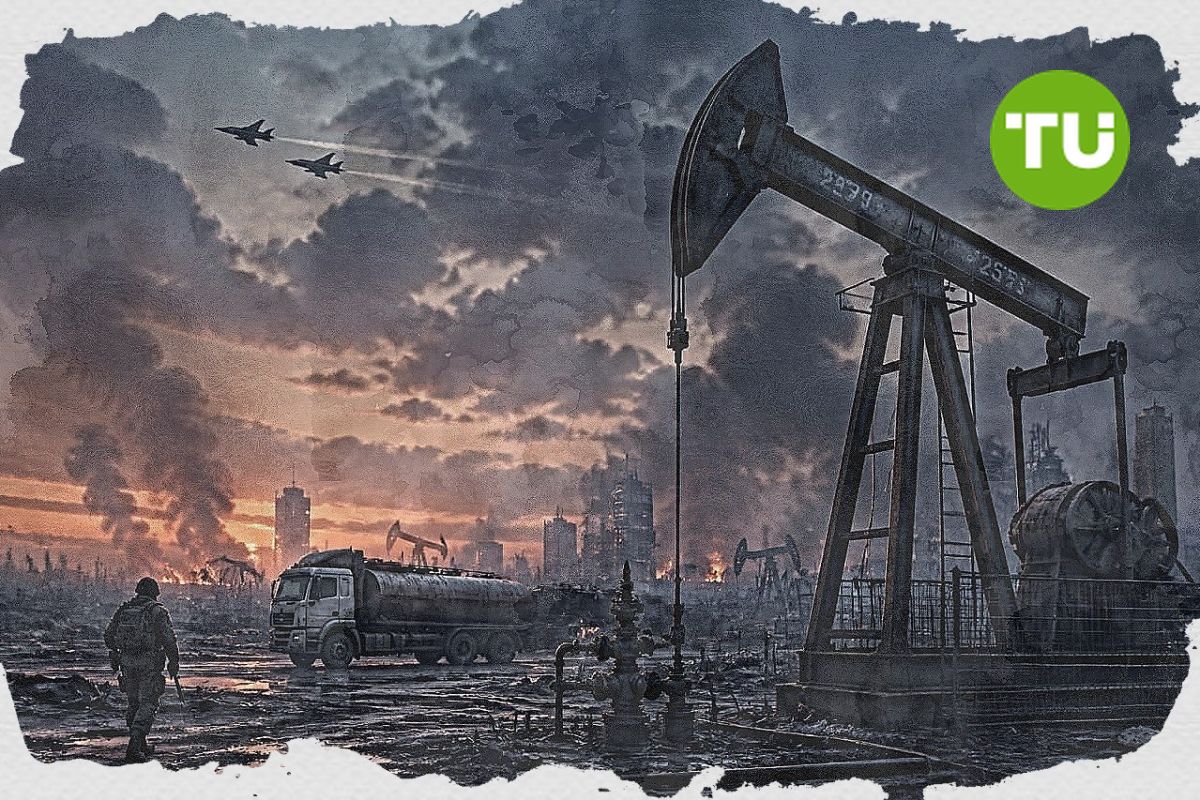
U.S. forces carried out strikes on targets in Iran. The attack came several hours after President Donald Trump accused Tehran of targeting a U.S. military helicopter off the coast of Oman.
U.S. Central Command said American forces used precision munitions launched from fighter jets to strike Iranian air defense sites, ground control stations, and surveillance radar systems near the Strait of Hormuz. Centcom added that the operation had been completed, Bloomberg reported.
Details of the military incident
Centcom described the operation as a “proportional response to recent attacks on U.S. forces and international commercial ships transiting regional waters.”
Iran’s joint military command said it had struck “several U.S. bases in the region.” The Islamic Revolutionary Guard Corps reported that it launched drones at the U.S. Fifth Fleet in Bahrain early Wednesday, according to state-run IRIB News. Fars and Iranian state television also said Iran had attacked U.S. military facilities in Jordan and Kuwait.
Iranian Foreign Minister Abbas Araghchi wrote on X that the country “will leave no attack or threat unanswered.” Centcom, for its part, said U.S. forces “remain vigilant and postured to defend against unjustified Iranian aggression.”
Iran has not acknowledged shooting down the helicopter. However, Foreign Minister Abbas Araghchi earlier said that “foreign forces in proximity to our territory are at constant risk on account of their own human errors, plain accidents, or potentially being caught in crossfire.”
Market reaction to the events
Oil prices erased their gains as traders assessed the prospects for peace talks over the war with Iran after a brief U.S. military campaign against the Islamic Republic, launched following the crash of an American helicopter.
Brent crude slipped and traded near $91 a barrel after rising to $93 earlier in the session. WTI was around $88. U.S. forces attacked sites near the Strait of Hormuz. In response, Iran launched a drone strike against the U.S. Fifth Fleet in Bahrain, state-run IRIB reported, and also attacked U.S. military facilities in Jordan and Kuwait.
U.S. crude inventories fell by 9.1 million barrels last week, according to an American Petroleum Institute report seen by Bloomberg. If the figures are confirmed by official data on Wednesday, it would mark the largest drawdown since September. Stockpiles in the country are already at a four-month low, reflecting shrinking global supply as buyers try to replace volumes lost due to the situation in the Persian Gulf.
“Every day that passes tightens the market as global oil storage drops into unprecedented low levels,” said Kavonic of MST Marquee.
What caused the U.S.-Iran conflict
The current phase of the military confrontation between the U.S. and Iran began early this year, when the situation in the Persian Gulf started deteriorating rapidly amid attacks on ships, military facilities, and regional infrastructure. Tensions gradually escalated from isolated incidents into an open confrontation: both sides strengthened their military presence, exchanged accusations, and began carrying out limited strikes on targets linked to the opposing side.
A key phase of the escalation was the war that began in late February. It disrupted supplies of oil, fuel, and natural gas, and led to the near-total closure of the Strait of Hormuz, one of the most important routes for the global energy market. Despite efforts by mediators to secure a ceasefire and a peace agreement, new attacks, including the incident involving a U.S. Apache helicopter off the coast of Oman, have again jeopardized the diplomatic process and demonstrated how unstable the ceasefire remains.
As a reminder, the closure of the Strait of Hormuz is pushing Iraq and the UAE to develop oil pipelines.


Latest Brent News









-
 Afghanistan
-
 Albania
-
 Algeria
-
 Angola
-
 Argentina
-
 Armenia
-
 Australia
-
 Austria
-
 Azerbaijan
-
 Bahamas
-
 Bahrain
-
 Bangladesh
-
 Belarus
-
 Belgium
-
 Bolivia
-
 Botswana
-
 Brazil
-
 Brunei
-
 Bulgaria
-
 Cambodia
-
 Cameroon
-
 Canada
-
 Chile
Chile
-
 China
China
-
 Colombia
-
 Congo
Congo
-
 Costa Rica
-
 Cote d'Ivoire
-
 Croatia
-
 Cuba
Cuba
-
 Cyprus
-
 Czechia
-
 DR Congo
-
 Denmark
-
 Dominican Republic
-
 Ecuador
-
 Egypt
Egypt
-
 El Salvador
-
 Estonia
-
 Eswatini
-
 Ethiopia
-
 Finland
-
 France
-
 Georgia
-
 Germany
-
 Ghana
Ghana
-
 Greece
-
 Haiti
Haiti
-
 Hong Kong
-
 Hungary
-
 India
India
-
 Indonesia
-
 Iran, Islamic republic
-
 Iraq
Iraq
-
 Ireland
-
 Israel
-
 Italy
Italy
-
 Jamaica
-
 Japan
Japan
-
 Jordan
-
 Kazakhstan
-
 Kenya
Kenya
-
 Korea
Korea
-
 Kuwait
-
 Kyrgyzstan
-
 Laos
Laos
-
 Latvia
-
 Lebanon
-
 Lesotho
-
 Libya
Libya
-
 Lithuania
-
 Luxembourg
-
 Madagascar
-
 Malaysia
-
 Malta
Malta
-
 Mauritius
-
 Mexico
-
 Moldova
-
 Mongolia
-
 Montenegro
-
 Morocco
-
 Mozambique
-
 Myanmar
-
 Namibia
-
 Nepal
Nepal
-
 Netherlands
-
 New Zealand
-
 Nigeria
-
 North Macedonia
-
 Norway
-
 Oman
Oman
-
 Pakistan
-
 Palestine
-
 Panama
-
 Papua New Guinea
-
 Paraguay
-
 Peru
Peru
-
 Philippines
-
 Poland
-
 Portugal
-
 Puerto Rico
-
 Qatar
Qatar
-
 Reunion
-
 Romania
-
 Rwanda
-
 Saudi Arabia
-
 Serbia
-
 Singapore
-
 Slovakia
-
 Slovenia
-
 Somalia
-
 South Africa
-
 Spain
Spain
-
 Sri Lanka
-
 Sweden
-
 Switzerland
-
 Syria
Syria
-
 Taiwan
-
 Tajikistan
-
 Tanzania
-
 Thailand
-
 Trinidad and Tobago
-
 Tunisia
-
 Turkey
-
 UAE
UAE
-
 Uganda
-
 Ukraine
-
 United Kingdom
-
United States
-
 Uruguay
-
 Uzbekistan
-
 Venezuela
-
 Vietnam
-
 Yemen
Yemen
-
 Zambia
-
 Zimbabwe
- Forex
- Crypto












