
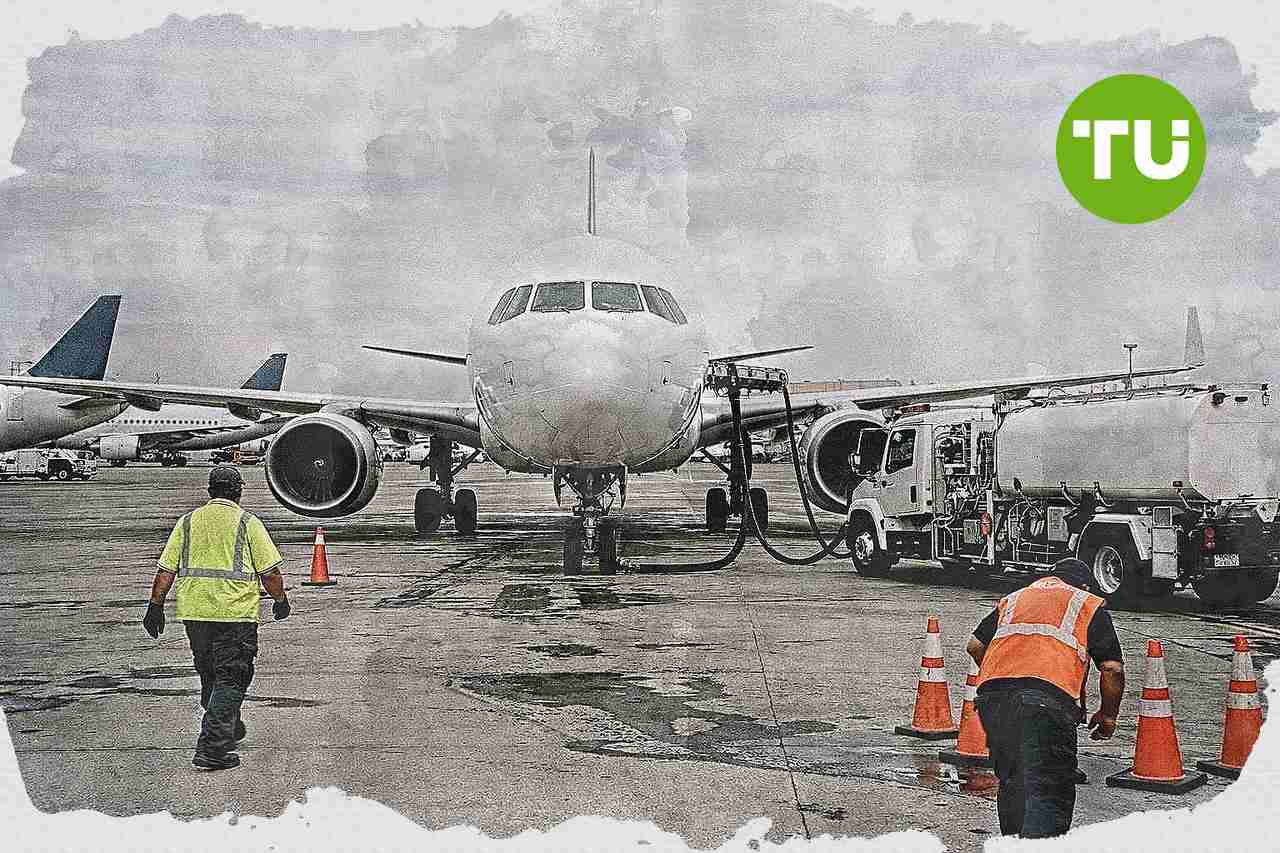
Airlines are poised to save billions of dollars as jet fuel prices fall after an interim U.S.-Iran peace deal lowered oil prices. Limited seat growth and still-elevated fuel costs are likely to let many carriers protect recent fare increases instead of passing savings on to passengers quickly.
Highlights
- U.S. jet fuel spot prices fell to $2.85 per gallon on June 17 from $4.88 in April, potentially lowering airlines' annual fuel bill by over $40 billion if sustained.
- Average domestic U.S. airfares booked one week before travel were up 34.1% year-on-year as of June 8, supported by slow capacity growth of just 0.4% in the third quarter.
- Jefferies estimates that every 5% decline in $3-per-gallon 2027 fuel-cost forecasts could boost projected EPS by 10%–15% for Delta, Southwest, and United, and up to 50% for American Airlines.
Fuel price drop supports airline margins
As reported by Reuters, U.S. jet fuel spot prices stood at $2.85 a gallon on June 17, down from an early April high of $4.88, a move that would cut the U.S. airline industry's annual fuel bill by more than $40 billion if sustained. Airlines have already raised ticket prices and bag fees and trimmed schedules, but those measures have only partly offset the earlier rise in fuel costs.Industry data show jet fuel prices rose more than three times as fast as airfares from January through May. Deutsche Bank estimated U.S. carriers would recover only about 60 cents of every extra dollar spent on fuel, with $14.4 billion in higher revenue against $24.1 billion in higher fuel costs. United CEO Scott Kirby told Reuters the airline is getting closer to recouping the spike through pricing and is on a path to recovering 100% by the end of the year.
Even after the latest decline, jet fuel still costs 54% more than a year ago, according to the International Air Transport Association. Fuel bills also reflect purchases over time rather than spot prices alone, which means the benefit of lower oil prices may take time to feed into airline costs.
Capacity limits curb prospects for fare relief
The main question for passengers is whether airlines hold recent price increases as fuel eases. Raymond James data show average domestic fares booked one week before travel were up 34.1% from a year earlier as of June 8, and analysts say limited capacity growth gives carriers room to prioritize earnings recovery over fare cuts.In the U.S., domestic airline seats are scheduled to grow just 0.4% year on year in the third quarter. Aircraft delivery delays, tight airport capacity and weaker low-cost carriers are reducing the chances of a broad fare war, unlike past periods when lower oil prices triggered more aggressive competition.
Outside the U.S., the impact is likely to vary by region. Europe may see softer long-haul fares because airlines passed through higher fuel costs more effectively on those routes, while short-haul fares may remain firm if the peace agreement supports bookings. In Asia, HSBC analysts say China's three largest airlines face weaker pricing power and lower aircraft utilization, while Cathay Pacific is in a stronger position because higher fares, cargo revenue and premium demand could offset fuel costs. The Middle East remains an exception after war-related disruption to traffic flows, with some carriers likely to use promotions to rebuild demand but not to pursue widespread discounting.
Jefferies estimated each 5% drop in its roughly $3-per-gallon 2027 fuel-cost forecast would lift projected earnings per share by 10% to 15% for Delta, Southwest and United, and by as much as 50% for American Airlines. That leaves fare relief heavily dependent on whether consumer demand weakens enough to force airlines to lower prices.
In our earlier article, we looked at how the U.S. summer air travel market is tilting toward fewer cheap-fare options as big network airlines gain ground while smaller low-cost carriers struggle. We noted that higher jet fuel and other operating costs, alongside resilient premium demand and loyalty revenue, are pressuring the low-cost model and pushing remaining budget airlines to retreat to niche routes rather than compete head-on on major ones.


Latest IAG News





-
 Afghanistan
-
 Albania
-
 Algeria
-
 Angola
-
 Argentina
-
 Armenia
-
 Australia
-
 Austria
-
 Azerbaijan
-
 Bahamas
-
 Bahrain
-
 Bangladesh
-
 Belarus
-
 Belgium
-
 Bolivia
-
 Botswana
-
 Brazil
-
 Brunei
-
 Bulgaria
-
 Cambodia
-
 Cameroon
-
 Canada
-
 Chile
Chile
-
 China
China
-
 Colombia
-
 Congo
Congo
-
 Costa Rica
-
 Cote d'Ivoire
-
 Croatia
-
 Cuba
Cuba
-
 Cyprus
-
 Czechia
-
 DR Congo
-
 Denmark
-
 Dominican Republic
-
 Ecuador
-
 Egypt
Egypt
-
 El Salvador
-
 Estonia
-
 Eswatini
-
 Ethiopia
-
 Finland
-
 France
-
 Georgia
-
 Germany
-
 Ghana
Ghana
-
 Greece
-
 Haiti
Haiti
-
 Hong Kong
-
 Hungary
-
 India
India
-
 Indonesia
-
 Iran, Islamic republic
-
 Iraq
Iraq
-
 Ireland
-
 Israel
-
 Italy
Italy
-
 Jamaica
-
 Japan
Japan
-
 Jordan
-
 Kazakhstan
-
 Kenya
Kenya
-
 Korea
Korea
-
 Kuwait
-
 Kyrgyzstan
-
 Laos
Laos
-
 Latvia
-
 Lebanon
-
 Lesotho
-
 Libya
Libya
-
 Lithuania
-
 Luxembourg
-
 Madagascar
-
 Malaysia
-
 Malta
Malta
-
 Mauritius
-
 Mexico
-
 Moldova
-
 Mongolia
-
 Montenegro
-
 Morocco
-
 Mozambique
-
 Myanmar
-
 Namibia
-
 Nepal
Nepal
-
 Netherlands
-
 New Zealand
-
 Nigeria
-
 North Macedonia
-
 Norway
-
 Oman
Oman
-
 Pakistan
-
 Palestine
-
 Panama
-
 Papua New Guinea
-
 Paraguay
-
 Peru
Peru
-
 Philippines
-
 Poland
-
 Portugal
-
 Puerto Rico
-
 Qatar
Qatar
-
 Reunion
-
 Romania
-
 Rwanda
-
 Saudi Arabia
-
 Serbia
-
 Singapore
-
 Slovakia
-
 Slovenia
-
 Somalia
-
 South Africa
-
 Spain
Spain
-
 Sri Lanka
-
 Sweden
-
 Switzerland
-
 Syria
Syria
-
 Taiwan
-
 Tajikistan
-
 Tanzania
-
 Thailand
-
 Trinidad and Tobago
-
 Tunisia
-
 Turkey
-
 UAE
UAE
-
 Uganda
-
 Ukraine
-
 United Kingdom
-
United States
-
 Uruguay
-
 Uzbekistan
-
 Venezuela
-
 Vietnam
-
 Yemen
Yemen
-
 Zambia
-
 Zimbabwe
- Forex
- Crypto











