

Micron joins CNBC Investing Club watchlist as AI memory demand supports outlook

With Wall Street pulling back and portfolio changes underway, CNBC Investing Club is adding Micron Technology to its Bullpen watchlist as it looks for new opportunities in AI-linked stocks. The move comes as the memory-chip maker remains below its late-June peak, even as tight supply conditions in DRAM, NAND and high-bandwidth memory continue to underpin its earnings outlook.
Highlights
- Micron Technology added to CNBC Investing Club's Bullpen after sharp drop from its high of $1,213.56 on June 25 and subsequent rebound.
- Demand for DRAM and NAND exceeds supply due to AI-driven growth, supporting higher prices and margins for Micron, with tight industry conditions expected through at least 2027.
- Micron trades at under nine times 2027 earnings estimates and has secured 16 five-year take-or-pay contracts, covering 20% of DRAM and 33% of NAND volumes.
AI memory thesis and watchlist move
As reported by CNBC Investing, the club is adding Micron Technology to its Bullpen after removing Honeywell Aerospace and Procter & Gamble from the portfolio and holding its remaining Dover position for sale. The update comes during a weaker Thursday session for stocks, with the Dow Jones Industrial Average leading declines, while oil prices and Treasury yields are also weighing on sentiment.The club says Micron became more attractive after forced selling by a highly levered AI-focused hedge fund ended, creating what it describes as a clearing event for several AI stocks that had fallen sharply from their highs. Although Micron has rebounded since the morning of July 30, its shares still sit about 25% below their record close of $1,213.56 on June 25.
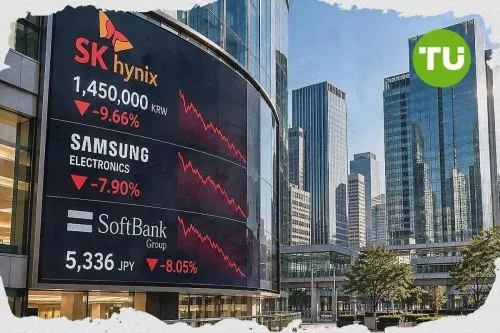
Micron operates in a memory semiconductor market dominated by Samsung Electronics, SK Hynix and Micron in the U.S. The main product categories are NAND, used for longer-term storage, and DRAM, which serves as working memory, while high-bandwidth memory, or HBM, is presented as a critical component for AI accelerators such as GPUs made by Nvidia and Advanced Micro Devices.
Supply constraints and industry implications
Demand for DRAM and NAND has outpaced supply since the AI boom accelerated, and that imbalance is supporting higher prices and stronger margins for Micron. On its June earnings call, the company says tight industry conditions are expected to last beyond calendar 2027 because of AI-driven demand and structural supply constraints.The main risk remains the memory sector's long history of boom-and-bust cycles, a concern that continues to weigh on valuation despite stronger fundamentals. The club notes that Micron trades at less than nine times calendar 2027 earnings estimates, while the company is also trying to make its business model more durable through strategic customer agreements.
Micron has signed 16 such agreements so far, typically covering five years from calendar 2026 through the end of 2030. The deals account for about 20% of DRAM volume and 33% of NAND volume, and are structured as take-or-pay contracts with pricing floors that protect margins, even if they also cap some upside during stronger pricing periods.
Our earlier article covered Washington’s renewed push to tighten semiconductor export controls aimed at protecting the U.S. lead in AI, with lawmakers weighing measures to broaden restrictions on equipment, advanced chips, and related loopholes. It also highlighted the rapid rise of China’s memory maker CXMT and why its expansion could pose longer-term competitive and cyclical risks for U.S. memory producers such as Micron.





Latest SK Hynix News



-
 Afghanistan
-
 Albania
-
 Algeria
-
 Angola
-
 Argentina
-
 Armenia
-
 Australia
-
 Austria
-
 Azerbaijan
-
 Bahamas
-
 Bahrain
-
 Bangladesh
-
 Belarus
-
 Belgium
-
 Bolivia
-
 Botswana
-
 Brazil
-
 Brunei
-
 Bulgaria
-
 Cambodia
-
 Cameroon
-
 Canada
-
 Chile
Chile
-
 China
China
-
 Colombia
-
 Congo
Congo
-
 Costa Rica
-
 Cote d'Ivoire
-
 Croatia
-
 Cuba
Cuba
-
 Cyprus
-
 Czechia
-
 DR Congo
-
 Denmark
-
 Dominican Republic
-
 Ecuador
-
 Egypt
Egypt
-
 El Salvador
-
 Estonia
-
 Eswatini
-
 Ethiopia
-
 Finland
-
 France
-
 Georgia
-
 Germany
-
 Ghana
Ghana
-
 Greece
-
 Haiti
Haiti
-
 Hong Kong
-
 Hungary
-
 India
India
-
 Indonesia
-
 Iran, Islamic republic
-
 Iraq
Iraq
-
 Ireland
-
 Israel
-
 Italy
Italy
-
 Jamaica
-
 Japan
Japan
-
 Jordan
-
 Kazakhstan
-
 Kenya
Kenya
-
 Korea
Korea
-
 Kuwait
-
 Kyrgyzstan
-
 Laos
Laos
-
 Latvia
-
 Lebanon
-
 Lesotho
-
 Libya
Libya
-
 Lithuania
-
 Luxembourg
-
 Madagascar
-
 Malaysia
-
 Malta
Malta
-
 Mauritius
-
 Mexico
-
 Moldova
-
 Mongolia
-
 Montenegro
-
 Morocco
-
 Mozambique
-
 Myanmar
-
 Namibia
-
 Nepal
Nepal
-
 Netherlands
-
 New Zealand
-
 Nigeria
-
 North Macedonia
-
 Norway
-
 Oman
Oman
-
 Pakistan
-
 Palestine
-
 Panama
-
 Papua New Guinea
-
 Paraguay
-
 Peru
Peru
-
 Philippines
-
 Poland
-
 Portugal
-
 Puerto Rico
-
 Qatar
Qatar
-
 Reunion
-
 Romania
-
 Rwanda
-
 Saudi Arabia
-
 Serbia
-
 Singapore
-
 Slovakia
-
 Slovenia
-
 Somalia
-
 South Africa
-
 Spain
Spain
-
 Sri Lanka
-
 Sweden
-
 Switzerland
-
 Syria
Syria
-
 Taiwan
-
 Tajikistan
-
 Tanzania
-
 Thailand
-
 Trinidad and Tobago
-
 Tunisia
-
 Turkey
-
 UAE
UAE
-
 Uganda
-
 Ukraine
-
 United Kingdom
-
United States
-
 Uruguay
-
 Uzbekistan
-
 Venezuela
-
 Vietnam
-
 Yemen
Yemen
-
 Zambia
-
 Zimbabwe
- Forex
- Crypto












