


Kuwait's banking sector is operating against a backdrop of oil revenue disruption tied to the Iran conflict, while lenders are still supported by strong sovereign finances and public spending. In that environment, Gulf Bank keeps its investment-grade standing as Fitch Ratings affirms both its Long-Term Issuer Default Rating at 'A' and its Viability Rating at 'bbb-'.
Highlights
- Gulf Bank's Long-Term Issuer Default Rating affirmed at 'A' with Stable Outlook by Fitch, reflecting Kuwait's sovereign AA-/Stable rating and strong government support.
- Fitch forecasts Gulf Bank's asset quality to remain stable with Stage 3 loans at 1.3% through end-2027, amid concentrated loan book but strong risk management and provisioning.
- Net profit grew 9% year-on-year in first nine months of 2026, but operating profit remains flat at 1% of risk-weighted assets due to margin pressures and high costs.
Rating rationale and operating backdrop
As reported by Fitch Ratings, Gulf Bank's Long-Term Issuer Default Rating remains supported by potential backing from the Kuwaiti authorities, reflected in its Government Support Rating of 'a'. The Stable Outlook on the bank's long-term rating mirrors Kuwait's sovereign rating of AA-/Stable.Fitch says the bank's standalone profile reflects a good domestic franchise, a cautious approach to risk, sound loan quality, stable funding and capitalization. At the same time, the agency says profitability remains under pressure and that loan and deposit concentrations are high, although these traits are broadly in line with local peers.
The agency also says Kuwait's exceptionally strong fiscal and external balance sheets, together with the ratified public debt law, support the economy despite severe disruption to oil revenue from the Iran conflict. Fitch expects real GDP to recover to 20.1% in 2027 from a 13% contraction in 2026, while bank credit growth should remain acceptable at 4% to 5% in 2026 and improve to 7% to 8% in 2027 if the geopolitical environment normalizes in the first quarter of 2027.
Islamic conversion plans and sector implications
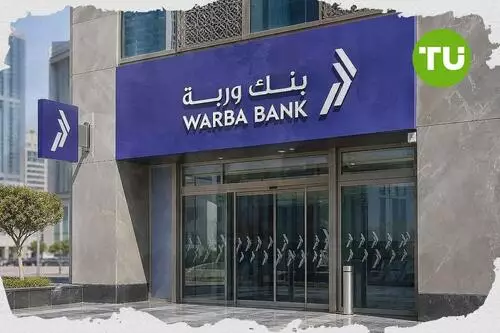
Fitch expects Gulf Bank's planned conversion to an Islamic bank to create attractive business opportunities and revenue potential, given Kuwait's well-developed Islamic banking market. However, the timeline and details of that conversion, as well as any potential merger and acquisition activity involving 32.8% indirect shareholder WARBA Bank K.S.C.P., have not been finalized or disclosed.In the meantime, Gulf Bank is focusing on consolidating its domestic position, with 6% of consolidated sector assets at the end of the third quarter of 2026, and on stabilizing its financial profile. Fitch says the bank's loan book remains highly concentrated by borrower and sector, a common characteristic in Kuwait, but adds that these risks are mitigated by risk management and high provisioning.
Loan quality metrics remain comparatively strong, with Stage 2 loans at 3.2% and Stage 3 loans at 1.2% at end-3Q26, including loans to banks. Fitch expects stable asset quality through end-2026 and end-2027, with the Stage 3 ratio at 1.3%, supported by write-offs, underwriting standards and a stable operating environment.
Profitability, however, continues to face pressure. Net profit rises 9% year on year in the first nine months of 2026, but operating profit is flat at 1% of risk-weighted assets since 2024 because of lower net interest margins, a higher cost-to-income ratio and still-elevated impairment charges; Fitch expects that metric to remain flat in 2026 and 2027.






Latest Fitch Ratings News



-
 Afghanistan
-
 Albania
-
 Algeria
-
 Angola
-
 Argentina
-
 Armenia
-
 Australia
-
 Austria
-
 Azerbaijan
-
 Bahamas
-
 Bahrain
-
 Bangladesh
-
 Belarus
-
 Belgium
-
 Bolivia
-
 Botswana
-
 Brazil
-
 Brunei
-
 Bulgaria
-
 Cambodia
-
 Cameroon
-
 Canada
-
 Chile
-
 China
-
 Colombia
-
 Congo
-
 Costa Rica
-
 Cote d'Ivoire
-
 Croatia
-
 Cuba
-
 Cyprus
-
 Czechia
-
 DR Congo
-
 Denmark
-
 Dominican Republic
-
 Ecuador
-
 Egypt
-
 El Salvador
-
 Estonia
-
 Eswatini
-
 Ethiopia
-
 Finland
-
 France
-
 Georgia
-
 Germany
-
 Ghana
-
 Greece
-
 Haiti
-
 Hong Kong
-
 Hungary
-
 India
-
 Indonesia
-
 Iran, Islamic republic
-
 Iraq
-
 Ireland
-
 Israel
-
 Italy
-
 Jamaica
-
 Japan
-
 Jordan
-
 Kazakhstan
-
 Kenya
-
 Korea
-
 Kuwait
-
 Kyrgyzstan
-
 Laos
-
 Latvia
-
 Lebanon
-
 Lesotho
-
 Libya
-
 Lithuania
-
 Luxembourg
-
 Madagascar
-
 Malaysia
-
 Malta
-
 Mauritius
-
 Mexico
-
 Moldova
-
 Mongolia
-
 Montenegro
-
 Morocco
-
 Mozambique
-
 Myanmar
-
 Namibia
-
 Nepal
-
 Netherlands
-
 New Zealand
-
 Nigeria
-
 North Macedonia
-
 Norway
-
 Oman
-
 Pakistan
-
 Palestine
-
 Panama
-
 Papua New Guinea
-
 Paraguay
-
 Peru
-
 Philippines
-
 Poland
-
 Portugal
-
 Puerto Rico
-
 Qatar
-
 Reunion
-
 Romania
-
 Rwanda
-
 Saudi Arabia
-
 Serbia
-
 Singapore
-
 Slovakia
-
 Slovenia
-
 Somalia
-
 South Africa
-
 Spain
-
 Sri Lanka
-
 Sweden
-
 Switzerland
-
 Syria
-
 Taiwan
-
 Tajikistan
-
 Tanzania
-
 Thailand
-
 Trinidad and Tobago
-
 Tunisia
-
 Turkey
-
 UAE
-
 Uganda
-
 Ukraine
-
 United Kingdom
-
United States
-
 Uruguay
-
 Uzbekistan
-
 Venezuela
-
 Vietnam
-
 Yemen
-
 Zambia
-
 Zimbabwe
- Forex
- Crypto












