

Nvidia valuation nears decade low as investors question profit outlook

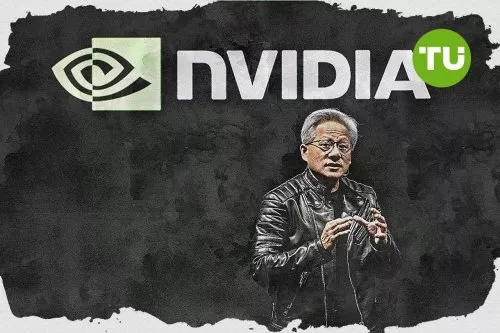
Nvidia is delivering some of the strongest growth in its history, yet investors are assigning the stock a sharply lower valuation than they did a year ago. That disconnect suggests the market is looking beyond booming AI demand and questioning how long the chipmaker can preserve its current earnings power and exceptional margins.
Highlights
- Nvidia trades below 17 times forward earnings.
- Profit growth remains exceptionally strong.
- Investors are increasingly focused on future margins.
Nvidia now trades at less than 17 times expected earnings over the next 12 months, near its lowest valuation multiple in more than a decade, according to Bloomberg. The multiple is roughly half its 2025 level and has fallen from more than 25 times projected earnings as recently as May.
Strong growth meets investor skepticism
The lower valuation stands in sharp contrast with Nvidia’s operating performance. Revenue and net income are expected to rise about 90% and 99%, respectively, in fiscal 2027, which ends in January. Revenue growth had been 65% in the previous fiscal year.
Nvidia’s second-quarter results reinforced that momentum. Revenue reached $96.2 billion, while gross margin stood at 75%. The company also projected much faster sales expansion for fiscal 2028 than analysts had previously expected.
Yet Nvidia shares have risen only 20% in 2026. That places the company behind much of the semiconductor industry, where the broader chip index has gained almost 76%. Micron, Intel, and AMD have each advanced more than 180%.
Margins emerge as the pressure point
The concern is less about current demand than about what Nvidia’s economics might look like several years from now. Rising memory and component costs are putting pressure on profitability, while some of the company’s largest customers are developing their own AI processors.
Gross margin is expected to fall below 72% in the fourth quarter before recovering, according to analyst estimates cited in the report. That decline matters because Nvidia’s premium valuation has historically rested not only on rapid sales growth but also on unusually high profitability.
Competition could become more important as companies such as Meta and Alphabet invest further in internally designed chips. Their efforts do not yet imply an abrupt reduction in Nvidia purchases, but they give large customers another way to reduce dependence on a single supplier.
The market is pricing the next phase of AI
Nvidia’s valuation captures a central question facing the AI boom: whether today’s enormous infrastructure spending can continue at roughly the same pace. The company’s annual sales have climbed from about $27 billion in fiscal 2023 to an estimated $410 billion in fiscal 2027, an expansion rarely seen at this scale.
For investors, the issue is no longer whether Nvidia is growing. It is whether future growth, margins, and market dominance can remain strong enough to justify higher multiples again. The stock’s unusually low valuation suggests expectations have become more cautious even while the company’s financial results remain formidable.
Earlier, we reported that Nvidia expands its AI infrastructure network in Australia.










-
 Afghanistan
-
 Albania
-
 Algeria
-
 Angola
-
 Argentina
-
 Armenia
-
 Australia
-
 Austria
-
 Azerbaijan
-
 Bahamas
-
 Bahrain
-
 Bangladesh
-
 Belarus
-
 Belgium
-
 Bolivia
-
 Botswana
-
 Brazil
-
 Brunei
-
 Bulgaria
-
 Cambodia
-
 Cameroon
-
 Canada
-
 Chile
Chile
-
 China
China
-
 Colombia
-
 Congo
Congo
-
 Costa Rica
-
 Cote d'Ivoire
-
 Croatia
-
 Cuba
Cuba
-
 Cyprus
-
 Czechia
-
 DR Congo
-
 Denmark
-
 Dominican Republic
-
 Ecuador
-
 Egypt
Egypt
-
 El Salvador
-
 Estonia
-
 Eswatini
-
 Ethiopia
-
 Finland
-
 France
-
 Georgia
-
 Germany
-
 Ghana
Ghana
-
 Greece
-
 Haiti
Haiti
-
 Hong Kong
-
 Hungary
-
 India
India
-
 Indonesia
-
 Iran, Islamic republic
-
 Iraq
Iraq
-
 Ireland
-
 Israel
-
 Italy
Italy
-
 Jamaica
-
 Japan
Japan
-
 Jordan
-
 Kazakhstan
-
 Kenya
Kenya
-
 Korea
Korea
-
 Kuwait
-
 Kyrgyzstan
-
 Laos
Laos
-
 Latvia
-
 Lebanon
-
 Lesotho
-
 Libya
Libya
-
 Lithuania
-
 Luxembourg
-
 Madagascar
-
 Malaysia
-
 Malta
Malta
-
 Mauritius
-
 Mexico
-
 Moldova
-
 Mongolia
-
 Montenegro
-
 Morocco
-
 Mozambique
-
 Myanmar
-
 Namibia
-
 Nepal
Nepal
-
 Netherlands
-
 New Zealand
-
 Nigeria
-
 North Macedonia
-
 Norway
-
 Oman
Oman
-
 Pakistan
-
 Palestine
-
 Panama
-
 Papua New Guinea
-
 Paraguay
-
 Peru
Peru
-
 Philippines
-
 Poland
-
 Portugal
-
 Puerto Rico
-
 Qatar
Qatar
-
 Reunion
-
 Romania
-
 Rwanda
-
 Saudi Arabia
-
 Serbia
-
 Singapore
-
 Slovakia
-
 Slovenia
-
 Somalia
-
 South Africa
-
 Spain
Spain
-
 Sri Lanka
-
 Sweden
-
 Switzerland
-
 Syria
Syria
-
 Taiwan
-
 Tajikistan
-
 Tanzania
-
 Thailand
-
 Trinidad and Tobago
-
 Tunisia
-
 Turkey
-
 UAE
UAE
-
 Uganda
-
 Ukraine
-
 United Kingdom
-
United States
-
 Uruguay
-
 Uzbekistan
-
 Venezuela
-
 Vietnam
-
 Yemen
Yemen
-
 Zambia
-
 Zimbabwe
- Forex
- Crypto












