


Volatility across the artificial intelligence trade is spreading from highly leveraged infrastructure names into major semiconductor stocks ahead of another earnings cycle. Even so, AMD is emerging as a relative standout on growth, valuation and profitability screens as investors weigh whether sector weakness reflects deteriorating fundamentals or broader risk aversion.
Highlights
- AMD shares fell 8.1% amid renewed fears over AI spending, worsened by Meta's financing plans and Lam Research's supply warning.
- Despite sector volatility, AMD uniquely meets screens for stock quality factors like PEG below 3, ROE and ROIC above 12%, and revenue/EPS growth outpacing the S&P 500, with Q3 consensus EPS at $1.94 on $13.06 billion revenue.
- A call spread risk reversal strategy allows investors to maintain AMD exposure with 66% lower long call cost, sacrificing $1,700 upside for $5,000 outperformance in sharp declines.
AMD screen strength meets sector volatility
As reported by CNBC, concerns about the pace of AI spending have recently intensified after weakness in names tied to data-center buildouts spread into chipmakers. AMD fell 8.1% as Meta financing plans and a supply warning from Lam Research added to worries that spending momentum in the sector may be slowing.The broader pressure follows sharp moves in other AI-linked companies. CoreWeave fell 15.5% on Oct. 14 as yields on its 2032 notes touched 15% and its default-swap spreads nearly doubled in October, while IREN is down more than 20% this year.
Against that backdrop, AMD still stands out on a screen focused on factors associated with long-term outperformance, including price above the 200-day moving average, revenue and EPS growth ahead of the S&P 500, rating upgrades, a PEG below 3, and ROE and ROIC of at least 12%. Among companies reporting in the next two weeks, AMD is described as effectively the only name meeting that set of criteria.
Consensus for the third quarter calls for EPS of $1.94 on revenue of $13.06 billion, compared with $1.20 and $9.25 billion a year earlier. That implies year-on-year growth of nearly 62% in EPS and 41% in revenue, reinforcing the view that AMD's recent weakness is tied more to a sector selloff than to company-specific deterioration.
Options strategy targets downside protection
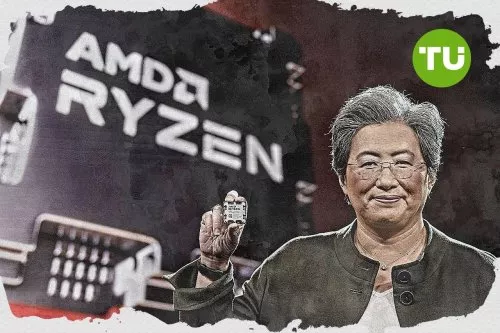
AMD's outlook is also supported by management commentary on capacity. On Oct. 6, Chief Executive Lisa Su said the company would substantially increase supply in 2027 because AI orders continue to outpace capacity.Still, the stock's volatility around earnings is complicating the investment case for investors seeking exposure without taking full downside risk. The implied earnings-related move is roughly 9% to 11% on the day, and over the past four quarters the smallest move over a similar window was more than 9%, while the largest, after first-quarter 2026 results, was 38%.
That volatility makes outright call buying expensive, leading to a preference for options structures that offset rich premiums. A call spread risk reversal is presented as a way to remain exposed to AMD while reducing losses if cracks in the AI trade widen further.
Under that approach, an investor gives up about $1,700 of upside in exchange for $5,000 of outperformance during a severe downside move. The structure also requires less capital than buying the stock outright, while selling both the put and the call reduces the cost of the long call purchase by 66%.
In our earlier coverage of the AI-linked tech selloff tied to funding and rate fears, we explained how hotter-than-expected U.S. inflation data reignited expectations for further Fed tightening and pressured Nasdaq futures alongside major AI-exposed names. We also noted that investors were reassessing the cost of financing large-scale AI infrastructure, with bond-market stress in companies connected to data-center buildouts adding to the risk-off move across chipmakers and big tech.






Latest AMD News


-
 Afghanistan
-
 Albania
-
 Algeria
-
 Angola
-
 Argentina
-
 Armenia
-
 Australia
-
 Austria
-
 Azerbaijan
-
 Bahamas
-
 Bahrain
-
 Bangladesh
-
 Belarus
-
 Belgium
-
 Bolivia
-
 Botswana
-
 Brazil
-
 Brunei
-
 Bulgaria
-
 Cambodia
-
 Cameroon
-
 Canada
-
 Chile
-
 China
-
 Colombia
-
 Congo
-
 Costa Rica
-
 Cote d'Ivoire
-
 Croatia
-
 Cuba
-
 Cyprus
-
 Czechia
-
 DR Congo
-
 Denmark
-
 Dominican Republic
-
 Ecuador
-
 Egypt
-
 El Salvador
-
 Estonia
-
 Eswatini
-
 Ethiopia
-
 Finland
-
 France
-
 Georgia
-
 Germany
-
 Ghana
-
 Greece
-
 Haiti
-
 Hong Kong
-
 Hungary
-
 India
-
 Indonesia
-
 Iran, Islamic republic
-
 Iraq
-
 Ireland
-
 Israel
-
 Italy
-
 Jamaica
-
 Japan
-
 Jordan
-
 Kazakhstan
-
 Kenya
-
 Korea
-
 Kuwait
-
 Kyrgyzstan
-
 Laos
-
 Latvia
-
 Lebanon
-
 Lesotho
-
 Libya
-
 Lithuania
-
 Luxembourg
-
 Madagascar
-
 Malaysia
-
 Malta
-
 Mauritius
-
 Mexico
-
 Moldova
-
 Mongolia
-
 Montenegro
-
 Morocco
-
 Mozambique
-
 Myanmar
-
 Namibia
-
 Nepal
-
 Netherlands
-
 New Zealand
-
 Nigeria
-
 North Macedonia
-
 Norway
-
 Oman
-
 Pakistan
-
 Palestine
-
 Panama
-
 Papua New Guinea
-
 Paraguay
-
 Peru
-
 Philippines
-
 Poland
-
 Portugal
-
 Puerto Rico
-
 Qatar
-
 Reunion
-
 Romania
-
 Rwanda
-
 Saudi Arabia
-
 Serbia
-
 Singapore
-
 Slovakia
-
 Slovenia
-
 Somalia
-
 South Africa
-
 Spain
-
 Sri Lanka
-
 Sweden
-
 Switzerland
-
 Syria
-
 Taiwan
-
 Tajikistan
-
 Tanzania
-
 Thailand
-
 Trinidad and Tobago
-
 Tunisia
-
 Turkey
-
 UAE
-
 Uganda
-
 Ukraine
-
 United Kingdom
-
United States
-
 Uruguay
-
 Uzbekistan
-
 Venezuela
-
 Vietnam
-
 Yemen
-
 Zambia
-
 Zimbabwe
- Forex
- Crypto












