The tweet was deleted by the author.
But we saved everything 🙂.


Strategy (MSTR, formerly MicroStrategy) is trading at $133.02, up $2.90 (2.23%) from the previous close, maintaining strong upward momentum near today’s session high of $134.41. Since the market open, MSTR has shown notable intraday strength despite remaining technically weak, with price action reflecting an early attempt by buyers to reverse previous losses. The move is supported by a positive tone following recent company actions and a favorable macro backdrop, with Michael Saylor’s upbeat commentary on credit metrics also lending support to sentiment.
 137.30
144.69
Michael Saylor highlighted that STRC's BTC Credit tightened to 59 bps and detailed key balance sheet assumptions, including an assumed Bitcoin price of $76,700. This matters because it signals improved funding conditions and greater financial flexibility for future Bitcoin accumulation, which could support confidence in Strategy’s growth trajectory. The company’s latest purchase of 811 Bitcoin and concurrent funding by selling MSTR shares, along with preferred share buybacks, further reinforce its continuing commitment to Bitcoin accumulation and disciplined capital management.
View post on X Loading...
At $133.02, MSTR is currently trading below the MA-20 ($147.29) and MA-50 ($143.64), and just under the MA-200 ($134.55), signaling ongoing short- and medium-term selling pressure and tentative long-term support near current levels. The nearest resistance is the Ichimoku Kijun at $146.89, with support near the MA-200 and round numbers in the $130 area. The MACD maintains a sell bias, and weak overall momentum dominates despite bullish price action intraday. For the coming week, MSTR is likely to trade between $125 and $138; the market’s reaction to Saylor’s statement supports a cautious but slightly improved forecast bias.
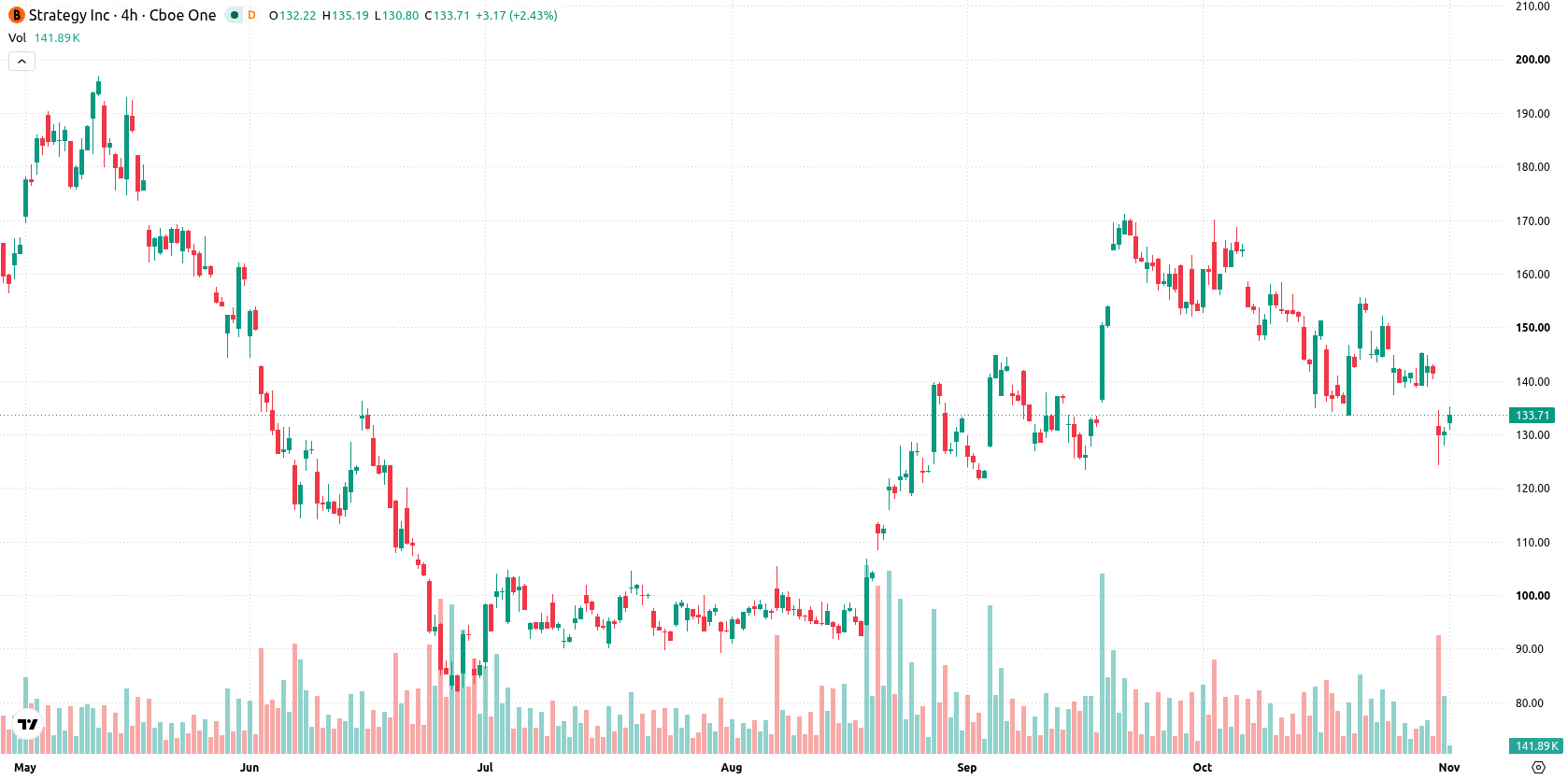
Previously it was reported that Strategy's shift to daily STRC preferred dividend payments coincided with ongoing downside pressure and a prevailing bearish technical outlook. This article adds to that assessment by highlighting a need to monitor the asset for signs of trend reversal or renewed weakness, with current price action serving as the primary indicator for near-term direction.



 Afghanistan
 Albania
 Algeria
 Angola
 Argentina
 Armenia
 Australia
 Austria
 Azerbaijan
 Bahamas
 Bahrain
 Bangladesh
 Belarus
 Belgium
 Bolivia
 Botswana
 Brazil
 Brunei
 Bulgaria
 Cambodia
 Cameroon
 Canada
 Chile
 China
 Colombia
 Congo
 Costa Rica
 Cote d'Ivoire
 Croatia
 Cuba
 Cyprus
 Czechia
 DR Congo
 Denmark
 Dominican Republic
 Ecuador
 Egypt
 El Salvador
 Estonia
 Eswatini
 Ethiopia
 Finland
 France
 Georgia
 Germany
 Ghana
 Greece
 Haiti
 Hong Kong
 Hungary
 India
 Indonesia
 Iran, Islamic republic
 Iraq
 Ireland
 Israel
 Italy
 Jamaica
 Japan
 Jordan
 Kazakhstan
 Kenya
 Korea
 Kuwait
 Kyrgyzstan
 Laos
 Latvia
 Lebanon
 Lesotho
 Libya
 Lithuania
 Luxembourg
 Madagascar
 Malaysia
 Malta
 Mauritius
 Mexico
 Moldova
 Mongolia
 Montenegro
 Morocco
 Mozambique
 Myanmar
 Namibia
 Nepal
 Netherlands
 New Zealand
 Nigeria
 North Macedonia
 Norway
 Oman
 Pakistan
 Palestine
 Panama
 Papua New Guinea
 Paraguay
 Peru
 Philippines
 Poland
 Portugal
 Puerto Rico
 Qatar
 Reunion
 Romania
 Rwanda
 Saudi Arabia
 Serbia
 Singapore
 Slovakia
 Slovenia
 Somalia
 South Africa
 Spain
 Sri Lanka
 Sweden
 Switzerland
 Syria
 Taiwan
 Tajikistan
 Tanzania
 Thailand
 Trinidad and Tobago
 Tunisia
 Turkey
 UAE
 Uganda
 Ukraine
 United Kingdom
United States
 Uruguay
 Uzbekistan
 Venezuela
 Vietnam
 Yemen
 Zambia
 Zimbabwe