

Shell weakens as US bond yields rise with inflation, raising funding and energy demand concerns

Shell (SHEL) stock is trading lower, with the market facing renewed pressure from macroeconomic conditions. Higher US bond yields have emerged as a significant headwind, feeding concerns about tighter global financial conditions and their impact on energy demand. Traders are watching upcoming US inflation data and Federal Reserve policy signals for further direction.
 3587.50
3752.00
Highlights
- US bond yields posted their sharpest one-day increase in 19 months after higher-than-expected inflation figures raised expectations for more Federal Reserve rate hikes.
- Rising US rates may increase funding costs for Shell and slow global demand for energy products as financial conditions tighten.
- Shell stock trades below key short-term averages with negative momentum signals, facing resistance around GBX3,669 and support near GBX3,343.
US inflation spike and bond yields increase tightening risk
According to Bloomberg, on November 10, 2026, US bond yields posted their largest one-day jump in 19 months after inflation data came in higher than expected, heightening anticipation that the Federal Reserve would move forward with more aggressive interest rate increases.
This development has raised concerns that higher US rates will translate into tighter financial conditions globally. For Shell, this environment could increase funding costs and temper worldwide demand for energy products as borrowing becomes more expensive and economic activity slows.
While the news signals a direct macroeconomic risk channel for Shell through both operational and market demand factors, no offsetting events have been reported that might cushion the impact.
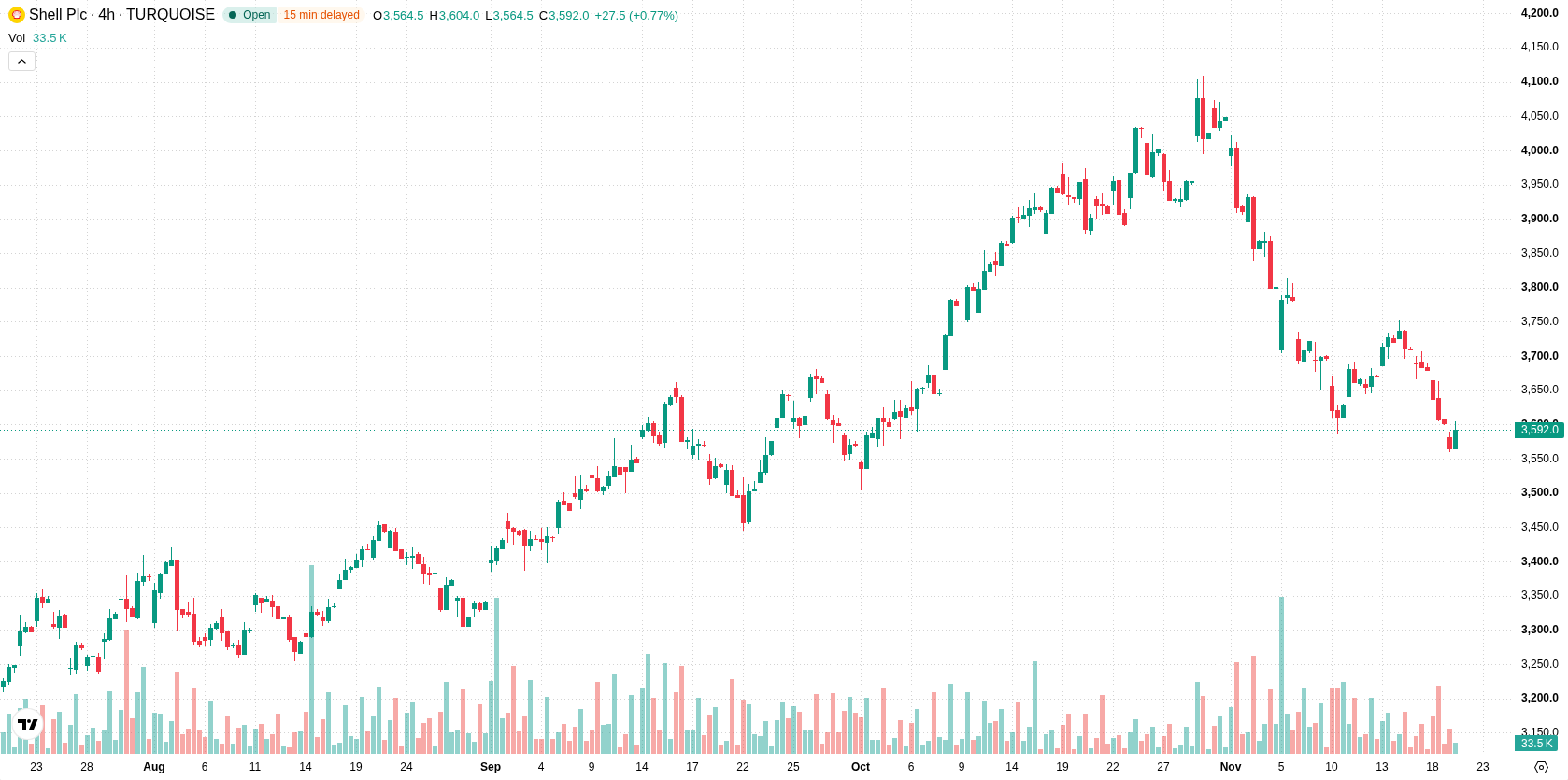
Shell pressured below 4H momentum levels; medium-term trend at risk
On the 4H chart, the price is positioned below the D1 SMA-50 at GBX3,735 but remains above the D1 SMA-200 at GBX3,343, reflecting a bullish medium-term alignment despite short-term weakness. The recent move also sits under the H4 SMA-20 at GBX3,673, reinforcing pressure from the macro backdrop.
Momentum signals are tilted negative, as both MACD and ADX indicate a selling bias. The H4 Kijun at GBX3,668 marks a local resistance area traders may monitor if price attempts a rebound.
Fed policy and global demand as triggers for next move
Macro risks tied to further Fed rate hikes and resulting dollar strength could extend pressure on Shell unless global conditions stabilize. Support is seen around GBX3,343, which coincides with the D1 SMA-200, while sustained recovery would require reclaiming resistance near GBX3,669. Upcoming US inflation releases and central bank guidance remain key catalysts for the next directional move.
Earlier, analysts noted that persistent technical weakness and selling pressure left Shell stock vulnerable to further consolidation or downside moves. The latest developments reinforce this bearish outlook amid heightened macroeconomic risks, with upcoming US inflation data and Federal Reserve policy guidance expected to be decisive for Shell's next direction.











-
 Afghanistan
-
 Albania
-
 Algeria
-
 Angola
-
 Argentina
-
 Armenia
-
 Australia
-
 Austria
-
 Azerbaijan
-
 Bahamas
-
 Bahrain
-
 Bangladesh
-
 Belarus
-
 Belgium
-
 Bolivia
-
 Botswana
-
 Brazil
-
 Brunei
-
 Bulgaria
-
 Cambodia
-
 Cameroon
-
 Canada
-
 Chile
-
 China
-
 Colombia
-
 Congo
-
 Costa Rica
-
 Cote d'Ivoire
-
 Croatia
-
 Cuba
-
 Cyprus
-
 Czechia
-
 DR Congo
-
 Denmark
-
 Dominican Republic
-
 Ecuador
-
 Egypt
-
 El Salvador
-
 Estonia
-
 Eswatini
-
 Ethiopia
-
 Finland
-
 France
-
 Georgia
-
 Germany
-
 Ghana
-
 Greece
-
 Haiti
-
 Hong Kong
-
 Hungary
-
 India
-
 Indonesia
-
 Iran, Islamic republic
-
 Iraq
-
 Ireland
-
 Israel
-
 Italy
-
 Jamaica
-
 Japan
-
 Jordan
-
 Kazakhstan
-
 Kenya
-
 Korea
-
 Kuwait
-
 Kyrgyzstan
-
 Laos
-
 Latvia
-
 Lebanon
-
 Lesotho
-
 Libya
-
 Lithuania
-
 Luxembourg
-
 Madagascar
-
 Malaysia
-
 Malta
-
 Mauritius
-
 Mexico
-
 Moldova
-
 Mongolia
-
 Montenegro
-
 Morocco
-
 Mozambique
-
 Myanmar
-
 Namibia
-
 Nepal
-
 Netherlands
-
 New Zealand
-
 Nigeria
-
 North Macedonia
-
 Norway
-
 Oman
-
 Pakistan
-
 Palestine
-
 Panama
-
 Papua New Guinea
-
 Paraguay
-
 Peru
-
 Philippines
-
 Poland
-
 Portugal
-
 Puerto Rico
-
 Qatar
-
 Reunion
-
 Romania
-
 Rwanda
-
 Saudi Arabia
-
 Serbia
-
 Singapore
-
 Slovakia
-
 Slovenia
-
 Somalia
-
 South Africa
-
 Spain
-
 Sri Lanka
-
 Sweden
-
 Switzerland
-
 Syria
-
 Taiwan
-
 Tajikistan
-
 Tanzania
-
 Thailand
-
 Trinidad and Tobago
-
 Tunisia
-
 Turkey
-
 UAE
-
 Uganda
-
 Ukraine
-
 United Kingdom
-
United States
-
 Uruguay
-
 Uzbekistan
-
 Venezuela
-
 Vietnam
-
 Yemen
-
 Zambia
-
 Zimbabwe
- Forex
- Crypto












