Anthony Pratt Net Worth, Biography and Key Insights


Anthony Pratt’s Profile Summary
|
Company
|
Visy Industries (Australia) and Pratt Industries (USA) |
|---|---|
|
Position
|
Executive Chairman |
|
Source of wealth
|
Packaging and recycling industry |
|
Also known as
|
Anthony Joseph Pratt |
|
Age
|
66 |
|
Education
|
Bachelor of Economics (Hons) from Monash University |
|
Citizenship
|
Australian |
|
Residence
|
Melbourne, Australia, and New York, USA |
|
Family
|
Married with three children |
|
Website, Social Media
|
Biography
Anthony Joseph Pratt, born on April 11, 1960, in Melbourne, Australia, is a billionaire businessman and one of the world's leading figures in the packaging and recycling industry. He is the Executive Chairman of Visy Industries, Australia's largest privately-owned packaging and recycling company, and Pratt Industries, the largest privately held paper and packaging company in the United States. The Pratt family business was originally founded by his grandfather in 1948, and it was later expanded significantly by Anthony's father, Richard Pratt.Anthony Pratt graduated with a Bachelor of Economics (Hons) from Monash University in 1982. After university, he began his career at McKinsey & Company, where he gained valuable consulting experience before joining the family business. In 1991, Pratt moved to the U.S. to lead the expansion of Pratt Industries USA, focusing on sustainable packaging solutions.
Under his leadership, Pratt Industries has grown into a multi-billion-dollar enterprise. The company has a strong focus on producing 100% recycled paper and packaging, aligning with global environmental trends. Today, Visy and Pratt Industries are recognized leaders in sustainability, recycling, and environmentally friendly business practices.
Pratt is also a well-known philanthropist, supporting causes related to education, the environment, and health. He has pledged substantial donations to charities and has made significant contributions to both Australian and American communities. As of January 2025, Pratt's net worth is estimated at US$9.6 billion, making him one of the richest individuals in Australia.
-
How did Anthony Pratt make money?
Anthony Pratt made his fortune by expanding his family's packaging and recycling business into a global empire. His journey began in the early 1990s when he took over Pratt Industries USA, the American branch of his family's company. At that time, the company was relatively small, generating around US$100 million in revenue. However, Pratt recognized the growing demand for sustainable packaging and began focusing on producing 100% recycled paper products.
Pratt's business strategy involved acquiring recycling plants and building modern facilities to produce paper and packaging materials with a reduced environmental impact. In 1995, he opened his first 100% recycled paper mill in Conyers, Georgia, marking a turning point for Pratt Industries USA. This move allowed the company to reduce waste and offer eco-friendly products, aligning with global trends toward sustainability.
Over the years, Pratt Industries expanded its operations across the U.S., opening additional paper mills and recycling facilities. The company's emphasis on sustainability and cost-effective production helped it secure major clients, including Amazon, Walmart, and Home Depot.
In Australia, Visy Industries continued to grow under Pratt's leadership, becoming a leader in recycling and packaging. By focusing on environmental responsibility, Pratt was able to capitalize on the increasing demand for sustainable business practices. Today, the combined operations of Visy and Pratt Industries generate billions in annual revenue.
Pratt's success is largely attributed to his vision of integrating recycling into packaging production and his commitment to sustainability. His leadership has transformed the family business into a global powerhouse, with over 10,000 employees worldwide. As of 2025, his net worth is estimated at US$9.6 billion, with his wealth primarily derived from his holdings in Visy and Pratt Industries. -
What is Anthony Pratt net worth?
As of 2026, Anthony Pratt’s net worth is estimated to be $8.5B.
What is Anthony Pratt also known as?
Anthony Pratt is often referred to as the "Cardboard King" due to his significant influence in the packaging industry through his companies, Visy Industries and Pratt Industries.Prominent achievements
Under Anthony Pratt's leadership, Pratt Industries became the largest privately held packaging and paper company globally, with significant growth in revenue and market share. He has been recognized for his contributions to sustainable business practices and his philanthropic efforts, particularly in supporting environmental and educational causes.What are Anthony Pratt’s key insights?
Anthony Pratt emphasizes sustainability and innovation in business. He believes in the importance of recycling and environmental responsibility, aligning business success with ecological stewardship. His leadership focuses on integrating sustainable practices to drive profitability and long-term growth.
Personal life
Anthony Pratt is married to Claudine Revere, and together they have three children. He is the son of the late Richard Pratt, a prominent Australian businessman, and Jeanne Pratt. His sisters, Heloise Waislitz and Fiona Geminder, are also involved in the family business and are recognized as fellow billionaires.
Useful insights
Advanced investment strategies

For those who have mastered the basics, the next step is exploring advanced investment strategies. These books delve into the complexities of portfolio management and alternative asset classes, offering sophisticated approaches to building wealth.
-
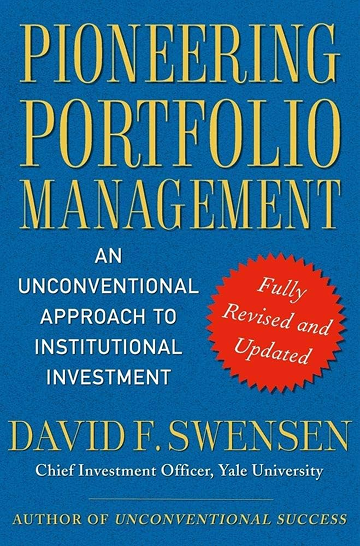
David Swensen - "Pioneering Portfolio Management"
-
Summary:
In this book, Swensen, who successfully managed Yale's endowment fund, outlines his investment philosophy, emphasizing diversification, a long-term perspective, and the inclusion of alternative asset classes such as hedge funds, private equity, and real estate. This approach aims to balance risk and reward to maximize returns for institutional investors.
-
Why read it:
Swensen’s methods are widely regarded as groundbreaking and have been adopted by many large institutional investors. His book is essential for anyone looking to build a robust, diversified portfolio with a focus on steady, long-term growth.
-
-
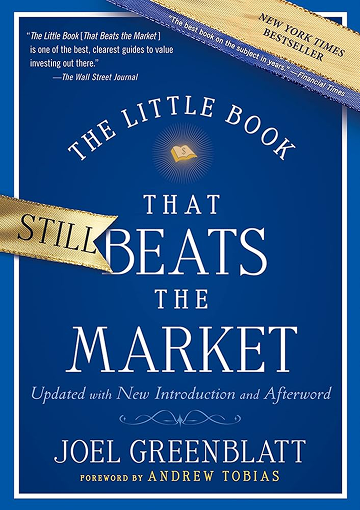
Joel Greenblatt - "The Little Book That Still Beats the Market"
-
Summary:
Greenblatt presents a simple yet effective formula for investing in value stocks. His "magic formula" identifies companies that are both undervalued and have high earnings yields, providing a clear strategy for beating the market. Greenblatt simplifies complex financial concepts for individual investors, making the book accessible to both beginners and experienced traders.
-
Why read it:
Greenblatt’s formula has consistently outperformed the market, making this book a practical guide for investors looking for a straightforward, effective strategy. It’s particularly useful for those who prefer a hands-on approach to stock selection without the need for deep financial expertise.
-
Other profiles in category
Popular Financial Guides
Editors' Top Picks and Insights






Latest Financial News

MIDA wants investors in Malaysia to be assessed based on job quality and their treatment of workers
UK Budget plans keep new measures fully funded under fiscal rules

Malaysia attracts foreign tech talent through startup roadmap

-
 Afghanistan
-
 Albania
-
 Algeria
-
 Angola
-
 Argentina
-
 Armenia
-
 Australia
-
 Austria
-
 Azerbaijan
-
 Bahamas
-
 Bahrain
-
 Bangladesh
-
 Belarus
-
 Belgium
-
 Bolivia
-
 Botswana
-
 Brazil
-
 Brunei
-
 Bulgaria
-
 Cambodia
-
 Cameroon
-
 Canada
-
 Chile
Chile
-
 China
China
-
 Colombia
-
 Congo
Congo
-
 Costa Rica
-
 Cote d'Ivoire
-
 Croatia
-
 Cuba
Cuba
-
 Cyprus
-
 Czechia
-
 DR Congo
-
 Denmark
-
 Dominican Republic
-
 Ecuador
-
 Egypt
Egypt
-
 El Salvador
-
 Estonia
-
 Eswatini
-
 Ethiopia
-
 Finland
-
 France
-
 Georgia
-
 Germany
-
 Ghana
Ghana
-
 Greece
-
 Haiti
Haiti
-
 Hong Kong
-
 Hungary
-
 India
India
-
 Indonesia
-
 Iran, Islamic republic
-
 Iraq
Iraq
-
 Ireland
-
 Israel
-
 Italy
Italy
-
 Jamaica
-
 Japan
Japan
-
 Jordan
-
 Kazakhstan
-
 Kenya
Kenya
-
 Korea
Korea
-
 Kuwait
-
 Kyrgyzstan
-
 Laos
Laos
-
 Latvia
-
 Lebanon
-
 Lesotho
-
 Libya
Libya
-
 Lithuania
-
 Luxembourg
-
 Madagascar
-
 Malaysia
-
 Malta
Malta
-
 Mauritius
-
 Mexico
-
 Moldova
-
 Mongolia
-
 Montenegro
-
 Morocco
-
 Mozambique
-
 Myanmar
-
 Namibia
-
 Nepal
Nepal
-
 Netherlands
-
 New Zealand
-
 Nigeria
-
 North Macedonia
-
 Norway
-
 Oman
Oman
-
 Pakistan
-
 Palestine
-
 Panama
-
 Papua New Guinea
-
 Paraguay
-
 Peru
Peru
-
 Philippines
-
 Poland
-
 Portugal
-
 Puerto Rico
-
 Qatar
Qatar
-
 Reunion
-
 Romania
-
 Rwanda
-
 Saudi Arabia
-
 Serbia
-
 Singapore
-
 Slovakia
-
 Slovenia
-
 Somalia
-
 South Africa
-
 Spain
Spain
-
 Sri Lanka
-
 Sweden
-
 Switzerland
-
 Syria
Syria
-
 Taiwan
-
 Tajikistan
-
 Tanzania
-
 Thailand
-
 Trinidad and Tobago
-
 Tunisia
-
 Turkey
-
 UAE
UAE
-
 Uganda
-
 Ukraine
-
 United Kingdom
-
United States
-
 Uruguay
-
 Uzbekistan
-
 Venezuela
-
 Vietnam
-
 Yemen
Yemen
-
 Zambia
-
 Zimbabwe
- Forex
- Crypto












