
Nassim Taleb Biography, Career, Net Worth, and Key Insight


Nassim Taleb’s Profile Summary
|
Company
|
NYU Tandon School of Engineering |
|---|---|
|
Position
|
Distinguished Professor of Risk Engineering |
|
Source of wealth
|
Royalty from The Black Swan and Antifragile Investing and trading Public speaking engagements Academic positions, such as his professorship at New York University |
|
Also known as
|
Black swan theory, Philosophy of risk |
|
Age
|
66 |
|
Education
|
University of Paris (BA)), University of Paris-Dauphine (PhD). |
|
Citizenship
|
United States |
|
Residence
|
New York City, USA |
|
Family
|
Private |
|
Website, Social Media
|
Biography
Nassim Nicholas Taleb is a renowned scholar, essayist, and risk analyst, widely recognized for his work in probability, uncertainty, and decision theory. Born in Lebanon in 1960, he later moved to France and the U.S., where he built a diverse career that spans multiple fields, including finance, mathematics, and philosophy. Taleb’s most notable work is his Incerto series, which includes influential books such as The Black Swan, Antifragile, and Fooled by Randomness. These works explore the profound impact of rare and unpredictable events, known as "black swans," and have been pivotal in reshaping modern risk management.Before his writing career, Taleb held various roles in quantitative finance, particularly as a derivatives trader and risk manager, where he developed his expertise in understanding extreme risk. He is also known for his academic contributions, having taught at NYU’s Tandon School of Engineering. Taleb advocates for a practical approach to uncertainty, critiquing traditional statistical models and emphasizing robustness in decision-making under uncertainty. His work spans a blend of science, philosophy, and economics, making him a significant voice in contemporary thought on randomness and risk.
Continues as scientific advisor to Universa Investments, a tail-risk hedge fund (2025).
-
How did Nassim Taleb make money?
Nassim Taleb makes money in the following areas:
Royalty from The Black Swan and Antifragile Investing and trading Public speaking engagements Academic positions, such as his professorship at New York University
-
What is Nassim Taleb net worth?
As of 2026, Nassim Taleb’s net worth is estimated to be $2M.
What is Nassim Taleb also known as?
Nassim Taleb is not only known for his contributions as an author, but also as a philosopher and mathematician focusing on complex systems and probability. His philosophical insights challenge traditional thinking on randomness and uncertainty, especially through his Antifragility concept, where systems can benefit from volatility. Taleb’s academic work often intertwines mathematics and philosophy, emphasizing real-world applications of statistical concepts. Additionally, he has gained recognition as an investor, particularly in the field of risk management and trading derivatives, applying his theories to navigate financial markets successfully.Prominent achievements
Taleb’s The Black Swan was listed by The Sunday Times as one of the 12 most influential books since World War II. Antifragile has been widely recognized for its groundbreaking concepts, he has received the Wolfram Award for his contributions to complex systems, his works are frequently cited in academic and financial circles, and he is regarded as one of the most influential thinkers on risk and uncertainty in the 21st century.Trading Strategy
Nassim Taleb, also known as a trader, is best known for his work on risk, uncertainty, and rare events—or “Black Swans.” His trading strategy focused on tail risk hedging, where he aimed to profit from extreme, unexpected market movements. As an options trader, Taleb structured his positions to have small, consistent losses most of the time while maintaining exposure to massive gains during market crashes or volatility spikes. He achieved this by buying deep out-of-the-money options, which are cheap but offer huge upside in rare market scenarios.
Taleb philosophy is rooted in antifragility—the idea that some systems benefit from stress and disorder. He believes most traditional risk models underestimate extreme events, making markets vulnerable to collapse. Through his hedge fund, Empirica and later Universa Investments (which he advised), his strategies protected against financial crises like the 2008 crash. Taleb advocates for a “barbell strategy”: putting the majority of capital in ultra-safe assets and a small portion in highly speculative bets, creating a portfolio that is robust to both normal conditions and rare shocks.
What are Nassim Taleb’s key insights?
Nassim Taleb emphasizes embracing uncertainty and volatility. He advocates for building systems that benefit from disorder, a concept he calls Antifragility. Taleb challenges traditional risk management and statistical models, promoting real-world robustness over theoretical precision. He encourages decision-making that prioritizes survival and long-term success, focusing on minimizing downside risk while allowing for potential gains from unpredictable events.
Personal life
Nassim Taleb’s family includes his wife and their children. He is known to be protective of his family’s privacy, and detailed information about their lives is not widely available or publicized.
Useful insights
Advanced investment strategies

For those who have mastered the basics, the next step is exploring advanced investment strategies. These books delve into the complexities of portfolio management and alternative asset classes, offering sophisticated approaches to building wealth.
-
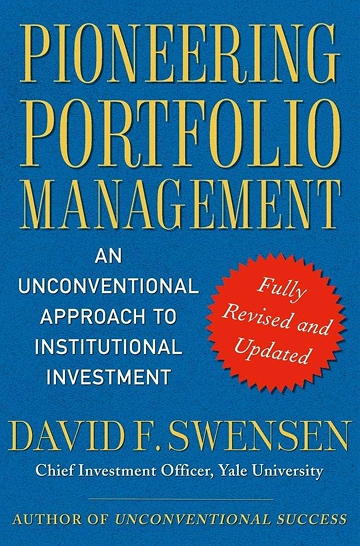
David Swensen - "Pioneering Portfolio Management"
-
Summary:
In this book, Swensen, who successfully managed Yale's endowment fund, outlines his investment philosophy, emphasizing diversification, a long-term perspective, and the inclusion of alternative asset classes such as hedge funds, private equity, and real estate. This approach aims to balance risk and reward to maximize returns for institutional investors.
-
Why read it:
Swensen’s methods are widely regarded as groundbreaking and have been adopted by many large institutional investors. His book is essential for anyone looking to build a robust, diversified portfolio with a focus on steady, long-term growth.
-
-
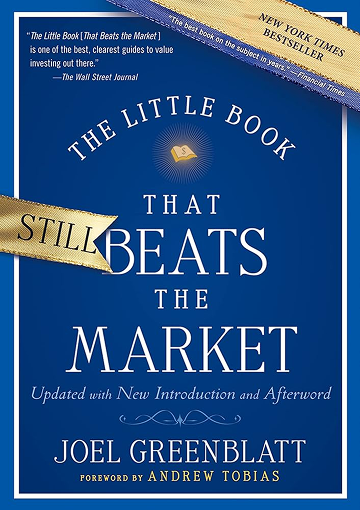
Joel Greenblatt - "The Little Book That Still Beats the Market"
-
Summary:
Greenblatt presents a simple yet effective formula for investing in value stocks. His "magic formula" identifies companies that are both undervalued and have high earnings yields, providing a clear strategy for beating the market. Greenblatt simplifies complex financial concepts for individual investors, making the book accessible to both beginners and experienced traders.
-
Why read it:
Greenblatt’s formula has consistently outperformed the market, making this book a practical guide for investors looking for a straightforward, effective strategy. It’s particularly useful for those who prefer a hands-on approach to stock selection without the need for deep financial expertise.
-
Other profiles in category
Popular Financial Guides
Editors' Top Picks and Insights






Latest Financial News

Nasdaq 100 index extends downward move as selloff intensifies and resistance caps rebound attempts

DAX climbs as upward price move extends buying momentum

Ibovespa falls nearly 3% as heavy selling persists after Lula re-election

-
 Afghanistan
-
 Albania
-
 Algeria
-
 Angola
-
 Argentina
-
 Armenia
-
 Australia
-
 Austria
-
 Azerbaijan
-
 Bahamas
-
 Bahrain
-
 Bangladesh
-
 Belarus
-
 Belgium
-
 Bolivia
-
 Botswana
-
 Brazil
-
 Brunei
-
 Bulgaria
-
 Cambodia
-
 Cameroon
-
 Canada
-
 Chile
-
 China
-
 Colombia
-
 Congo
-
 Costa Rica
-
 Cote d'Ivoire
-
 Croatia
-
 Cuba
-
 Cyprus
-
 Czechia
-
 DR Congo
-
 Denmark
-
 Dominican Republic
-
 Ecuador
-
 Egypt
-
 El Salvador
-
 Estonia
-
 Eswatini
-
 Ethiopia
-
 Finland
-
 France
-
 Georgia
-
 Germany
-
 Ghana
-
 Greece
-
 Haiti
-
 Hong Kong
-
 Hungary
-
 India
-
 Indonesia
-
 Iran, Islamic republic
-
 Iraq
-
 Ireland
-
 Israel
-
 Italy
-
 Jamaica
-
 Japan
-
 Jordan
-
 Kazakhstan
-
 Kenya
-
 Korea
-
 Kuwait
-
 Kyrgyzstan
-
 Laos
-
 Latvia
-
 Lebanon
-
 Lesotho
-
 Libya
-
 Lithuania
-
 Luxembourg
-
 Madagascar
-
 Malaysia
-
 Malta
-
 Mauritius
-
 Mexico
-
 Moldova
-
 Mongolia
-
 Montenegro
-
 Morocco
-
 Mozambique
-
 Myanmar
-
 Namibia
-
 Nepal
-
 Netherlands
-
 New Zealand
-
 Nigeria
-
 North Macedonia
-
 Norway
-
 Oman
-
 Pakistan
-
 Palestine
-
 Panama
-
 Papua New Guinea
-
 Paraguay
-
 Peru
-
 Philippines
-
 Poland
-
 Portugal
-
 Puerto Rico
-
 Qatar
-
 Reunion
-
 Romania
-
 Rwanda
-
 Saudi Arabia
-
 Serbia
-
 Singapore
-
 Slovakia
-
 Slovenia
-
 Somalia
-
 South Africa
-
 Spain
-
 Sri Lanka
-
 Sweden
-
 Switzerland
-
 Syria
-
 Taiwan
-
 Tajikistan
-
 Tanzania
-
 Thailand
-
 Trinidad and Tobago
-
 Tunisia
-
 Turkey
-
 UAE
-
 Uganda
-
 Ukraine
-
 United Kingdom
-
United States
-
 Uruguay
-
 Uzbekistan
-
 Venezuela
-
 Vietnam
-
 Yemen
-
 Zambia
-
 Zimbabwe
- Forex
- Crypto












