
Ben Carlson Biography, Career, Net Worth, and Key Insight


Ben Carlson’s Profile Summary
|
Company
|
Ritholtz Wealth Management |
|---|---|
|
Position
|
Director of Institutional Asset Management, CFA, author, investor |
|
Source of wealth
|
Asset management, investing, publishing, media, books |
|
Also known as
|
Author, Podcast Host, Financial Blogger. |
|
Age
|
Unknown |
|
Education
|
Hope College - Bachelor of Arts (Economics and Management), CFA designation. |
|
Citizenship
|
United States |
|
Residence
|
Grand Rapids, Michigan, USA |
|
Family
|
He is married and is the father of three children. |
|
Website, Social Media
|
Biography
Ben Carlson is an American investor, CFA Charterholder, financial author, and wealth management executive best known for his work in behavioral finance, long-term investing, and wealth management education. He currently serves as Director of Institutional Asset Management at Ritholtz Wealth Management, one of the most recognized independent registered investment advisory firms in the United States.Carlson became widely known through his financial blog A Wealth of Common Sense, which he launched in 2013. The blog gained popularity for its ability to explain complex investing concepts in simple language, focusing on market history, investor psychology, portfolio construction, and long-term wealth building.
Before joining Ritholtz Wealth Management, Carlson worked in institutional investing and financial advisory roles, developing expertise in portfolio management, retirement planning, and asset allocation. Over time, he built a reputation as one of the most widely read financial writers among retail investors and financial professionals.
Carlson’s work focuses heavily on behavioral finance — particularly how emotions, overconfidence, fear, and market cycles affect investment decisions. Unlike many market commentators who focus on short-term predictions, Carlson emphasizes patience, diversification, and realistic long-term expectations.
In addition to writing, Carlson became known through podcasts, media appearances, and video content connected to The Compound and Ritholtz Wealth Management. He frequently discusses investing trends, stock markets, ETFs, retirement planning, and macroeconomic developments.
He is also the author of several investing books, including:
A Wealth of Common Sense;
Organized Money;
Don’t Fall For It.
His writing is widely cited across financial media because of its practical approach to personal finance and investing.
-
How did Ben Carlson make money?
Ben Carlson makes money in the following areas:
Asset management, investing, publishing, media, books
-
What is Ben Carlson net worth?
As of 2026, there is no publicly available and reliable information regarding Ben Carlson’s net worth.
What is Ben Carlson also known as?
Ben Carlson is widely recognized as one of the most influential voices in behavioral finance and long-term investing education for retail investors.Within investing and financial media circles, he is known for:
behavioral finance analysis;
long-term investing strategies;
ETF and index fund investing;
wealth management education;
retirement planning;
market history analysis;
practical portfolio construction.
He is particularly associated with simplifying investing concepts for ordinary investors. Carlson frequently argues that successful investing is less about predicting markets and more about controlling emotions, maintaining discipline, and staying invested over long periods of time.
Through A Wealth of Common Sense, he became known for combining data, historical analysis, and behavioral insights in a highly accessible writing style.
Unlike many market commentators focused on aggressive trading or sensational predictions, Carlson emphasizes realistic expectations, diversification, patience, and consistency.
Prominent achievements
Became Director of Institutional Asset Management at Ritholtz Wealth Management.Built A Wealth of Common Sense into one of the most widely read investing blogs.
Earned the CFA designation.
Published multiple bestselling investing books.
Became a recognized voice in behavioral finance and long-term investing education.
Regularly appears on The Compound financial media network.
Built a strong audience across financial media, podcasts, and social platforms.
Helped popularize evidence-based investing and index fund education for retail investors.
What are Ben Carlson’s key insights?
Ben Carlson’s investment philosophy is centered around simplicity, discipline, behavioral finance, and long-term investing.
His core principles include:
Long-term investing wins. Carlson believes successful investing is primarily driven by patience, consistency, and time in the market rather than constant trading activity.
Investor behavior matters more than forecasts. A major part of his work focuses on how emotions and behavioral mistakes often damage investor returns more than poor market conditions.
Diversification reduces risk. Carlson strongly supports diversified portfolios using index funds, ETFs, and broad market exposure.
Market history matters. He frequently uses historical market data to show that volatility, corrections, and bear markets are normal parts of long-term investing.
Simplicity beats complexity. Carlson argues that many investors overcomplicate investing when simple, disciplined strategies often outperform emotionally driven decision-making.
Wealth building requires realistic expectations. He regularly warns against “get rich quick” thinking and promotes gradual wealth accumulation through consistent saving and investing.
Personal life
Ben Carlson is known for maintaining a relatively private personal life while remaining highly active in financial media, investing education, and wealth management commentary. He is married and is the father of three children. Carlson lives in Michigan and occasionally references family life, parenting, and long-term financial planning in his writing and podcasts, although he rarely shares detailed personal information publicly.
While little public information is available about his parents or extended family, Carlson has spoken about growing up in the Midwest and how practical financial habits, discipline, and long-term thinking influenced his approach to investing and wealth management.
His career reflects a long-term focus on disciplined investing, investor behavior, and financial education rather than speculative trading or short-term market forecasting.
Useful insights
Advanced investment strategies

For those who have mastered the basics, the next step is exploring advanced investment strategies. These books delve into the complexities of portfolio management and alternative asset classes, offering sophisticated approaches to building wealth.
-
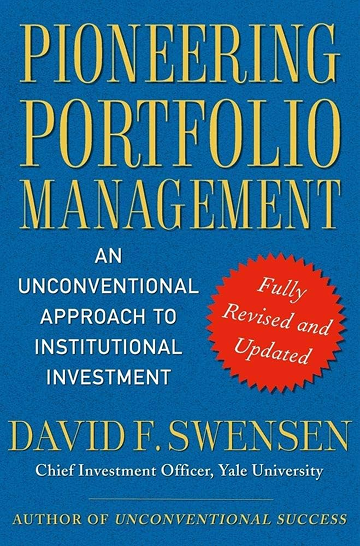
David Swensen - "Pioneering Portfolio Management"
-
Summary:
In this book, Swensen, who successfully managed Yale's endowment fund, outlines his investment philosophy, emphasizing diversification, a long-term perspective, and the inclusion of alternative asset classes such as hedge funds, private equity, and real estate. This approach aims to balance risk and reward to maximize returns for institutional investors.
-
Why read it:
Swensen’s methods are widely regarded as groundbreaking and have been adopted by many large institutional investors. His book is essential for anyone looking to build a robust, diversified portfolio with a focus on steady, long-term growth.
-
-
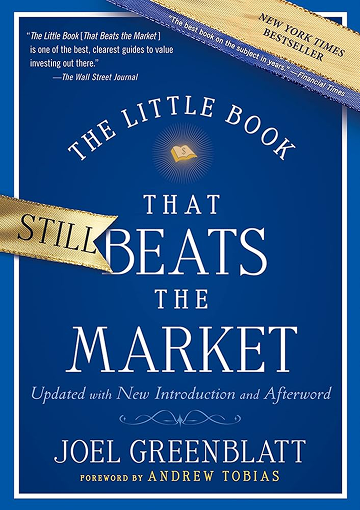
Joel Greenblatt - "The Little Book That Still Beats the Market"
-
Summary:
Greenblatt presents a simple yet effective formula for investing in value stocks. His "magic formula" identifies companies that are both undervalued and have high earnings yields, providing a clear strategy for beating the market. Greenblatt simplifies complex financial concepts for individual investors, making the book accessible to both beginners and experienced traders.
-
Why read it:
Greenblatt’s formula has consistently outperformed the market, making this book a practical guide for investors looking for a straightforward, effective strategy. It’s particularly useful for those who prefer a hands-on approach to stock selection without the need for deep financial expertise.
-
Latest Ben Carlson News

Top 10 S&P 500 stocks account for 40 percent of market cap, Ben Carlson notes

Ben Carlson: Time to rebalance portfolios may have arrived

Stocks or bonds present a current investment question, Ben Carlson notes

Ben Carlson: Stock market concentration is expected to continue and questions arise over higher rates versus ZIRP

137,000 households hold 15% of U.S. wealth, Ben Carlson notes

Ben Carlson: Many pundits express concern over market concentration, debt, rates, and AI valuations
Other profiles in category
Editors' Top Picks and Insights



Popular Financial Guides

-
 Afghanistan
-
 Albania
-
 Algeria
-
 Angola
-
 Argentina
-
 Armenia
-
 Australia
-
 Austria
-
 Azerbaijan
-
 Bahamas
-
 Bahrain
-
 Bangladesh
-
 Belarus
-
 Belgium
-
 Bolivia
-
 Botswana
-
 Brazil
-
 Brunei
-
 Bulgaria
-
 Cambodia
-
 Cameroon
-
 Canada
-
 Chile
Chile
-
 China
China
-
 Colombia
-
 Congo
Congo
-
 Costa Rica
-
 Cote d'Ivoire
-
 Croatia
-
 Cuba
Cuba
-
 Cyprus
-
 Czechia
-
 DR Congo
-
 Denmark
-
 Dominican Republic
-
 Ecuador
-
 Egypt
Egypt
-
 El Salvador
-
 Estonia
-
 Eswatini
-
 Ethiopia
-
 Finland
-
 France
-
 Georgia
-
 Germany
-
 Ghana
Ghana
-
 Greece
-
 Haiti
Haiti
-
 Hong Kong
-
 Hungary
-
 India
India
-
 Indonesia
-
 Iran, Islamic republic
-
 Iraq
Iraq
-
 Ireland
-
 Israel
-
 Italy
Italy
-
 Jamaica
-
 Japan
Japan
-
 Jordan
-
 Kazakhstan
-
 Kenya
Kenya
-
 Korea
Korea
-
 Kuwait
-
 Kyrgyzstan
-
 Laos
Laos
-
 Latvia
-
 Lebanon
-
 Lesotho
-
 Libya
Libya
-
 Lithuania
-
 Luxembourg
-
 Madagascar
-
 Malaysia
-
 Malta
Malta
-
 Mauritius
-
 Mexico
-
 Moldova
-
 Mongolia
-
 Montenegro
-
 Morocco
-
 Mozambique
-
 Myanmar
-
 Namibia
-
 Nepal
Nepal
-
 Netherlands
-
 New Zealand
-
 Nigeria
-
 North Macedonia
-
 Norway
-
 Oman
Oman
-
 Pakistan
-
 Palestine
-
 Panama
-
 Papua New Guinea
-
 Paraguay
-
 Peru
Peru
-
 Philippines
-
 Poland
-
 Portugal
-
 Puerto Rico
-
 Qatar
Qatar
-
 Reunion
-
 Romania
-
 Rwanda
-
 Saudi Arabia
-
 Serbia
-
 Singapore
-
 Slovakia
-
 Slovenia
-
 Somalia
-
 South Africa
-
 Spain
Spain
-
 Sri Lanka
-
 Sweden
-
 Switzerland
-
 Syria
Syria
-
 Taiwan
-
 Tajikistan
-
 Tanzania
-
 Thailand
-
 Trinidad and Tobago
-
 Tunisia
-
 Turkey
-
 UAE
UAE
-
 Uganda
-
 Ukraine
-
 United Kingdom
-
United States
-
 Uruguay
-
 Uzbekistan
-
 Venezuela
-
 Vietnam
-
 Yemen
Yemen
-
 Zambia
-
 Zimbabwe
- Forex
- Crypto












