
Richard Dennis Biography, Career, Net Worth, and Key Insight


Richard Dennis’s Profile Summary
|
Company
|
C&D Commodities |
|---|---|
|
Position
|
Richard Dennis serves as the Vice-President of C&D Commodities, a position he holds while also leading his own trading firm, the Dennis Trading Group |
|
Source of wealth
|
Trading profits from commodities. Management of capital pools for investors. Consulting and advisory roles in various organizations |
|
Also known as
|
Richard Dennis is also known as: The “Prince of the Pit”. Founder of the Turtle Trading Program. A notable trading educator and mentor |
|
Age
|
77 |
|
Education
|
DePaul University: Studied but did not complete a degree. |
|
Citizenship
|
United States |
|
Residence
|
Chicago, Illinois, USA |
|
Family
|
Richard Dennis is known to keep his family life private, but he is married and has children. |
|
Website, Social Media
|
https://www.bloomberg.com/profile/company/4909355Z:US |
Biography
Richard Dennis, often referred to as the "Prince of the Pit," is a prominent figure in the trading world, renowned for his significant contributions to commodity trading and market strategies. Born in 1952, he began his career at the age of 17 as a runner at the Chicago Mercantile Exchange. His early success was highlighted by his involvement in the "Great Russian Grain Robbery," where he capitalized on government grain sales to the Soviet Union, establishing himself as a successful trend follower. Dennis is best known for his groundbreaking experiment in the 1980s, where he trained a group of novice traders known as the "Turtles." This initiative aimed to demonstrate that trading skills could be taught and refined. Over a period of five years, these Turtles reportedly generated around $175 million in profits, validating Dennis's trading methodologies. In addition to his trading career, he has been involved in various advisory roles, including serving on boards like the Cato Institute and the Drug Policy Alliance. His philosophies emphasize that trading success can be distilled into rules that anyone can learn, contrasting the common belief that successful trading is an innate skill. Today, Richard Dennis continues to be a respected voice in trading, even as he has stepped back from active trading on the floor-
How did Richard Dennis make money?
Richard Dennis makes money in the following areas:
Trading profits from commodities. Management of capital pools for investors. Consulting and advisory roles in various organizations
-
What is Richard Dennis net worth?
As of 2026, Richard Dennis’s net worth is estimated to be ≈$200M.
What is Richard Dennis also known as?
Richard Dennis gained widespread recognition as the “Prince of the Pit” due to his rapid success as a trader at the Chicago Board of Trade. He is best known for founding the Turtle Trading Program in the early 1980s, where he trained individuals in systematic trading strategies based on trend-following. This initiative aimed to demonstrate that successful trading could be taught, contrary to the belief that it required inherent talent. Many of his "turtles" have since enjoyed successful careers in finance, and the program itself has become a case study in trading education. Additionally, Dennis is recognized for his contributions to trading philosophy, emphasizing the psychological aspects of trading and the importance of discipline. His approach has influenced many in the trading community, and he has been featured in various media outlets discussing his techniques and experiences in the markets. Richard Dennis is a prominent figure in the trading community, not only for his successful career but also for his impactful training methods that have inspired countless traders.Prominent achievements
Pioneered the Turtle Trading system, which produced over $175 million in profits for his students within five years. Co-authored influential trading principles that continue to impact traders worldwide. Managed to make over $500,000 in trading profits as a young trader in the 1970s. His trading strategies have been adopted and adapted by various trading schools and programs globally. Participated in public discourse on drug policy and economic issues through writings for major publications like The Wall Street Journal and The New York TimesTrading Strategy
Richard Dennis’s trading strategy is rooted in trend following, specifically through his famous Turtle Trading experiment. He believed that successful trading could be taught with clear rules and discipline. His approach involved using technical signals—primarily breakouts from price channels—to enter trades and applying strict risk management and position sizing techniques to control losses and let profits run.
Dennis used a systematic strategy, buying futures when prices broke above recent highs and selling short when they dropped below recent lows. He emphasized diversification across markets (commodities, currencies, interest rates, etc.) and adhered to a clear stop-loss system. His core philosophy was to follow the trend, cut losses quickly, and allow winning trades to grow, showing that consistent application of rules could outperform intuition.
What are Richard Dennis’s key insights?
Richard Dennis’s business philosophy is rooted in his belief that successful trading can be taught through systematic rules and strategies rather than being an innate talent. He emphasizes the importance of following a structured trading methodology, using data and analysis to drive decisions. His Turtle Trading system, which focuses on trend-following and risk management, exemplifies his approach. He encourages traders to detach emotionally from their trades, adopt a scientific method in their strategies, and apply disciplined risk management techniques.
Personal life
While specific details about Richard Dennis's family members are not widely publicized, he has indicated in interviews that he values family life. His wife and children are mentioned occasionally, but specific names or professional details are not commonly disclosed in public sources
Useful insights
Advanced investment strategies

For those who have mastered the basics, the next step is exploring advanced investment strategies. These books delve into the complexities of portfolio management and alternative asset classes, offering sophisticated approaches to building wealth.
-
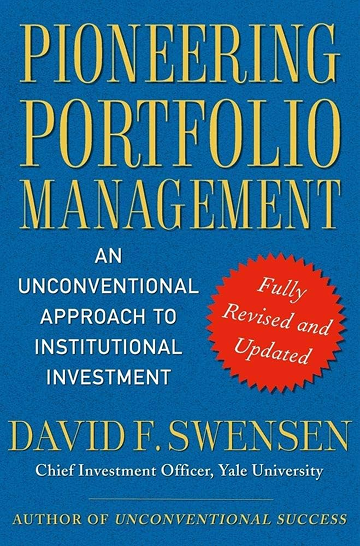
David Swensen - "Pioneering Portfolio Management"
-
Summary:
In this book, Swensen, who successfully managed Yale's endowment fund, outlines his investment philosophy, emphasizing diversification, a long-term perspective, and the inclusion of alternative asset classes such as hedge funds, private equity, and real estate. This approach aims to balance risk and reward to maximize returns for institutional investors.
-
Why read it:
Swensen’s methods are widely regarded as groundbreaking and have been adopted by many large institutional investors. His book is essential for anyone looking to build a robust, diversified portfolio with a focus on steady, long-term growth.
-
-
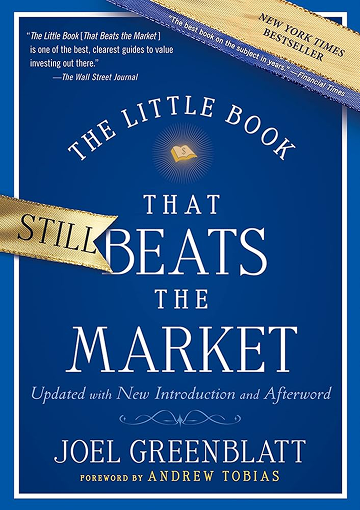
Joel Greenblatt - "The Little Book That Still Beats the Market"
-
Summary:
Greenblatt presents a simple yet effective formula for investing in value stocks. His "magic formula" identifies companies that are both undervalued and have high earnings yields, providing a clear strategy for beating the market. Greenblatt simplifies complex financial concepts for individual investors, making the book accessible to both beginners and experienced traders.
-
Why read it:
Greenblatt’s formula has consistently outperformed the market, making this book a practical guide for investors looking for a straightforward, effective strategy. It’s particularly useful for those who prefer a hands-on approach to stock selection without the need for deep financial expertise.
-
Other profiles in category
Popular Financial Guides
Editors' Top Picks and Insights






Latest Financial News

Saudi Arabia postpones major events after Houthi attacks disrupt travel and logistics

Nvidia urges deeper AI safety dialogue with Chinese companies

NAFDAC destroys unsafe products worth N22.73 billion in Nigeria crackdown

-
 Afghanistan
-
 Albania
-
 Algeria
-
 Angola
-
 Argentina
-
 Armenia
-
 Australia
-
 Austria
-
 Azerbaijan
-
 Bahamas
-
 Bahrain
-
 Bangladesh
-
 Belarus
-
 Belgium
-
 Bolivia
-
 Botswana
-
 Brazil
-
 Brunei
-
 Bulgaria
-
 Cambodia
-
 Cameroon
-
 Canada
-
 Chile
Chile
-
 China
China
-
 Colombia
-
 Congo
Congo
-
 Costa Rica
-
 Cote d'Ivoire
-
 Croatia
-
 Cuba
Cuba
-
 Cyprus
-
 Czechia
-
 DR Congo
-
 Denmark
-
 Dominican Republic
-
 Ecuador
-
 Egypt
Egypt
-
 El Salvador
-
 Estonia
-
 Eswatini
-
 Ethiopia
-
 Finland
-
 France
-
 Georgia
-
 Germany
-
 Ghana
Ghana
-
 Greece
-
 Haiti
Haiti
-
 Hong Kong
-
 Hungary
-
 India
India
-
 Indonesia
-
 Iran, Islamic republic
-
 Iraq
Iraq
-
 Ireland
-
 Israel
-
 Italy
Italy
-
 Jamaica
-
 Japan
Japan
-
 Jordan
-
 Kazakhstan
-
 Kenya
Kenya
-
 Korea
Korea
-
 Kuwait
-
 Kyrgyzstan
-
 Laos
Laos
-
 Latvia
-
 Lebanon
-
 Lesotho
-
 Libya
Libya
-
 Lithuania
-
 Luxembourg
-
 Madagascar
-
 Malaysia
-
 Malta
Malta
-
 Mauritius
-
 Mexico
-
 Moldova
-
 Mongolia
-
 Montenegro
-
 Morocco
-
 Mozambique
-
 Myanmar
-
 Namibia
-
 Nepal
Nepal
-
 Netherlands
-
 New Zealand
-
 Nigeria
-
 North Macedonia
-
 Norway
-
 Oman
Oman
-
 Pakistan
-
 Palestine
-
 Panama
-
 Papua New Guinea
-
 Paraguay
-
 Peru
Peru
-
 Philippines
-
 Poland
-
 Portugal
-
 Puerto Rico
-
 Qatar
Qatar
-
 Reunion
-
 Romania
-
 Rwanda
-
 Saudi Arabia
-
 Serbia
-
 Singapore
-
 Slovakia
-
 Slovenia
-
 Somalia
-
 South Africa
-
 Spain
Spain
-
 Sri Lanka
-
 Sweden
-
 Switzerland
-
 Syria
Syria
-
 Taiwan
-
 Tajikistan
-
 Tanzania
-
 Thailand
-
 Trinidad and Tobago
-
 Tunisia
-
 Turkey
-
 UAE
UAE
-
 Uganda
-
 Ukraine
-
 United Kingdom
-
United States
-
 Uruguay
-
 Uzbekistan
-
 Venezuela
-
 Vietnam
-
 Yemen
Yemen
-
 Zambia
-
 Zimbabwe
- Forex
- Crypto












