
Thomas Bulkowski Biography, Career, Net Worth, and Key Insight


Thomas Bulkowski’s Profile Summary
|
Company
|
Self-employed |
|---|---|
|
Position
|
Trader and Author as part of his self-employed career. |
|
Source of wealth
|
Book sales, investments in stocks, royalties from published works, income from articles in financial publications. |
|
Also known as
|
Author of investment books, blogger, community volunteer. |
|
Age
|
69 |
|
Education
|
No information on formal degrees or education available |
|
Citizenship
|
United States |
|
Residence
|
Keller, Texas, USA |
|
Family
|
No public information available. |
|
Website, Social Media
|
https://thepatternsite.com/ |
Biography
Thomas Bulkowski is a seasoned trader and author, best known for his expertise in chart patterns and technical analysis. Born in 1957, Bulkowski initially worked as a senior software engineer before shifting to full-time trading. After retiring at the young age of 36, he dedicated himself to mastering the stock market, primarily through the study and application of chart patterns. His early writings, starting in 1995, quickly garnered attention, leading to the publication of his landmark book Encyclopedia of Chart Patterns in 2000. This was followed by several other notable works that made him a go-to authority on market patterns and tactics. His books have been translated into multiple languages, reflecting his international acclaim. Beyond trading, Bulkowski has written over 130 articles for various finance publications. He also runs ThePatternSite.com, a resource offering a wealth of information on stock market patterns and investing strategies. In his personal life, Bulkowski engages in philanthropy and creative pursuits, including writing fiction and contributing to local community initiatives. Despite his quiet demeanor, his influence in trading circles is profound.-
How did Thomas Bulkowski make money?
Thomas Bulkowski makes money in the following areas:
Book sales, investments in stocks, royalties from published works, income from articles in financial publications.
-
What is Thomas Bulkowski net worth?
As of 2026, there is no publicly available and reliable information regarding Thomas Bulkowski’s net worth.
What is Thomas Bulkowski also known as?
Thomas Bulkowski has gained recognition as an accomplished author, with several best-selling books on chart patterns and technical analysis. His Encyclopedia of Chart Patterns is a particularly well-regarded reference in the field. He also maintains a blog on his website, ThePatternSite.com, where he shares investment insights and strategies. Furthermore, Bulkowski has been actively involved in community service, taking on leadership roles in local organizations such as the Keller Parks and Recreation board and the Friends of the Keller LibraryProminent achievements
Best-selling author of Encyclopedia of Chart Patterns, more than 40 years of experience as a successful investor, over 130 articles published in leading financial magazines, his book translated into multiple languages, creator of the highly trafficked website ThePatternSite.com, numerous influential publications on stock market patterns.What are Thomas Bulkowski’s key insights?
Thomas Bulkowski is renowned for his quantitative approach to chart pattern analysis, bringing statistical rigor to a field often dominated by subjective interpretation. In books like Encyclopedia of Chart Patterns and Trading Classic Chart Patterns, he catalogs dozens of technical formations—such as head and shoulders, double tops, flags, and triangles—and evaluates their historical success rates, average gains/losses, and failure conditions using large datasets.
Bulkowski introduces concepts like “throwbacks” and “pullbacks”, and emphasizes the importance of confirmation, volume trends, breakout direction, and breakout quality in pattern reliability. He ranks patterns based on measured performance, helping traders prioritize setups with higher statistical edge. Unlike many technical analysts, Bulkowski dissects not just ideal patterns but their most common failure modes, equipping traders with realistic expectations.
He also developed event patterns like earnings surprises, gaps, and dead-cat bounces—analyzing their behavior across thousands of cases. His work reinforces the idea that pattern trading can be evidence-based, provided it's grounded in thorough testing and paired with strong risk controls.
Personal life
Bulkowski has kept his personal and family life private, with no available details on family members.
Useful insights
Advanced investment strategies

For those who have mastered the basics, the next step is exploring advanced investment strategies. These books delve into the complexities of portfolio management and alternative asset classes, offering sophisticated approaches to building wealth.
-
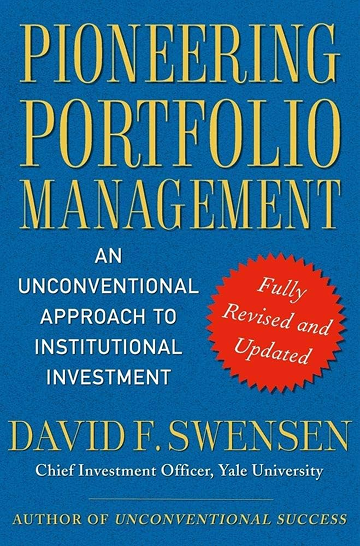
David Swensen - "Pioneering Portfolio Management"
-
Summary:
In this book, Swensen, who successfully managed Yale's endowment fund, outlines his investment philosophy, emphasizing diversification, a long-term perspective, and the inclusion of alternative asset classes such as hedge funds, private equity, and real estate. This approach aims to balance risk and reward to maximize returns for institutional investors.
-
Why read it:
Swensen’s methods are widely regarded as groundbreaking and have been adopted by many large institutional investors. His book is essential for anyone looking to build a robust, diversified portfolio with a focus on steady, long-term growth.
-
-
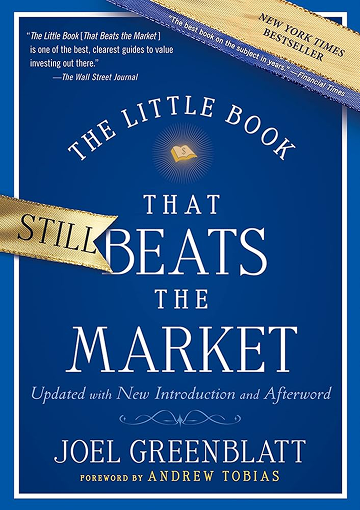
Joel Greenblatt - "The Little Book That Still Beats the Market"
-
Summary:
Greenblatt presents a simple yet effective formula for investing in value stocks. His "magic formula" identifies companies that are both undervalued and have high earnings yields, providing a clear strategy for beating the market. Greenblatt simplifies complex financial concepts for individual investors, making the book accessible to both beginners and experienced traders.
-
Why read it:
Greenblatt’s formula has consistently outperformed the market, making this book a practical guide for investors looking for a straightforward, effective strategy. It’s particularly useful for those who prefer a hands-on approach to stock selection without the need for deep financial expertise.
-
Other profiles in category
Popular Financial Guides
Editors' Top Picks and Insights






Latest Financial News

Why is Ibovespa down 1.5% today?

S&P 500 falls over 1% as major tech earnings reports spark selling pressure

Over 2% drop for Nasdaq 100 as technical weakness and selling pressure dominate

-
 Afghanistan
-
 Albania
-
 Algeria
-
 Angola
-
 Argentina
-
 Armenia
-
 Australia
-
 Austria
-
 Azerbaijan
-
 Bahamas
-
 Bahrain
-
 Bangladesh
-
 Belarus
-
 Belgium
-
 Bolivia
-
 Botswana
-
 Brazil
-
 Brunei
-
 Bulgaria
-
 Cambodia
-
 Cameroon
-
 Canada
-
 Chile
Chile
-
 China
China
-
 Colombia
-
 Congo
Congo
-
 Costa Rica
-
 Cote d'Ivoire
-
 Croatia
-
 Cuba
Cuba
-
 Cyprus
-
 Czechia
-
 DR Congo
-
 Denmark
-
 Dominican Republic
-
 Ecuador
-
 Egypt
Egypt
-
 El Salvador
-
 Estonia
-
 Eswatini
-
 Ethiopia
-
 Finland
-
 France
-
 Georgia
-
 Germany
-
 Ghana
Ghana
-
 Greece
-
 Haiti
Haiti
-
 Hong Kong
-
 Hungary
-
 India
India
-
 Indonesia
-
 Iran, Islamic republic
-
 Iraq
Iraq
-
 Ireland
-
 Israel
-
 Italy
Italy
-
 Jamaica
-
 Japan
Japan
-
 Jordan
-
 Kazakhstan
-
 Kenya
Kenya
-
 Korea
Korea
-
 Kuwait
-
 Kyrgyzstan
-
 Laos
Laos
-
 Latvia
-
 Lebanon
-
 Lesotho
-
 Libya
Libya
-
 Lithuania
-
 Luxembourg
-
 Madagascar
-
 Malaysia
-
 Malta
Malta
-
 Mauritius
-
 Mexico
-
 Moldova
-
 Mongolia
-
 Montenegro
-
 Morocco
-
 Mozambique
-
 Myanmar
-
 Namibia
-
 Nepal
Nepal
-
 Netherlands
-
 New Zealand
-
 Nigeria
-
 North Macedonia
-
 Norway
-
 Oman
Oman
-
 Pakistan
-
 Palestine
-
 Panama
-
 Papua New Guinea
-
 Paraguay
-
 Peru
Peru
-
 Philippines
-
 Poland
-
 Portugal
-
 Puerto Rico
-
 Qatar
Qatar
-
 Reunion
-
 Romania
-
 Rwanda
-
 Saudi Arabia
-
 Serbia
-
 Singapore
-
 Slovakia
-
 Slovenia
-
 Somalia
-
 South Africa
-
 Spain
Spain
-
 Sri Lanka
-
 Sweden
-
 Switzerland
-
 Syria
Syria
-
 Taiwan
-
 Tajikistan
-
 Tanzania
-
 Thailand
-
 Trinidad and Tobago
-
 Tunisia
-
 Turkey
-
 UAE
UAE
-
 Uganda
-
 Ukraine
-
 United Kingdom
-
United States
-
 Uruguay
-
 Uzbekistan
-
 Venezuela
-
 Vietnam
-
 Yemen
Yemen
-
 Zambia
-
 Zimbabwe
- Forex
- Crypto












