
What Is The Best Time To Trade NAS100?



Editorial Note: While we adhere to strict Editorial Integrity, this post may contain references to products from our partners. Here's an explanation for How We Make Money. None of the data and information on this webpage constitutes investment advice according to our Disclaimer.
The best time to trade NAS100 is typically during the U.S. market hours. The morning session (9:30 AM - 11:30 AM EST) and the afternoon session (1:30 PM - 4:00 PM EST) are particularly active and volatile, offering ample trading opportunities. After-hours trading (4:00 PM - 8:00 PM EST) can also provide opportunities, though with lower liquidity.
The NAS100, or Nasdaq 100, is a stock market index made up of the 100 largest non-financial companies listed on the Nasdaq stock exchange. This index is significant due to its heavy weighting towards technology and innovation-driven companies, making it a popular choice among traders. From this article you will learn what is the best time to trade NAS100.
Best time to trade NAS100: optimize your trading schedule
Understanding the best times to trade NAS100 is crucial for maximizing profits and minimizing risks.
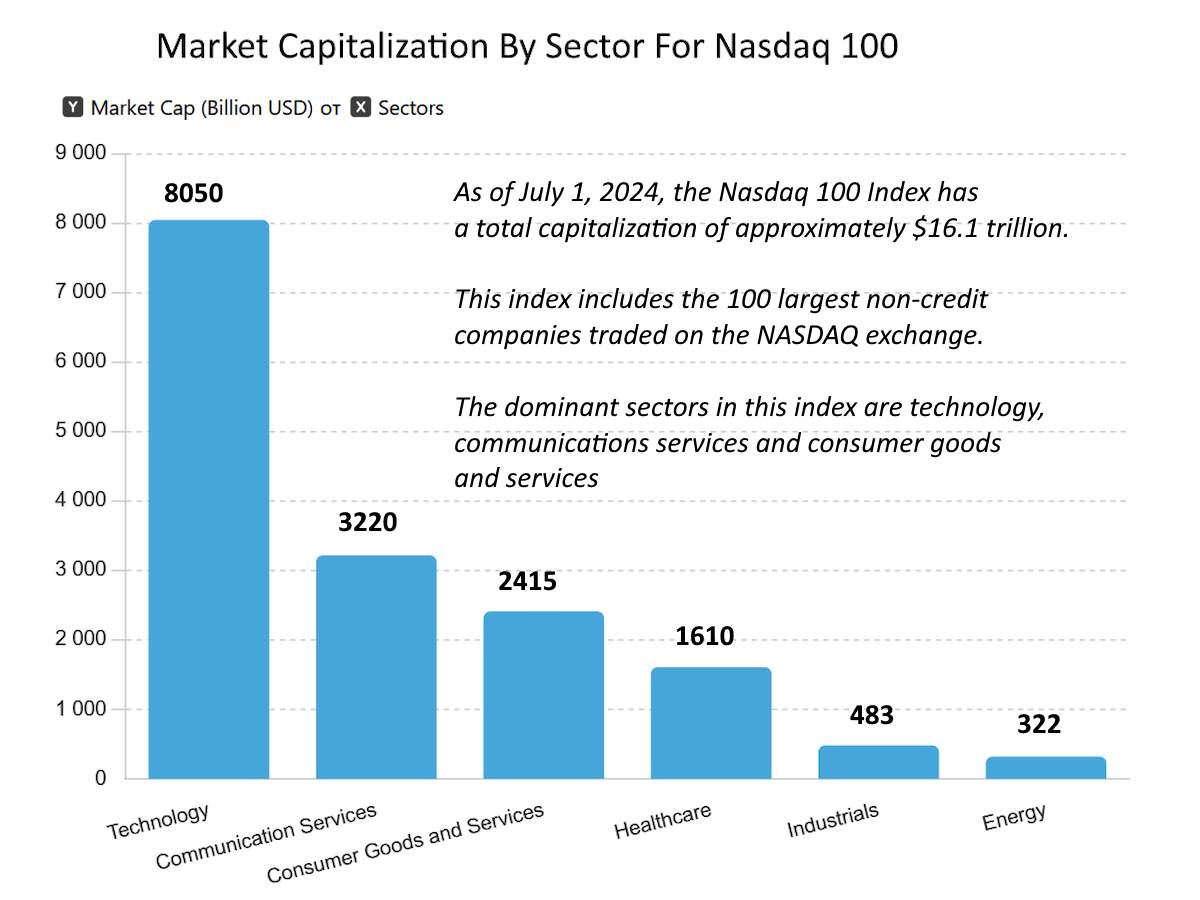
Morning session (9:30 AM - 11:30 AM EST)
The morning session is often marked by high volatility as traders react to overnight news and economic reports. This period offers significant price movements, providing ample opportunities for day traders. The NAS100 market opens at 9:30 AM EST, and the initial 30 minutes to an hour are known for their rapid price fluctuations. This is because traders are reacting to news that came out after the previous market close and before the current opening. For example, if a major tech company listed in the NAS100 announces better-than-expected earnings after the market closes, traders will rush to buy its stock as soon as the market opens, causing a spike in its price and increased volatility in the index.
Trading strategies to use:
Scalping. This involves making quick trades to take advantage of small price movements.
News trading. Traders can capitalize on news events such as earnings announcements and economic data releases by entering trades based on the anticipated market reaction.
Momentum trading. As the market opens and volatility spikes, momentum traders look for stocks or indices moving strongly in one direction and try to ride the trend.
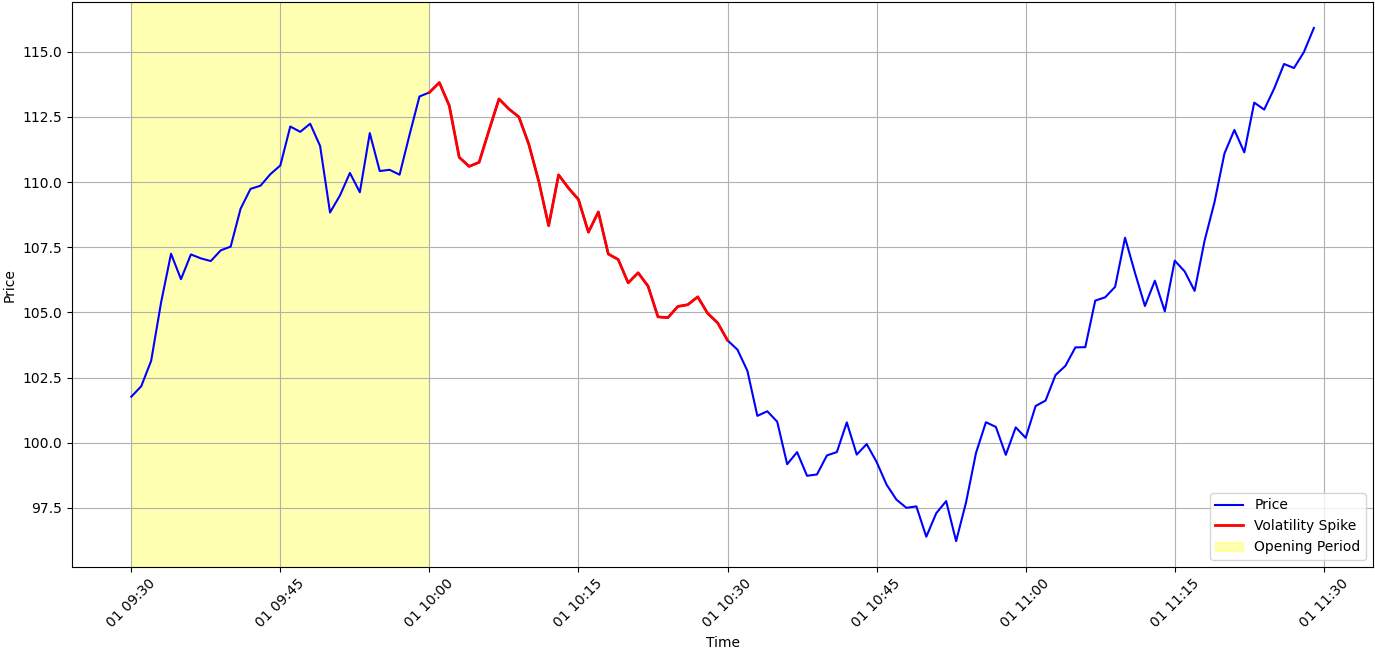
Midday lull (11:30 AM - 1:30 PM EST)
During the midday lull, trading activity and volatility tend to decrease as traders take a break for lunch. This period is often characterized by lower trading volumes and narrower price ranges. The midday lull typically starts around 11:30 AM EST and lasts until 1:30 PM EST. During this time, many traders step away from their desks for lunch, leading to a drop in trading activity. This decrease in activity is reflected in lower trading volumes and reduced price volatility.
For example, if the NAS100 experiences a sharp upward movement during the morning session, the momentum often slows down as the midday lull approaches. This can be seen in narrower price ranges, where the difference between the highest and lowest prices within a specific time frame becomes smaller.
Trading strategies to use:
Scalping. Some traders might still engage in scalping, aiming to profit from very small price movements. However, due to lower volatility, opportunities might be limited.
Range trading. Traders can take advantage of the narrower price ranges by employing range trading strategies. This involves buying at the lower end of the range and selling at the higher end, or vice versa.
Strategy review. Use this time to review your trading strategy and morning performance. Analyze what worked well and what didn’t, and make adjustments as needed for the afternoon session.
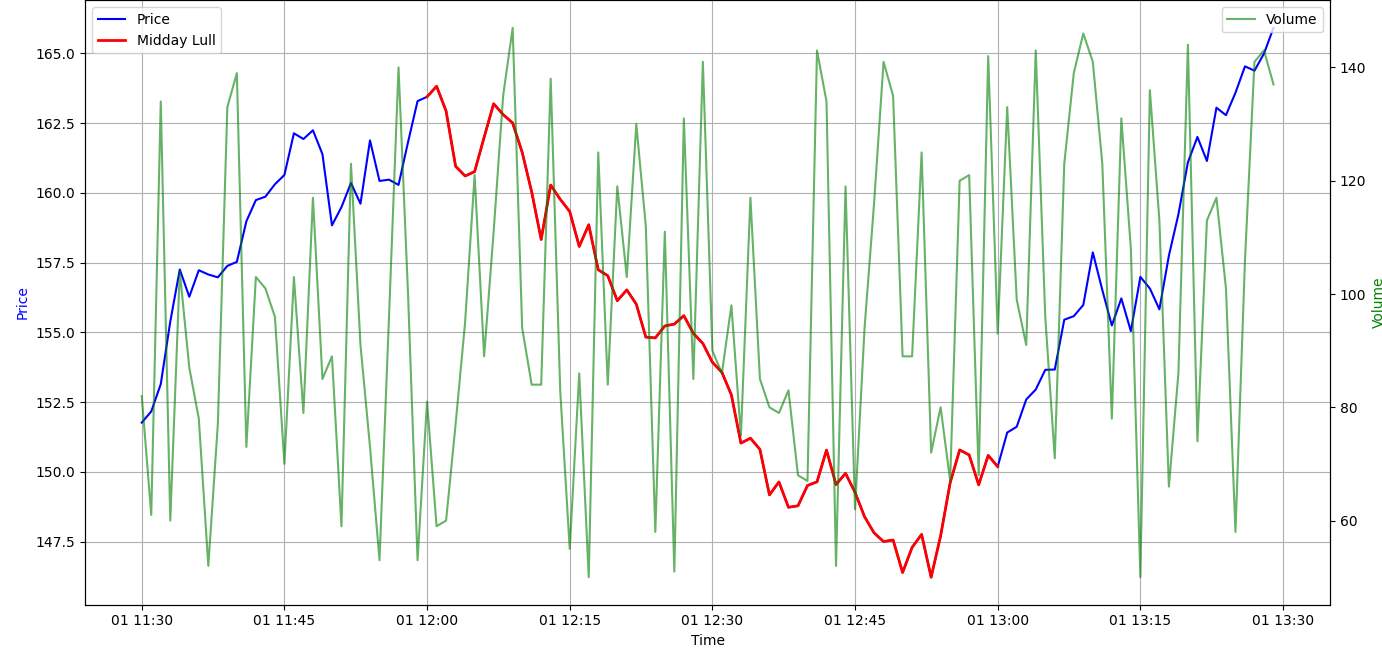
Afternoon session (1:30 PM - 4:00 PM EST)
Volatility often picks up again in the afternoon as traders position themselves for the close of the market. This period can be ideal for entering or exiting trades based on the day’s trends. The last hour of trading, often referred to as the "power hour," can be particularly volatile.
The afternoon session begins at 1:30 PM EST and lasts until the market closes at 4:00 PMEST. This period is characterized by a resurgence in trading activity as traders digest the developments of the day and make their final moves. The increase in activity can lead to significant price movements, making it a prime time for both day traders and swing traders.
Trading strategies to use:
Trend following. During the afternoon session, traders can use trend-following strategies to capitalize on the continuation of the morning’s trend.
Reversal trading. If there are signs that the morning trend is reversing, traders can use reversal trading strategies.
Volume analysis. By analyzing trading volume, traders can get a sense of the market’s strength. For instance, a surge in volume might indicate strong interest in a particular direction, signaling potential trading opportunities.

After-hours trading (4:00 PM - 8:00 PM EST)
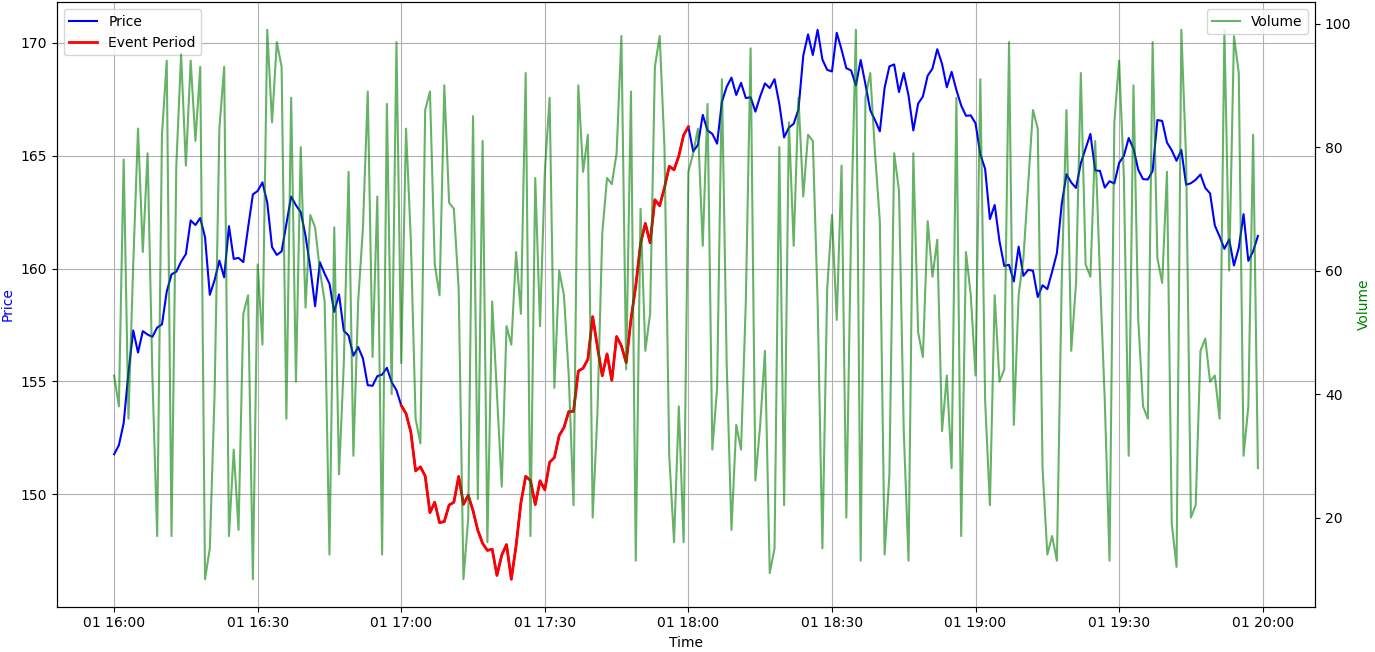
After-hours trading, which occurs from 4:00 PM to 8:00 PM EST, offers a unique set of opportunities and challenges for traders. This period is characterized by lower liquidity compared to regular trading hours, but it allows traders to react to late-breaking news and earnings reports that are released after the market closes.
During after-hours trading, fewer traders are active, leading to reduced trading volumes. This lower liquidity can result in wider bid-ask spreads and more pronounced price movements, both of which present opportunities and risks for traders. For example, if a trader expects positive news to drive the market higher overnight, they might buy NAS100 futures or related ETFs during after-hours to benefit from the anticipated price increase by the next morning.
Trading strategies to use:
News-based trading: Traders can capitalize on after-hours news releases by quickly entering trades based on the news impact.
Earnings reactions: Monitoring earnings announcements and the subsequent price reactions can provide trading opportunities. Traders can look for significant earnings surprises and trade accordingly.
Price gap exploitation: Due to lower liquidity, price gaps can occur more frequently in after-hours trading. Traders can exploit these gaps by entering trades at favorable prices and potentially closing them when liquidity improves.
Risks and considerations must be counted:
Wider bid-ask spreads. The lower trading volumes in after-hours sessions often lead to wider bid-ask spreads. This can increase the cost of entering and exiting positions and requires traders to be more cautious with their order placements.
Higher volatility. Reduced liquidity can also result in higher volatility, with prices moving more abruptly than during regular trading hours. Traders need to be prepared for sudden price swings and manage their risk accordingly.
Limited market participants. With fewer traders active, the influence of large trades can be more pronounced, leading to exaggerated price movements. This can create both opportunities and risks, depending on the direction of the trades.
For trading NAS100 you need to choose the best brokers that offer competitive spreads, low fees, robust trading platforms, and excellent customer support. In this section, we will explore the top brokers that are recommended for trading NAS100.
| Demo | Min. deposit, $ | Max. leverage | Indices | Futures | ETFs | Investor protection | Open an account | |
|---|---|---|---|---|---|---|---|---|
| Yes | 100 | 1:300 | Yes | Yes | Yes | €20,000 £85,000 SGD 75,000 | Go to broker 80% of retail CFD accounts lose money. |
|
| Yes | No | 1:200 | Yes | No | No | £85,000 SGD 75,000 $500,000 | Go to broker Your capital is at risk. |
|
| Yes | 100 | 1:50 | Yes | Yes | Yes | £85,000 | Study review | |
| Yes | 5000 | 1:4 | Yes | Yes | Yes | $500,000 | Study review | |
| Yes | 1 | 1:200 | Yes | Yes | Yes | £85,000 €100,000 SGD 75,000 | Study review |
Risk and warning section
When trading NAS100, it's crucial to be aware of the various risks involved. Understanding and managing these risks is key to maintaining a sustainable trading practice.
Market risks. Trading NAS100 involves market volatility and liquidity risks. Understanding these risks and having a risk management strategy is crucial. This might include setting stop-loss orders, diversifying your portfolio, and staying informed about market conditions.
Trading psychology. Emotional control is vital in trading. Traders must manage their emotions and avoid making impulsive decisions based on fear or greed.
Regulatory and compliance risks. Adhering to trading regulations and compliance requirements is essential to avoid legal issues and ensure safe trading practices.
Focus on trading NAS100 during the overlapping hours of major financial markets

Choosing the best time to trade NAS100 essential for your trading success. For best results, focus on trading NAS100 during the overlapping hours of major financial markets, especially when the New York Stock Exchange (NYSE) and NASDAQ are open. As I saw on a practice, this is typically the period with the highest liquidity and volatility, offering more trading opportunities and better chances for profit.
Also, always use stop-loss orders to protect your investments and avoid significant losses. A well-balanced portfolio can help you mitigate risks effectively. Never risk more than you can afford to lose on a single trade. Set realistic trading goals and regularly review your performance and adapt your strategy as market conditions change.
By focusing on these key aspects, you can make more informed decisions and improve your chances of success when trading NAS100.
Conclusion
Identifying the optimal trading hours for NAS100 can significantly amplify your trading success. The article underscores that the most advantageous periods often align with the overlap of major financial markets, such as the opening of the US and European sessions, when volatility and liquidity surge. For example, trading during the first few hours of the New York session provides ample opportunities for swift market movements that experienced traders can capitalize on. Ultimately, understanding and strategically leveraging these peak times sets disciplined traders apart, turning volatility into opportunity rather than risk.
FAQs
How does the midday lull affect trading the NAS100 index?
What trading strategies are commonly used during after-hours NAS100 sessions?
Why is the overlap of major financial market hours important when trading NAS100?
What role does trading volume analysis play in optimizing NAS100 trading times?
Editors' Top Picks and Insights

Problem with crypto IPOs: How high-profile listings became trap for investors

U.S. Bitcoin reserve: Trump’s unrealized crypto promise

Aiming for leadership: Payment giants prepare a new stablecoin

Proof of Reserves: the new standard for cryptocurrency exchanges

Three trends that could reshape the crypto market over the next decade

Trump financial disclosure: How the president's crypto income became a U.S. ethics issue
Related Articles
Team that worked on the article
Parshwa is a content expert and finance professional possessing deep knowledge of stock and options trading, technical and fundamental analysis, and equity research. As a Chartered Accountant Finalist, Parshwa also has expertise in Forex, crypto trading, and personal taxation.
Dan Blystone began his trading career in 1998 as an arbitrage clerk on the floor of the Chicago Mercantile Exchange (CME). He later traded bond and Eurex futures at proprietary firms such as Altea Trading, gaining valuable experience in high-frequency trading and risk management.
Chinmay Soni is a financial analyst with more than 5 years of experience in working with stocks, Forex, derivatives, and other assets. As a founder of a boutique research firm and an active researcher, he covers various industries and fields, providing insights backed by statistical data.
Crypto trading involves the buying and selling of cryptocurrencies, such as Bitcoin, Ethereum, or other digital assets, with the aim of making a profit from price fluctuations.
Volatility refers to the degree of variation or fluctuation in the price or value of a financial asset, such as stocks, bonds, or cryptocurrencies, over a period of time. Higher volatility indicates that an asset's price is experiencing more significant and rapid price swings, while lower volatility suggests relatively stable and gradual price movements.
Cryptocurrency is a type of digital or virtual currency that relies on cryptography for security. Unlike traditional currencies issued by governments (fiat currencies), cryptocurrencies operate on decentralized networks, typically based on blockchain technology.
Scalping in trading is a strategy where traders aim to make quick, small profits by executing numerous short-term trades within seconds or minutes, capitalizing on minor price fluctuations.
Forex leverage is a tool enabling traders to control larger positions with a relatively small amount of capital, amplifying potential profits and losses based on the chosen leverage ratio.

-
 Afghanistan
-
 Albania
-
 Algeria
-
 Angola
-
 Argentina
-
 Armenia
-
 Australia
-
 Austria
-
 Azerbaijan
-
 Bahamas
-
 Bahrain
-
 Bangladesh
-
 Belarus
-
 Belgium
-
 Bolivia
-
 Botswana
-
 Brazil
-
 Brunei
-
 Bulgaria
-
 Cambodia
-
 Cameroon
-
 Canada
-
 Chile
Chile
-
 China
China
-
 Colombia
-
 Congo
Congo
-
 Costa Rica
-
 Cote d'Ivoire
-
 Croatia
-
 Cuba
Cuba
-
 Cyprus
-
 Czechia
-
 DR Congo
-
 Denmark
-
 Dominican Republic
-
 Ecuador
-
 Egypt
Egypt
-
 El Salvador
-
 Estonia
-
 Eswatini
-
 Ethiopia
-
 Finland
-
 France
-
 Georgia
-
 Germany
-
 Ghana
Ghana
-
 Greece
-
 Haiti
Haiti
-
 Hong Kong
-
 Hungary
-
 India
India
-
 Indonesia
-
 Iran, Islamic republic
-
 Iraq
Iraq
-
 Ireland
-
 Israel
-
 Italy
Italy
-
 Jamaica
-
 Japan
Japan
-
 Jordan
-
 Kazakhstan
-
 Kenya
Kenya
-
 Korea
Korea
-
 Kuwait
-
 Kyrgyzstan
-
 Laos
Laos
-
 Latvia
-
 Lebanon
-
 Lesotho
-
 Libya
Libya
-
 Lithuania
-
 Luxembourg
-
 Madagascar
-
 Malaysia
-
 Malta
Malta
-
 Mauritius
-
 Mexico
-
 Moldova
-
 Mongolia
-
 Montenegro
-
 Morocco
-
 Mozambique
-
 Myanmar
-
 Namibia
-
 Nepal
Nepal
-
 Netherlands
-
 New Zealand
-
 Nigeria
-
 North Macedonia
-
 Norway
-
 Oman
Oman
-
 Pakistan
-
 Palestine
-
 Panama
-
 Papua New Guinea
-
 Paraguay
-
 Peru
Peru
-
 Philippines
-
 Poland
-
 Portugal
-
 Puerto Rico
-
 Qatar
Qatar
-
 Reunion
-
 Romania
-
 Rwanda
-
 Saudi Arabia
-
 Serbia
-
 Singapore
-
 Slovakia
-
 Slovenia
-
 Somalia
-
 South Africa
-
 Spain
Spain
-
 Sri Lanka
-
 Sweden
-
 Switzerland
-
 Syria
Syria
-
 Taiwan
-
 Tajikistan
-
 Tanzania
-
 Thailand
-
 Trinidad and Tobago
-
 Tunisia
-
 Turkey
-
 UAE
UAE
-
 Uganda
-
 Ukraine
-
 United Kingdom
-
United States
-
 Uruguay
-
 Uzbekistan
-
 Venezuela
-
 Vietnam
-
 Yemen
Yemen
-
 Zambia
-
 Zimbabwe
- Forex
- Crypto











