
The Psychology Of A Crypto Trader?



Editorial Note: While we adhere to strict Editorial Integrity, this post may contain references to products from our partners. Here's an explanation for How We Make Money. None of the data and information on this webpage constitutes investment advice according to our Disclaimer.
The psychology of crypto trading plays a vital role in a trader's success. It involves understanding and managing emotions such as fear, greed, and the fear of missing out (FOMO), which can significantly impact trading decisions. By recognizing cognitive biases and developing emotional resilience, traders can make more rational and informed decisions, ultimately improving their trading performance.
Grasping the psychological factors behind successful crypto trading is essential for investors aiming to excel in this market. Psychological pressure is intensified by the strong speculative nature of the crypto market and the lack of usual fundamental information. Even experienced traders successfully trading on Forex and the stock market are more likely to make a loss in crypto deals. Emotional control and mental resilience can significantly impact trading outcomes, often more than technical analysis or market knowledge. This article delves into the psychological aspects that influence trading decisions and offers strategies to manage them effectively.
Risk warning: Cryptocurrency markets are highly volatile, with sharp price swings and regulatory uncertainties. Research indicates that 75-90% of traders face losses. Only invest discretionary funds and consult an experienced financial advisor.
Crypto trading psychology
The psychology of crypto trading is a crucial aspect that can significantly impact a trader's performance. Understanding and mastering trading psychology can make the difference between consistent profitability and ongoing losses.
Emotions and trading. Emotions play a central role in trading decisions. Fear can lead to missed opportunities, while greed can push traders to take unnecessary risks. Fear of missing out (FOMO) often leads to impulsive actions, which usually result in panic selling and inevitable losses. Recognizing and controlling these emotions is essential for maintaining a rational and disciplined trading approach.
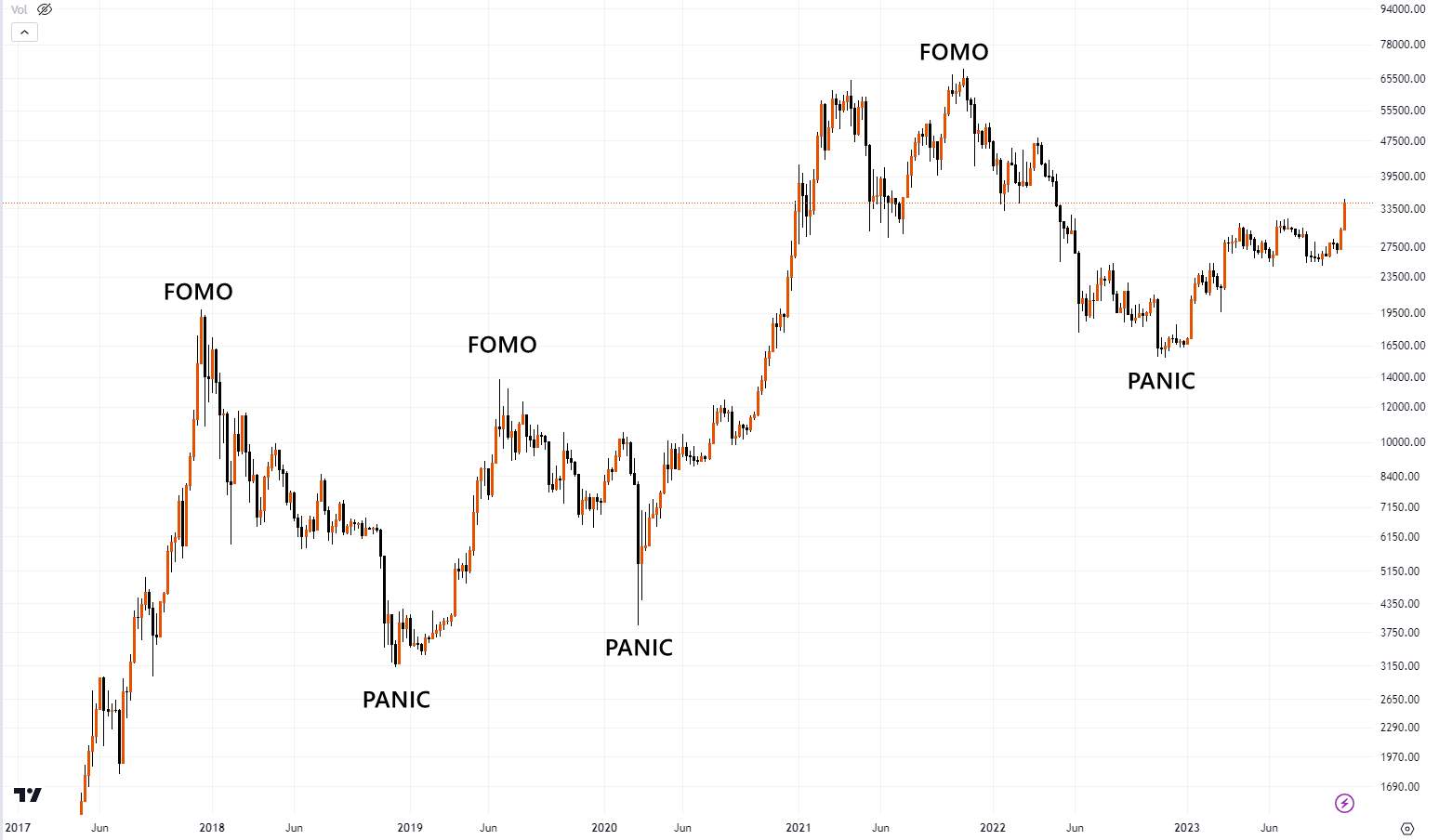
Patience and discipline. In the fast-paced crypto market, patience is a valuable trait. Rushing into trades without thorough research can lead to significant losses. Successful traders know that waiting for the right opportunities and sticking to a well-defined trading plan yields better results over time.
Risk management. Effective risk management is not just about numbers; it involves controlling emotions to prevent panic during market volatility. Setting appropriate stop-loss levels, diversifying investments, and maintaining a healthy risk-to-reward ratio are critical strategies. These practices help protect trading capital and reduce emotional stress.
Mindset and learning. Adopting a growth mindset, where losses are seen as learning opportunities rather than failures, is crucial for long-term success. Continuous learning and self-reflection help traders improve their strategies and decision-making skills. Keeping a trading journal to track decisions and emotions can provide valuable insights into personal trading behavior and areas for improvement.
Self-realization and independence. We recommend getting used to the fact that cryptocurrency trading is an individual activity. Analyze market situations on your own, take any advice critically and do not let anyone interfere in your trading process. Be confident in yourself, make crypto trading a tool of your success.
Community and support. Trading can be an isolating activity, but engaging with a community of like-minded traders can offer support, shared knowledge, and accountability. This social aspect helps maintain a positive trading mindset and motivates traders to stay disciplined and focused.
How psychological biases can affect crypto traders
Psychological biases significantly impact decision-making in crypto trading, often leading to suboptimal outcomes. Understanding these biases can help traders mitigate their effects and improve their trading strategies.
Confirmation bias. Confirmation bias is the tendency to search for, interpret, and remember information that confirms pre-existing beliefs while ignoring contradictory evidence. In crypto trading, this can lead traders to favor information that supports their investment choices and overlook warning signs, increasing the risk of losses.
Overconfidence bias. Overconfidence bias causes traders to overestimate their knowledge and predictive abilities. This can result in excessive trading, taking on too much risk, and ignoring market signals that suggest the need for caution. Overconfident traders are more likely to make impulsive decisions, which can be detrimental in the volatile crypto market.
Loss aversion. Loss aversion refers to the tendency to prefer avoiding losses over acquiring equivalent gains. In crypto trading, this bias can cause traders to hold onto losing positions for too long, hoping to break even, rather than cutting their losses and reallocating their resources to more promising opportunities.
Herd mentality. Herd mentality is the inclination to follow the actions of a larger group, often disregarding personal analysis and market signals. In the crypto market, this can lead to buying into hype or selling during panic, which often results in poor timing and financial losses.
Recency bias. Recency bias is the tendency to weigh recent events more heavily than earlier ones. For crypto traders, this can lead to overreacting to short-term market movements and making decisions based on recent trends rather than a comprehensive analysis of market conditions.
How crypto traders can manage their psychology
Managing psychology is crucial for crypto traders due to the volatile nature of the cryptocurrency market. Here are several strategies that can help traders maintain a healthy mindset and improve their trading performance:
1. Set clear goals and limits
Establish clear trading goals and limits for each trading session. This includes setting profit targets and stop-loss limits to prevent emotional decision-making. Knowing when to exit a trade, whether it’s at a profit or loss, helps maintain discipline and reduces stress.
2. Develop a trading plan
A well-defined trading plan includes specific criteria for entering and exiting trades, risk management strategies, and guidelines for capital allocation. Sticking to a plan helps mitigate impulsive decisions driven by market movements.
3. Embrace risk management
Effective risk management is essential for maintaining psychological balance. This involves:
Position sizing: Only invest a small percentage of your total capital in a single trade to minimize potential losses.
Diversification: Spread investments across various assets to reduce risk exposure.
Use of stop-loss orders: Automatically close positions at predetermined loss levels to prevent significant losses.
4. Stay educated and informed
Keeping up with the latest market trends, news, and analysis helps traders make informed decisions. Education reduces uncertainty and builds confidence in trading strategies.
5. Accept losses as part of trading
Losses are inevitable in trading. Accepting this reality helps in maintaining a healthy mindset. Analyze losing trades to understand what went wrong and avoid similar mistakes in the future.
6. Maintain emotional control
Emotional control is critical in trading. Here are ways to maintain it:
Avoid overtrading: Trading excessively can lead to emotional exhaustion and poor decision-making.
Take breaks: Step away from the screen regularly to avoid burnout.
Mindfulness and relaxation: Practices like meditation and deep breathing can help manage stress and improve focus.
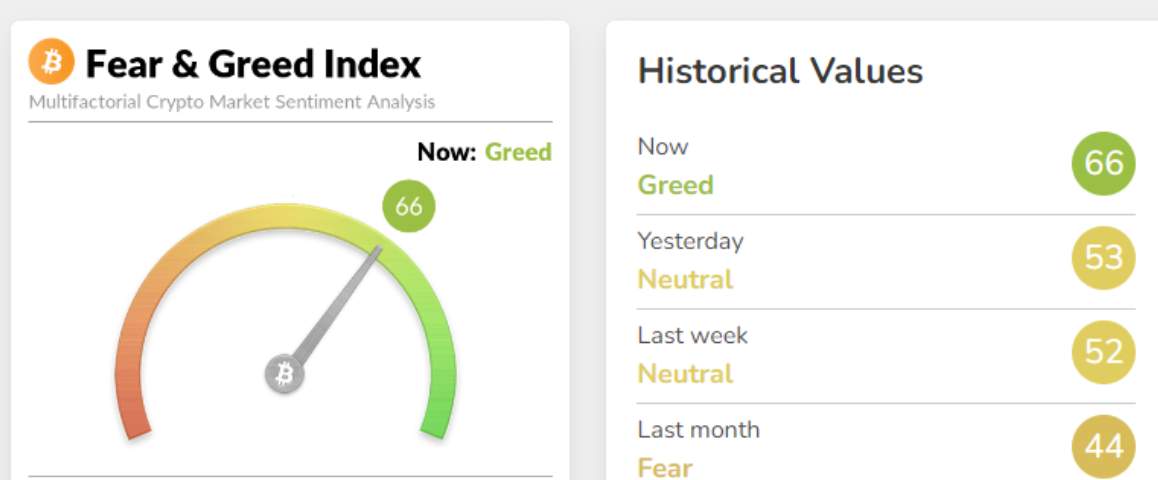
7. Keep a trading journal
Documenting each trade, including the rationale behind it, the outcome, and the emotions experienced, can provide valuable insights into your trading behavior. Reviewing your trading journal helps identify patterns and improve decision-making.
8. Surround yourself with a supportive community
Engage with other traders through forums, social media, or trading groups. Sharing experiences and learning from others can provide support and reduce the feeling of isolation.
9. Continuous improvement
Treat trading as a continuous learning process. Regularly review and refine your strategies based on performance and market conditions. Stay adaptable and open to new ideas and techniques.
We have selected several cryptocurrency exchanges where you can buy a variety of digital assets, ranging from basic cryptocurrencies BTC, ETH to popular meme tokens, trade them freely, place bets and easily withdraw money to your bank accounts. These cryptocurrency exchanges are good places to test your trading skills and resilience in trading psychology.
| Coins Supported | Min. Deposit, $ | Spot Taker fee, % | Spot Maker Fee, % | Extra tools | Open account | |
|---|---|---|---|---|---|---|
| 278 | 10 | 0.4 | 0.25 | 0.00 | Go to broker Your capital is at risk. |
|
| 249 | 10 | 0.5 | 0.5 | 0.00 | Go to broker Your capital is at risk. |
|
| 329 | 10 | 0.1 | 0.08 | 0.00 | Go to broker Your capital is at risk. |
|
| 30 | 5 | Not available | Not available | 0.00 | Go to broker Your capital is at risk.
|
|
| 250 | 1 | 0.5 | 0.25 | 0.00 | Go to broker Your capital is at risk. |
Benefits of trading psychology
The infographic below highlights the main benefits of understanding crypto trading psychology.

Understanding and managing trading psychology is crucial for success in the highly volatile cryptocurrency market. Here are the key advantages associated with crypto trading psychology:
1. Improved decision-making
Rational decisions: A strong grasp of trading psychology helps traders make rational, data-driven decisions rather than impulsive ones based on emotions like fear or greed. This can lead to more consistent trading performance.
Discipline and consistency: Developing psychological discipline helps maintain consistency in trading strategies, reducing the likelihood of deviating from planned actions due to emotional reactions.
2. Better risk management
Controlled risk-taking: Understanding your psychological responses to risk helps in setting appropriate risk management strategies, such as stop-loss orders and position sizing, to protect capital.
Avoiding overtrading: Recognizing the emotional triggers that lead to overtrading can help traders avoid excessive trading and the associated risk.
3. Enhanced emotional stability
Stress reduction: Techniques like mindfulness and meditation can help traders manage stress and maintain emotional balance, which is crucial for making clear-headed decisions.
Resilience: Building psychological resilience helps traders recover from losses more quickly and prevents the development of a negative mindset that could affect future trading.
Trading is not only about logic, but also about constant self-improvement

In cryptocurrency markets, where volatility and uncertainty are the norm, the importance of mental toughness cannot be overstated. In my opinion, successful traders are not those who are simply good at technical analysis or have access to cutting-edge information, but those who know how to manage their emotions and make informed decisions in stressful situations.
The main recommendation for traders is the development of emotional intelligence. The ability to be aware of your emotions, manage them, and understand how they influence your behavior is a fundamental skill. When the market plummets, it is very easy to panic and start making rash decisions. In such situations, it is important to remain calm and stick to your trading plan rather than giving in to the herd mentality.
Another important tip is regular self-reflection and analysis of your actions. Keeping a trading journal that records all trades and emotions experienced while trading can help identify behavioral patterns and mistakes. By analyzing your mistakes and successes, you can better understand your weaknesses and strengths and, accordingly, improve your strategy. Remember that trading is not only about mathematics and logic, but also about constant self-improvement.
Conclusion
The psychology of crypto trading is a fundamental driver of success or failure in this volatile market. Emotional biases like fear, greed, and FOMO can cloud judgment, leading traders to make impulsive decisions that work against their best interests—such as panic selling during a price dip or chasing after sudden rallies. To counteract these tendencies, disciplined strategies like sticking to a clear trading plan and regularly reflecting on emotional triggers are essential. Ultimately, mastering your mindset is just as crucial as understanding the technicals; in crypto trading, self-awareness and emotional control can be the decisive edge that sets winning traders apart from the rest.
FAQs
How does emotional control differ from technical analysis in the psychology of crypto trading?
What strategies help crypto traders overcome the fear of missing out (FOMO)?
Why is maintaining a trading journal important for understanding crypto trading psychology?
How does risk management contribute to a healthier psychological state for crypto traders?
Editors' Top Picks and Insights

FIFA World Cup on blockchain: Where football meets crypto

Aliens, Satoshi, and Bitcoin: How the extraterrestrial theory emerged

Blockchain nation in crisis: How a power struggle split Liberland

Shifting priorities: Governments back mining as businesses turn to AI

Intel's comeback: Apple, Trump and the AI bet

Bitcoin price prediction based on RSI: Is BTC poised for a new rally?
Related Articles
Team that worked on the article
Vuk stands at the forefront of financial journalism, blending over six years of crypto investing experience with profound insights gained from navigating two bull/bear cycles. A dedicated content writer, Vuk has contributed to a myriad of publications and projects.
Dan Blystone began his trading career in 1998 as an arbitrage clerk on the floor of the Chicago Mercantile Exchange (CME). He later traded bond and Eurex futures at proprietary firms such as Altea Trading, gaining valuable experience in high-frequency trading and risk management.
Chinmay Soni is a financial analyst with more than 5 years of experience in working with stocks, Forex, derivatives, and other assets. As a founder of a boutique research firm and an active researcher, he covers various industries and fields, providing insights backed by statistical data.
CFD is a contract between an investor/trader and seller that demonstrates that the trader will need to pay the price difference between the current value of the asset and its value at the time of contract to the seller.
Yield refers to the earnings or income derived from an investment. It mirrors the returns generated by owning assets such as stocks, bonds, or other financial instruments.
An investor is an individual, who invests money in an asset with the expectation that its value would appreciate in the future. The asset can be anything, including a bond, debenture, mutual fund, equity, gold, silver, exchange-traded funds (ETFs), and real-estate property.
Bitcoin is a decentralized digital cryptocurrency that was created in 2009 by an anonymous individual or group using the pseudonym Satoshi Nakamoto. It operates on a technology called blockchain, which is a distributed ledger that records all transactions across a network of computers.
Overtrading is a phenomenon where a trader executes too many transactions in the market, surpassing their strategy and trading more frequently than planned. It's a common mistake that can lead to financial losses.

-
 Afghanistan
-
 Albania
-
 Algeria
-
 Angola
-
 Argentina
-
 Armenia
-
 Australia
-
 Austria
-
 Azerbaijan
-
 Bahamas
-
 Bahrain
-
 Bangladesh
-
 Belarus
-
 Belgium
-
 Bolivia
-
 Botswana
-
 Brazil
-
 Brunei
-
 Bulgaria
-
 Cambodia
-
 Cameroon
-
 Canada
-
 Chile
Chile
-
 China
China
-
 Colombia
-
 Congo
Congo
-
 Costa Rica
-
 Cote d'Ivoire
-
 Croatia
-
 Cuba
Cuba
-
 Cyprus
-
 Czechia
-
 DR Congo
-
 Denmark
-
 Dominican Republic
-
 Ecuador
-
 Egypt
Egypt
-
 El Salvador
-
 Estonia
-
 Eswatini
-
 Ethiopia
-
 Finland
-
 France
-
 Georgia
-
 Germany
-
 Ghana
Ghana
-
 Greece
-
 Haiti
Haiti
-
 Hong Kong
-
 Hungary
-
 India
India
-
 Indonesia
-
 Iran, Islamic republic
-
 Iraq
Iraq
-
 Ireland
-
 Israel
-
 Italy
Italy
-
 Jamaica
-
 Japan
Japan
-
 Jordan
-
 Kazakhstan
-
 Kenya
Kenya
-
 Korea
Korea
-
 Kuwait
-
 Kyrgyzstan
-
 Laos
Laos
-
 Latvia
-
 Lebanon
-
 Lesotho
-
 Libya
Libya
-
 Lithuania
-
 Luxembourg
-
 Madagascar
-
 Malaysia
-
 Malta
Malta
-
 Mauritius
-
 Mexico
-
 Moldova
-
 Mongolia
-
 Montenegro
-
 Morocco
-
 Mozambique
-
 Myanmar
-
 Namibia
-
 Nepal
Nepal
-
 Netherlands
-
 New Zealand
-
 Nigeria
-
 North Macedonia
-
 Norway
-
 Oman
Oman
-
 Pakistan
-
 Palestine
-
 Panama
-
 Papua New Guinea
-
 Paraguay
-
 Peru
Peru
-
 Philippines
-
 Poland
-
 Portugal
-
 Puerto Rico
-
 Qatar
Qatar
-
 Reunion
-
 Romania
-
 Rwanda
-
 Saudi Arabia
-
 Serbia
-
 Singapore
-
 Slovakia
-
 Slovenia
-
 Somalia
-
 South Africa
-
 Spain
Spain
-
 Sri Lanka
-
 Sweden
-
 Switzerland
-
 Syria
Syria
-
 Taiwan
-
 Tajikistan
-
 Tanzania
-
 Thailand
-
 Trinidad and Tobago
-
 Tunisia
-
 Turkey
-
 UAE
UAE
-
 Uganda
-
 Ukraine
-
 United Kingdom
-
United States
-
 Uruguay
-
 Uzbekistan
-
 Venezuela
-
 Vietnam
-
 Yemen
Yemen
-
 Zambia
-
 Zimbabwe
- Forex
- Crypto












