


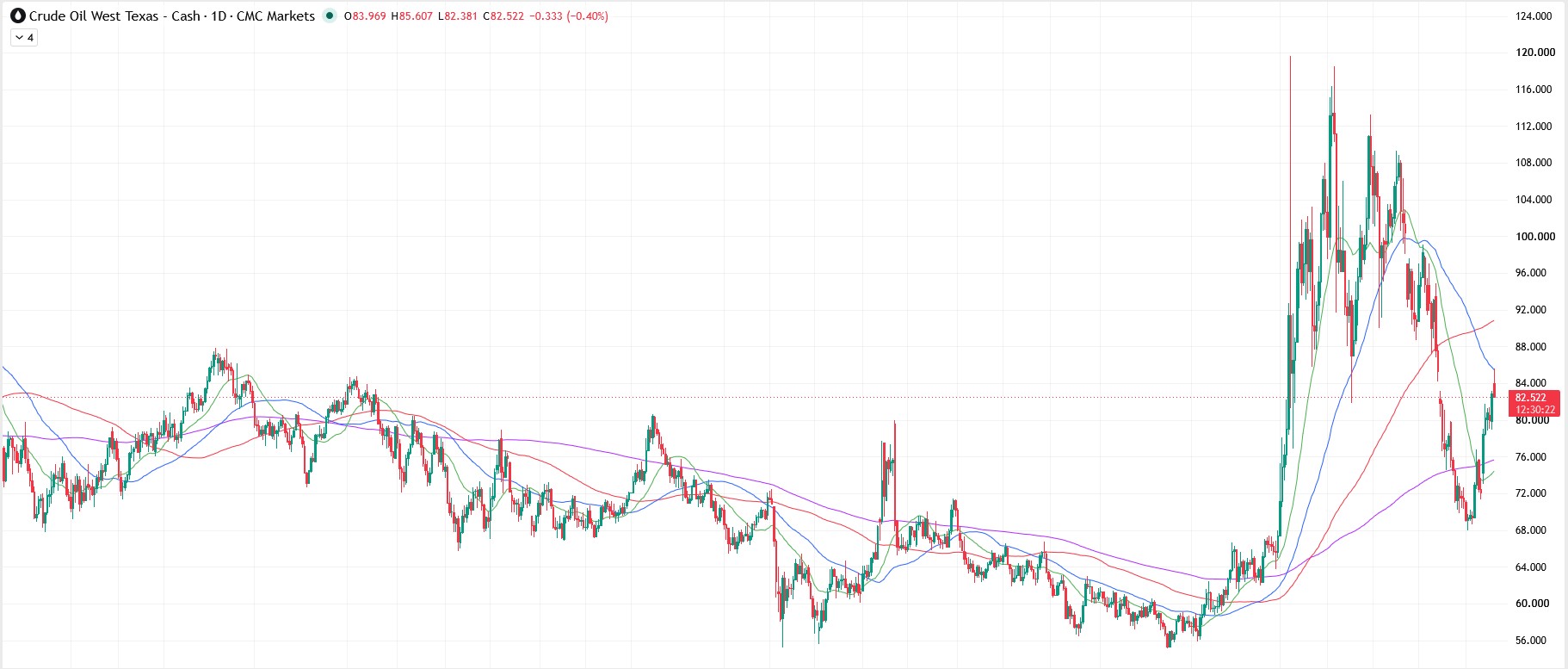
WTI continues to trade above the $80 level after rebounding sharply from recent lows, with the daily chart showing buyers defending an important support area. However, the rally has slowed below recent highs, suggesting that traders remain cautious despite elevated geopolitical risks.
The ongoing war in the Middle East continues to dominate market sentiment as the conflict between the United States and Iran raises concerns about regional oil infrastructure and shipping routes through the Strait of Hormuz.
Supply risks offset higher OPEC+ production
The latest OPEC+ decision to gradually increase August production would normally weigh on prices, but the market remains focused on potential supply disruptions rather than additional output. Traders continue to price in the risk of further interruptions to exports from the Gulf, while uncertainty surrounding tanker traffic has kept the geopolitical risk premium elevated. The International Energy Agency also noted that the outlook remains highly dependent on whether regional tensions ease in the coming months.
Macroeconomic outlook adds another layer of uncertainty
Recent U.S. inflation data reinforced expectations that underlying price pressures are moderating, but stronger energy prices threaten to complicate the Federal Reserve's policy outlook. Higher crude prices could slow the pace of future monetary easing if they feed into broader inflation, while investors also continue monitoring global demand prospects, particularly in China and Europe. At the same time, resilient refinery activity and relatively tight refined fuel markets continue to provide underlying support for crude despite concerns about economic growth.
Technical recovery faces important resistance
From a technical perspective, WTI has recovered significantly from its recent correction, but the chart shows that prices remain below short and medium-term resistance after failing to sustain the previous rally. Momentum has improved compared with earlier this month, although buyers still need a decisive break above nearby resistance to strengthen the bullish outlook. Until then, volatility is likely to remain elevated as traders react to headlines from the Middle East, OPEC+ policy developments, U.S. inventory data, and incoming macroeconomic releases.
A worrying signal for oil bulls is that, despite every escalation in the Middle East, as I noted in the article WTI holds above $80 as Middle East tensions keep geopolitical premium elevated, each rally in the oil market continues to attract fresh selling interest. This suggests that downside risks remain elevated, with a return toward the $76 to $72 area still a realistic possibility.





Latest WTI News





-
 Afghanistan
-
 Albania
-
 Algeria
-
 Angola
-
 Argentina
-
 Armenia
-
 Australia
-
 Austria
-
 Azerbaijan
-
 Bahamas
-
 Bahrain
-
 Bangladesh
-
 Belarus
-
 Belgium
-
 Bolivia
-
 Botswana
-
 Brazil
-
 Brunei
-
 Bulgaria
-
 Cambodia
-
 Cameroon
-
 Canada
-
 Chile
Chile
-
 China
China
-
 Colombia
-
 Congo
Congo
-
 Costa Rica
-
 Cote d'Ivoire
-
 Croatia
-
 Cuba
Cuba
-
 Cyprus
-
 Czechia
-
 DR Congo
-
 Denmark
-
 Dominican Republic
-
 Ecuador
-
 Egypt
Egypt
-
 El Salvador
-
 Estonia
-
 Eswatini
-
 Ethiopia
-
 Finland
-
 France
-
 Georgia
-
 Germany
-
 Ghana
Ghana
-
 Greece
-
 Haiti
Haiti
-
 Hong Kong
-
 Hungary
-
 India
India
-
 Indonesia
-
 Iran, Islamic republic
-
 Iraq
Iraq
-
 Ireland
-
 Israel
-
 Italy
Italy
-
 Jamaica
-
 Japan
Japan
-
 Jordan
-
 Kazakhstan
-
 Kenya
Kenya
-
 Korea
Korea
-
 Kuwait
-
 Kyrgyzstan
-
 Laos
Laos
-
 Latvia
-
 Lebanon
-
 Lesotho
-
 Libya
Libya
-
 Lithuania
-
 Luxembourg
-
 Madagascar
-
 Malaysia
-
 Malta
Malta
-
 Mauritius
-
 Mexico
-
 Moldova
-
 Mongolia
-
 Montenegro
-
 Morocco
-
 Mozambique
-
 Myanmar
-
 Namibia
-
 Nepal
Nepal
-
 Netherlands
-
 New Zealand
-
 Nigeria
-
 North Macedonia
-
 Norway
-
 Oman
Oman
-
 Pakistan
-
 Palestine
-
 Panama
-
 Papua New Guinea
-
 Paraguay
-
 Peru
Peru
-
 Philippines
-
 Poland
-
 Portugal
-
 Puerto Rico
-
 Qatar
Qatar
-
 Reunion
-
 Romania
-
 Rwanda
-
 Saudi Arabia
-
 Serbia
-
 Singapore
-
 Slovakia
-
 Slovenia
-
 Somalia
-
 South Africa
-
 Spain
Spain
-
 Sri Lanka
-
 Sweden
-
 Switzerland
-
 Syria
Syria
-
 Taiwan
-
 Tajikistan
-
 Tanzania
-
 Thailand
-
 Trinidad and Tobago
-
 Tunisia
-
 Turkey
-
 UAE
UAE
-
 Uganda
-
 Ukraine
-
 United Kingdom
-
United States
-
 Uruguay
-
 Uzbekistan
-
 Venezuela
-
 Vietnam
-
 Yemen
Yemen
-
 Zambia
-
 Zimbabwe
- Forex
- Crypto












