

Global EV market posts September sales decline as North America and China weaken

Global electric vehicle demand loses momentum in September after six straight months of growth, as weakness in two of the largest markets outweighs record buying in Europe. The downturn reflects uneven regional conditions, with Europe supported by consumer demand and policy incentives while North America and China face sharper pressure.
Highlights
- Global EV sales fell 2% in September to 2.15 million units, but year-to-date volumes are up 3% at 15.5 million vehicles.
- North American EV sales dropped 44% in September, reflecting the impact of expiring U.S. federal tax credits and a strong prior-year base.
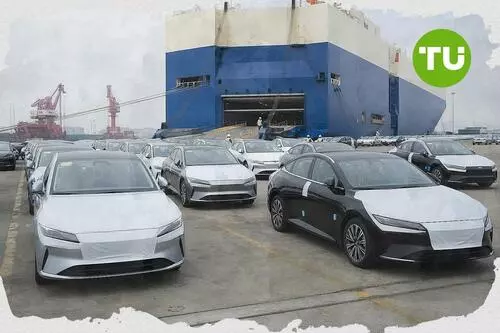
- Chinese EV sales declined 18% to 1.11 million vehicles, increasing pressure on automakers to focus on exports amid weaker domestic demand.
September sales data shows widening regional split
As reported by Reuters, citing Benchmark Mineral Intelligence, global EV sales fall 2% in September to 2.15 million vehicles, while year-to-date volumes are up 3% at 15.5 million units.The data points to a growing divergence across major EV markets. Europe records its strongest month on record, with nearly 600,000 EVs sold in September, 10% above the previous high set in June, according to BMI data manager Charles Lester.
Tax credit changes and weak Chinese demand weigh on outlook
North American sales drop 44%, marking the steepest monthly decline this year as the market compares with a strong year-earlier period when buyers rushed to dealerships before U.S. federal EV tax credits expired at the end of September 2025.Lester says those comparisons will ease from the fourth quarter as the market laps the post-tax-credit slump. In China, sales fall 18% to 1.11 million vehicles, pushing carmakers to rely increasingly on exports.
In our earlier article on BYD Malaysia’s local assembly plans, we covered the company’s move to appoint Inokom Corporation as its CKD assembly partner in Kulim, following the decision not to proceed with a dedicated plant in Tanjung Malim. We also noted that the rollout could strengthen Malaysia’s automotive ecosystem, although key details such as models and production timing were still undisclosed.










-
 Afghanistan
-
 Albania
-
 Algeria
-
 Angola
-
 Argentina
-
 Armenia
-
 Australia
-
 Austria
-
 Azerbaijan
-
 Bahamas
-
 Bahrain
-
 Bangladesh
-
 Belarus
-
 Belgium
-
 Bolivia
-
 Botswana
-
 Brazil
-
 Brunei
-
 Bulgaria
-
 Cambodia
-
 Cameroon
-
 Canada
-
 Chile
-
 China
-
 Colombia
-
 Congo
-
 Costa Rica
-
 Cote d'Ivoire
-
 Croatia
-
 Cuba
-
 Cyprus
-
 Czechia
-
 DR Congo
-
 Denmark
-
 Dominican Republic
-
 Ecuador
-
 Egypt
-
 El Salvador
-
 Estonia
-
 Eswatini
-
 Ethiopia
-
 Finland
-
 France
-
 Georgia
-
 Germany
-
 Ghana
-
 Greece
-
 Haiti
-
 Hong Kong
-
 Hungary
-
 India
-
 Indonesia
-
 Iran, Islamic republic
-
 Iraq
-
 Ireland
-
 Israel
-
 Italy
-
 Jamaica
-
 Japan
-
 Jordan
-
 Kazakhstan
-
 Kenya
-
 Korea
-
 Kuwait
-
 Kyrgyzstan
-
 Laos
-
 Latvia
-
 Lebanon
-
 Lesotho
-
 Libya
-
 Lithuania
-
 Luxembourg
-
 Madagascar
-
 Malaysia
-
 Malta
-
 Mauritius
-
 Mexico
-
 Moldova
-
 Mongolia
-
 Montenegro
-
 Morocco
-
 Mozambique
-
 Myanmar
-
 Namibia
-
 Nepal
-
 Netherlands
-
 New Zealand
-
 Nigeria
-
 North Macedonia
-
 Norway
-
 Oman
-
 Pakistan
-
 Palestine
-
 Panama
-
 Papua New Guinea
-
 Paraguay
-
 Peru
-
 Philippines
-
 Poland
-
 Portugal
-
 Puerto Rico
-
 Qatar
-
 Reunion
-
 Romania
-
 Rwanda
-
 Saudi Arabia
-
 Serbia
-
 Singapore
-
 Slovakia
-
 Slovenia
-
 Somalia
-
 South Africa
-
 Spain
-
 Sri Lanka
-
 Sweden
-
 Switzerland
-
 Syria
-
 Taiwan
-
 Tajikistan
-
 Tanzania
-
 Thailand
-
 Trinidad and Tobago
-
 Tunisia
-
 Turkey
-
 UAE
-
 Uganda
-
 Ukraine
-
 United Kingdom
-
United States
-
 Uruguay
-
 Uzbekistan
-
 Venezuela
-
 Vietnam
-
 Yemen
-
 Zambia
-
 Zimbabwe
- Forex
- Crypto












