

Volkswagen’s Xpeng partnership struggles to revive China EV sales

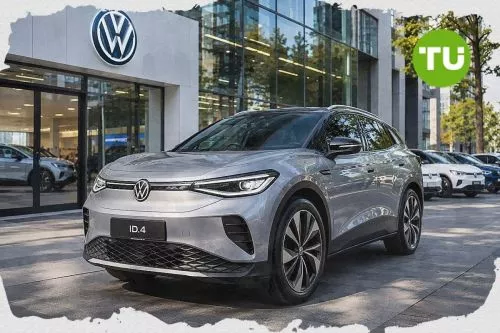
Volkswagen’s effort to rebuild its China business through a 2023 partnership with Xpeng is showing weak early results in a market that has become central to the carmaker’s wider restructuring. The alliance’s first major product, the ID. UNYX 08 electric SUV, is selling far below internal targets as local rivals outpace it on technology, pricing and distribution.
Highlights
- Volkswagen's ID. UNYX 08 sold an average of 267 units per month between April and August, far below its 3,622 monthly target, exposing major shortfalls in its China EV strategy.
- UNYX 08's $34,260 price point failed to compete with Xiaomi and Zeekr, whose comparable models sold almost 57,000 and over 21,000 units respectively over the same period.
- Volkswagen forecasts nearly 4,900 monthly and over 90,000 annual sales for the upcoming UNYX 09 despite a 17% price cut on the underperforming UNYX 08 and a projected 20% contraction in China's car market this year.
Weak launch exposes strategy gaps in China
As reported by Reuters, the first clear test of Volkswagen’s collaboration with Xpeng is underlining how difficult it remains for the German automaker to regain ground in China’s fast-moving electric-vehicle market. Data from automotive consultancy ThinkerCar show the ID. UNYX 08 sold an average of 267 vehicles a month between its April launch and August, well below the 3,622 monthly sales target laid out in company planning documents for this year.The weak performance adds to pressure on Volkswagen in a market where it once dominated for decades until 2022. China, which previously contributed nearly 50% of group profits, now accounts for about 10%, a reversal that has helped drive the biggest restructuring in the company’s 89-year history.
Volkswagen’s challenge is not only sales volume but also product competitiveness. The UNYX 08 launched at about $34,260, while similarly priced Chinese rivals offered more advanced features. ThinkerCar data show Xiaomi sold almost 57,000 YU7s and Zeekr sold more than 21,000 7Xs between April and August, compared with about 1,300 UNYX 08s over the same period.
Analysts said the model entered a market where consumer expectations are shifting quickly toward higher-end technology and faster product cycles. Pedro Pacheco, vice president of research at Gartner, said Chinese buyers question paying more for a German car when comparable technology is available at lower prices, while Bernstein analyst Stephen Reitman said designs shown by Volkswagen in 2024 already looked familiar at the Beijing auto show the next day.
China pressure deepens Volkswagen’s restructuring challenge
Distribution decisions have also weighed on the model’s rollout. Volkswagen largely sold the UNYX 08 through a separate dealer network run by Volkswagen Anhui, its EV-focused venture, instead of relying on the more than 3,000 dealerships it operates with joint-venture partners FAW and SAIC. The smaller Anhui footprint limited visibility for the vehicle, although Volkswagen said sales of Anhui models were growing and that the unit had expanded to 166 outlets while working with FAW-Volkswagen at selected dealerships.The problems around the UNYX 08 follow a broader pattern in China, where Volkswagen has pursued multiple partnerships across batteries, autonomous driving, charging infrastructure, software and even flying cars. Some of those efforts failed to deliver, and others created new complications, including legal disputes and shareholder conflicts. Two people familiar with Volkswagen’s China partnerships said the company internally described its alliance approach as “marriage and divorce”, forming partnerships to learn from local companies before moving on.
Even so, Volkswagen is maintaining ambitious plans for the next Xpeng-linked model, the UNYX 09 sedan, which is due in showrooms this month. Company product-planning documents forecast average monthly sales of nearly 4,900 vehicles and annual volume above 90,000 by 2034, despite the company recently advertising the UNYX 08 at a 17% discount to its April launch price.
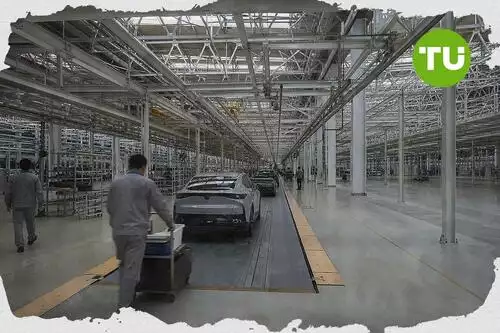
The stakes are high because Volkswagen’s China exposure remains unusually deep while the market itself is under heavy strain. In a September 10 message to staff, executive Ralf Brandstaetter said Volkswagen expected China’s passenger-car market to shrink by 20% this year, or about 4.5 million vehicles, with industry profit margins down to 1.5% and product cycles shortened from seven years to three. He said the company must align production capacity with market realities and remove unnecessary duplication across its China operations, highlighting how a delayed response to local competition is now colliding with a harsher operating environment.
In our earlier article, China’s Q3 growth outlook and Beijing’s latest policy support were in focus, with economists expecting only a modest pickup while overall momentum stays near the low end of the official target. We noted that targeted rate cuts, mortgage subsidies and the use of unused local-government debt quotas aim to stabilize activity, but weak consumption, subdued private investment and lingering property-sector stress continue to weigh on domestic demand even as exports provide support.






Latest Volkswagen News


-
 Afghanistan
-
 Albania
-
 Algeria
-
 Angola
-
 Argentina
-
 Armenia
-
 Australia
-
 Austria
-
 Azerbaijan
-
 Bahamas
-
 Bahrain
-
 Bangladesh
-
 Belarus
-
 Belgium
-
 Bolivia
-
 Botswana
-
 Brazil
-
 Brunei
-
 Bulgaria
-
 Cambodia
-
 Cameroon
-
 Canada
-
 Chile
-
 China
-
 Colombia
-
 Congo
-
 Costa Rica
-
 Cote d'Ivoire
-
 Croatia
-
 Cuba
-
 Cyprus
-
 Czechia
-
 DR Congo
-
 Denmark
-
 Dominican Republic
-
 Ecuador
-
 Egypt
-
 El Salvador
-
 Estonia
-
 Eswatini
-
 Ethiopia
-
 Finland
-
 France
-
 Georgia
-
 Germany
-
 Ghana
-
 Greece
-
 Haiti
-
 Hong Kong
-
 Hungary
-
 India
-
 Indonesia
-
 Iran, Islamic republic
-
 Iraq
-
 Ireland
-
 Israel
-
 Italy
-
 Jamaica
-
 Japan
-
 Jordan
-
 Kazakhstan
-
 Kenya
-
 Korea
-
 Kuwait
-
 Kyrgyzstan
-
 Laos
-
 Latvia
-
 Lebanon
-
 Lesotho
-
 Libya
-
 Lithuania
-
 Luxembourg
-
 Madagascar
-
 Malaysia
-
 Malta
-
 Mauritius
-
 Mexico
-
 Moldova
-
 Mongolia
-
 Montenegro
-
 Morocco
-
 Mozambique
-
 Myanmar
-
 Namibia
-
 Nepal
-
 Netherlands
-
 New Zealand
-
 Nigeria
-
 North Macedonia
-
 Norway
-
 Oman
-
 Pakistan
-
 Palestine
-
 Panama
-
 Papua New Guinea
-
 Paraguay
-
 Peru
-
 Philippines
-
 Poland
-
 Portugal
-
 Puerto Rico
-
 Qatar
-
 Reunion
-
 Romania
-
 Rwanda
-
 Saudi Arabia
-
 Serbia
-
 Singapore
-
 Slovakia
-
 Slovenia
-
 Somalia
-
 South Africa
-
 Spain
-
 Sri Lanka
-
 Sweden
-
 Switzerland
-
 Syria
-
 Taiwan
-
 Tajikistan
-
 Tanzania
-
 Thailand
-
 Trinidad and Tobago
-
 Tunisia
-
 Turkey
-
 UAE
-
 Uganda
-
 Ukraine
-
 United Kingdom
-
United States
-
 Uruguay
-
 Uzbekistan
-
 Venezuela
-
 Vietnam
-
 Yemen
-
 Zambia
-
 Zimbabwe
- Forex
- Crypto












