
Thailand expands derivatives law to include bitcoin and digital assets
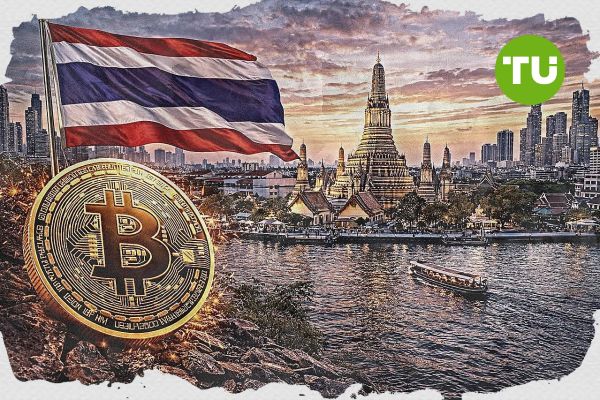
Thailand is moving to formally integrate digital assets into its regulated derivatives market, marking a significant shift in how cryptocurrencies are treated within the country’s capital markets framework.
The Cabinet on Feb. 10 approved a proposal from the Finance Ministry to expand the list of permissible underlying assets under the Derivatives Act B.E. 2546 (2003), paving the way for digital assets such as Bitcoin to serve as reference instruments for regulated derivatives products.
Digital assets recognized as underlying instruments
The Securities and Exchange Commission (SEC) will now amend the Derivatives Act and develop accompanying regulations to allow digital asset business operators to offer derivative contracts referencing cryptocurrencies. The regulator will also review licensing requirements for derivatives exchanges and clearing houses to ensure they are suitable for new types of underlying assets.
SEC Secretary-General Pornanong Budsaratragoon said the reform will “strengthen the recognition of crypto as an asset class, promote market inclusiveness, enhance portfolio diversification, and improve risk management for investors.” In a separate statement, she added: “This development will help promote more inclusive market growth, facilitate diversification and more effective risk management, and expand investment opportunities for a broader range of investors.”
The SEC will coordinate with Thailand Futures Exchange Public Company Limited (TFEX) to determine contract specifications for digital asset-linked derivatives, aligning them with the risk characteristics and practical market usage of cryptocurrencies.
Institutional focus and market modernization
The move aligns with Thailand’s broader effort to modernize its derivatives market in line with international standards. The government aims to strengthen oversight and investor protection while positioning the country as a regional hub for institutional crypto trading.
Nirun Fuwattananukul, chief executive of Binance Thailand, told the Bangkok Post that the reform was a “watershed moment” and a “strong signal” that Thailand is positioning itself as a “forward-looking leader” in Southeast Asia’s digital economy.
Thailand’s regulatory framework for digital assets dates back to 2018, when the Emergency Decree on Digital Asset Businesses granted the SEC licensing authority over exchanges and token issuers. Since then, oversight has expanded to include stricter operational rules, cross-border supervision and the approval of stablecoin trading on local exchanges.
Safeguards and ongoing restrictions
While derivatives linked to crypto will be permitted, retail use of cryptocurrencies for payments remains restricted. The Bank of Thailand continues to prohibit crypto payments, and stablecoin use is subject to limits. Regulators have also intensified efforts to combat money laundering through digital assets.
The SEC said it will ensure that innovation proceeds within a robust supervisory framework, emphasizing disclosure standards, capital requirements and investor safeguards.
Read also: U.S. government shutdown probability reaches 83%, crypto market cap falls to $2.3 trillion





Latest Bitcoin News










-
 Afghanistan
-
 Albania
-
 Algeria
-
 Angola
-
 Argentina
-
 Armenia
-
 Australia
-
 Austria
-
 Azerbaijan
-
 Bahamas
-
 Bahrain
-
 Bangladesh
-
 Belarus
-
 Belgium
-
 Bolivia
-
 Botswana
-
 Brazil
-
 Brunei
-
 Bulgaria
-
 Cambodia
-
 Cameroon
-
 Canada
-
 Chile
Chile
-
 China
China
-
 Colombia
-
 Congo
Congo
-
 Costa Rica
-
 Cote d'Ivoire
-
 Croatia
-
 Cuba
Cuba
-
 Cyprus
-
 Czechia
-
 DR Congo
-
 Denmark
-
 Dominican Republic
-
 Ecuador
-
 Egypt
Egypt
-
 El Salvador
-
 Estonia
-
 Eswatini
-
 Ethiopia
-
 Finland
-
 France
-
 Georgia
-
 Germany
-
 Ghana
Ghana
-
 Greece
-
 Haiti
Haiti
-
 Hong Kong
-
 Hungary
-
 India
India
-
 Indonesia
-
 Iran, Islamic republic
-
 Iraq
Iraq
-
 Ireland
-
 Israel
-
 Italy
Italy
-
 Jamaica
-
 Japan
Japan
-
 Jordan
-
 Kazakhstan
-
 Kenya
Kenya
-
 Korea
Korea
-
 Kuwait
-
 Kyrgyzstan
-
 Laos
Laos
-
 Latvia
-
 Lebanon
-
 Lesotho
-
 Libya
Libya
-
 Lithuania
-
 Luxembourg
-
 Madagascar
-
 Malaysia
-
 Malta
Malta
-
 Mauritius
-
 Mexico
-
 Moldova
-
 Mongolia
-
 Montenegro
-
 Morocco
-
 Mozambique
-
 Myanmar
-
 Namibia
-
 Nepal
Nepal
-
 Netherlands
-
 New Zealand
-
 Nigeria
-
 North Macedonia
-
 Norway
-
 Oman
Oman
-
 Pakistan
-
 Palestine
-
 Panama
-
 Papua New Guinea
-
 Paraguay
-
 Peru
Peru
-
 Philippines
-
 Poland
-
 Portugal
-
 Puerto Rico
-
 Qatar
Qatar
-
 Reunion
-
 Romania
-
 Rwanda
-
 Saudi Arabia
-
 Serbia
-
 Singapore
-
 Slovakia
-
 Slovenia
-
 Somalia
-
 South Africa
-
 Spain
Spain
-
 Sri Lanka
-
 Sweden
-
 Switzerland
-
 Syria
Syria
-
 Taiwan
-
 Tajikistan
-
 Tanzania
-
 Thailand
-
 Trinidad and Tobago
-
 Tunisia
-
 Turkey
-
 UAE
UAE
-
 Uganda
-
 Ukraine
-
 United Kingdom
-
United States
-
 Uruguay
-
 Uzbekistan
-
 Venezuela
-
 Vietnam
-
 Yemen
Yemen
-
 Zambia
-
 Zimbabwe
- Forex
- Crypto











