
The tweet was deleted by the author.
But we saved everything 🙂.

Uniswap (UNI) is currently trading at $2.734, reflecting a $0.16 drop from the previous close and representing a 5.53% decline for the day. Since the market opened, UNI has traded lower, heading toward the bottom of today's range, as persistent selling pressure and unfavorable technical signals outweigh any rebound attempts. The current decline is driven primarily by technical weakness across multiple timeframes, despite intraday oversold indicators flagging potential for a temporary bounce. Broader bearish sentiment continues to dominate trading activity.
 3.59
3.7600
3.59
3.7600
Hayden Adams highlighted the launch of direct token auctions within the Uniswap interface, describing it as an "incredibly powerful tool for price discovery and liquidity bootstrapping" and noting that portions of auction proceeds will help seed new liquidity pools. This development could foster greater adoption and increase protocol liquidity, positively impacting market sentiment and UNI's governance ecosystem. However, despite this constructive announcement, the market is prioritizing technical resistance and selling momentum over the potential growth signal from the feature release. News coverage continues to underline Uniswap's established position in decentralized finance, its automated market maker model, and the critical role of security and ongoing Ethereum upgrades in shaping its ecosystem.
UNI remains below the 20, 50, and 200-day moving averages, confirming persistent downward pressure with dynamic resistance at $3.0225 and no golden or death cross detected. The nearest key support is near $2.50, while resistance lies just above at $3.02. Most dominant trend signals, including RSI, indicate prevailing selling, with intraday moves oversold and a baseline expectation of sideways action within $2.50 to $2.97 over the next five days. The positive signal from the tweet has not been reflected in price action, which adds caution to the near-term outlook.
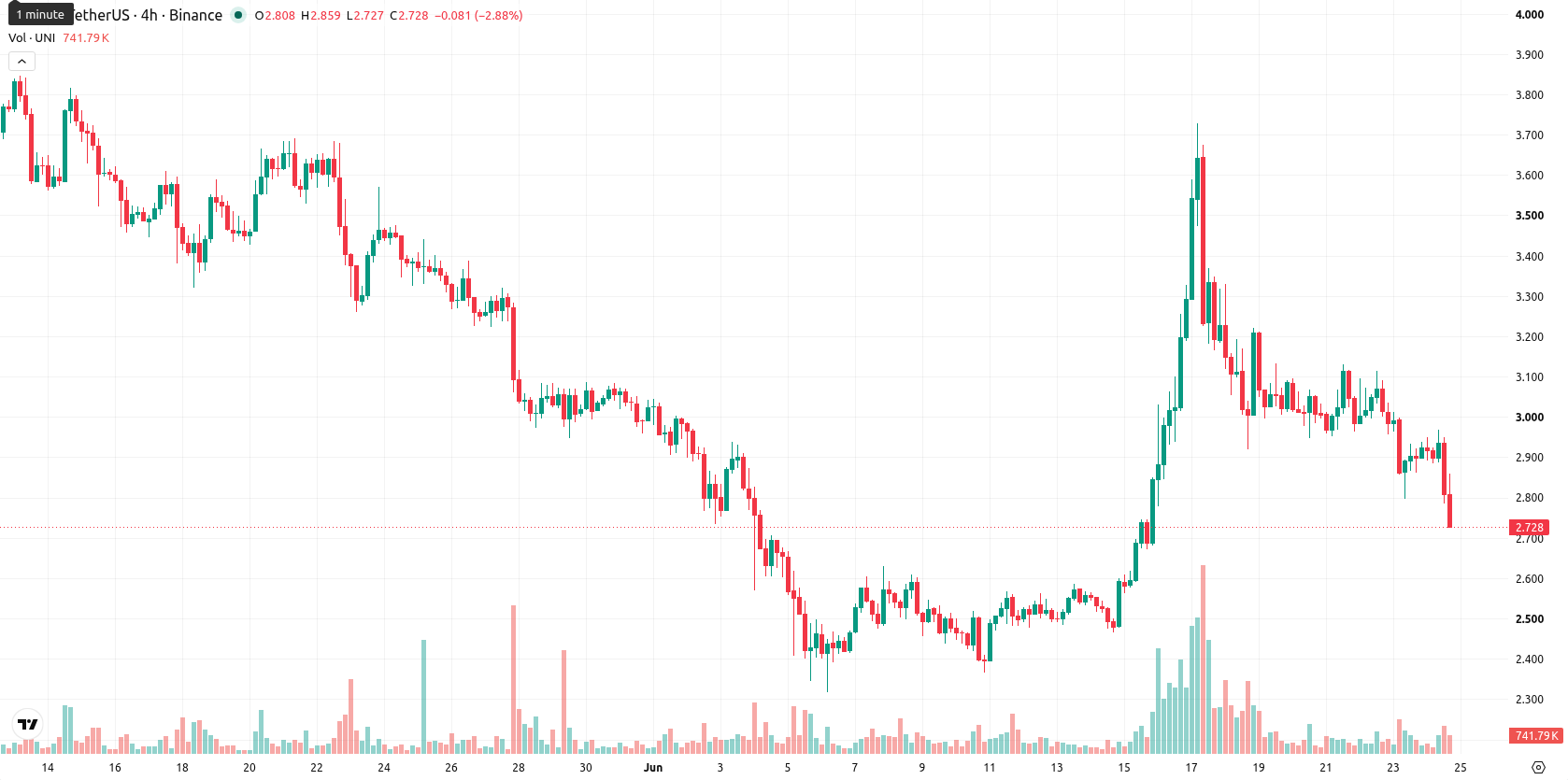
Earlier, analysts noted that federal scrutiny was increasing on financial intermediaries and distribution costs across regulated markets, with questions arising about the value and incentive structures involved. For Uniswap, focus now shifts to how decentralized platforms may alter traditional brokerage models, with the prevailing scenario suggesting that regulatory themes and evolving technology could influence both trading participation and ecosystem development going forward.

 Afghanistan
 Albania
 Algeria
 Angola
 Argentina
 Armenia
 Australia
 Austria
 Azerbaijan
 Bahamas
 Bahrain
 Bangladesh
 Belarus
 Belgium
 Bolivia
 Botswana
 Brazil
 Brunei
 Bulgaria
 Cambodia
 Cameroon
 Canada
 Chile
Chile
 China
China
 Colombia
 Congo
Congo
 Costa Rica
 Cote d'Ivoire
 Croatia
 Cuba
Cuba
 Cyprus
 Czechia
 DR Congo
 Denmark
 Dominican Republic
 Ecuador
 Egypt
Egypt
 El Salvador
 Estonia
 Eswatini
 Ethiopia
 Finland
 France
 Georgia
 Germany
 Ghana
Ghana
 Greece
 Haiti
Haiti
 Hong Kong
 Hungary
 India
India
 Indonesia
 Iran, Islamic republic
 Iraq
Iraq
 Ireland
 Israel
 Italy
Italy
 Jamaica
 Japan
Japan
 Jordan
 Kazakhstan
 Kenya
Kenya
 Korea
Korea
 Kuwait
 Kyrgyzstan
 Laos
Laos
 Latvia
 Lebanon
 Lesotho
 Libya
Libya
 Lithuania
 Luxembourg
 Madagascar
 Malaysia
 Malta
Malta
 Mauritius
 Mexico
 Moldova
 Mongolia
 Montenegro
 Morocco
 Mozambique
 Myanmar
 Namibia
 Nepal
Nepal
 Netherlands
 New Zealand
 Nigeria
 North Macedonia
 Norway
 Oman
Oman
 Pakistan
 Palestine
 Panama
 Papua New Guinea
 Paraguay
 Peru
Peru
 Philippines
 Poland
 Portugal
 Puerto Rico
 Qatar
Qatar
 Reunion
 Romania
 Rwanda
 Saudi Arabia
 Serbia
 Singapore
 Slovakia
 Slovenia
 Somalia
 South Africa
 Spain
Spain
 Sri Lanka
 Sweden
 Switzerland
 Syria
Syria
 Taiwan
 Tajikistan
 Tanzania
 Thailand
 Trinidad and Tobago
 Tunisia
 Turkey
 UAE
UAE
 Uganda
 Ukraine
 United Kingdom
United States
United Kingdom
United States
 Uruguay
 Uzbekistan
 Venezuela
 Vietnam
 Yemen
Yemen
 Zambia
 Zimbabwe