The tweet was deleted by the author.
But we saved everything 🙂.


Cryptocurrencies promised to make money more transparent. In practice, they have given corruption new tools that allow millions of dollars to move outside traditional banking channels. But this system has a weak point: digital money leaves a trail that is almost impossible to erase.
In 2026, the Organisation for Economic Co-operation and Development (OECD) released a major report on the fight against corruption in more than 50 countries. The authors concluded that in many countries, the problem is not the absence of anti-corruption laws, but how they work in practice.
View post on X Loading...
Public procurement remains one of the most vulnerable areas. Governments use it to buy medicines and build roads, schools and infrastructure, awarding contracts worth huge sums. In OECD countries alone, public procurement accounts for around 13% of GDP. According to estimates cited by the organization, corruption and poor management may cause the loss of between 8% and 25% of public investment worldwide.
The OECD believes digital technologies can help identify suspicious deals. For example, systems can detect when one company wins an unusually large number of tenders, when too few bidders repeatedly participate, or when a particular official regularly awards contracts to the same suppliers. However, such tools are still used only on a limited scale. Of the 40 countries studied, only half use data analysis, AI, blockchain or other digital technologies to identify risks in public procurement. Data analysis is used by 16 countries, while only three use AI.
Blockchain is even less common. The only specific example cited in the study is Peru. Since 2019, government agency Perú Compras has recorded orders from electronic catalogs and supplier bids on a blockchain. These records are harder to alter without detection, while the authenticity of documents can be checked using a QR code.
But the same technology that helps governments record transactions and verify documents has also given corrupt actors a new way to transfer money. A bribe no longer necessarily requires cash, a bank account or an offshore company. Cryptocurrency can be sent directly to a wallet within minutes.
One of the most prominent examples involves FTX founder Sam Bankman-Fried. According to the U.S. Department of Justice, he and his associates authorized a cryptocurrency payment of around $40 million intended for Chinese officials. The goal was to secure the release of Alameda Research crypto accounts worth roughly $1 billion.
View post on X Loading...
There have also been more direct cases. In 2022, U.S. prosecutors accused two Chinese intelligence officers of attempting to bribe a U.S. government employee. They paid him around $41,000 in Bitcoin in exchange for a confidential document. The recipient was actually working with the FBI, so the payment became part of the evidence in the case.
Another problem arises when officials use cryptocurrency to explain the origin of their wealth. For example, someone can claim that they bought Bitcoin many years ago, when it was worth tens or hundreds of times less. Verifying such a claim is more difficult than checking a bank account or real estate: investigators need the purchase date, wallet address and transaction history.
But sending cryptocurrency to someone else's wallet is far from the only way to benefit from it. If a politician or affiliated entities launch their own token, interested parties can buy the asset on the market. Such a purchase is not a bribe in itself, but it can create a conflict of interest, particularly if token holders gain access to the politician.
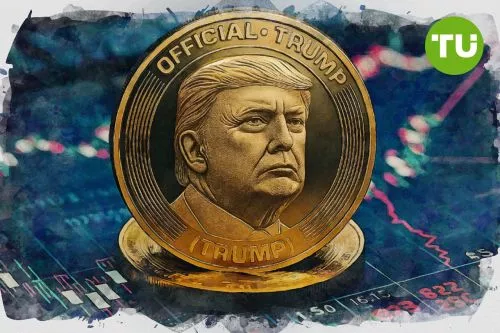
The most prominent example is the TRUMP memecoin, launched shortly before Donald Trump's inauguration in January 2025. Several months later, the project's team invited the 220 largest token holders to a dinner with the president at his golf club in Virginia. The largest investors received additional privileges, including access to a separate reception.
The situation raised concerns among Democrats and ethics experts. They argued that token buyers, including foreign investors, could invest large sums in an asset linked to the president while also gaining an opportunity to meet him in person. At the same time, the identities of cryptocurrency wallet holders are not disclosed in the same way as information about traditional political donations.
In 2026, this conflict-of-interest debate became part of the broader dispute over crypto regulation. During discussions over the CLARITY Act, senators proposed banning elected federal officials and their spouses from issuing digital assets, while requiring large crypto holdings to be sold or placed in a blind trust. Donald Trump agreed to some of these restrictions, although disagreements over his crypto assets remained.
Crypto schemes have one feature that cash does not: most transactions on public blockchains can still be viewed years later. The network records the sender and recipient addresses, the amount and the time of the transfer. The wallet owner's name is not shown, but investigators can link an address to a person through crypto exchanges, bank transactions, seized devices and other data.
These methods are already being used in practice. In 2026, Italy's Guardia di Finanza uncovered a scheme involving more than €1 million in undeclared cryptocurrency profits. Investigators started with the suspect's hardware wallet, reconstructed the chain of transactions and linked some of the transfers to centralized exchanges. These points can help investigators move from an anonymous address to a specific owner.
Criminals are constantly making money trails more complicated by moving funds between different blockchains, splitting transactions into smaller amounts and using crypto-laundering services. According to Chainalysis, known illicit crypto addresses received at least $154 billion in 2025, up 162% from the previous year. But even a long chain of transactions remains on the blockchain and can be reconstructed years later.
However, blockchain only shows the movement of money. It cannot determine whether a $1 million transfer was an investment, payment for a service or a bribe to an official. Investigators still need to identify the wallet owners and prove that the money was transferred in exchange for a specific decision or service. Cryptocurrency alone cannot stop corruption — it only changes the way money is transferred. But unlike cash, public blockchains preserve a digital trail that investigators can return to even years later.


 Afghanistan
 Albania
 Algeria
 Angola
 Argentina
 Armenia
 Australia
 Austria
 Azerbaijan
 Bahamas
 Bahrain
 Bangladesh
 Belarus
 Belgium
 Bolivia
 Botswana
 Brazil
 Brunei
 Bulgaria
 Cambodia
 Cameroon
 Canada
 Chile
Chile
 China
China
 Colombia
 Congo
Congo
 Costa Rica
 Cote d'Ivoire
 Croatia
 Cuba
Cuba
 Cyprus
 Czechia
 DR Congo
 Denmark
 Dominican Republic
 Ecuador
 Egypt
Egypt
 El Salvador
 Estonia
 Eswatini
 Ethiopia
 Finland
 France
 Georgia
 Germany
 Ghana
Ghana
 Greece
 Haiti
Haiti
 Hong Kong
 Hungary
 India
India
 Indonesia
 Iran, Islamic republic
 Iraq
Iraq
 Ireland
 Israel
 Italy
Italy
 Jamaica
 Japan
Japan
 Jordan
 Kazakhstan
 Kenya
Kenya
 Korea
Korea
 Kuwait
 Kyrgyzstan
 Laos
Laos
 Latvia
 Lebanon
 Lesotho
 Libya
Libya
 Lithuania
 Luxembourg
 Madagascar
 Malaysia
 Malta
Malta
 Mauritius
 Mexico
 Moldova
 Mongolia
 Montenegro
 Morocco
 Mozambique
 Myanmar
 Namibia
 Nepal
Nepal
 Netherlands
 New Zealand
 Nigeria
 North Macedonia
 Norway
 Oman
Oman
 Pakistan
 Palestine
 Panama
 Papua New Guinea
 Paraguay
 Peru
Peru
 Philippines
 Poland
 Portugal
 Puerto Rico
 Qatar
Qatar
 Reunion
 Romania
 Rwanda
 Saudi Arabia
 Serbia
 Singapore
 Slovakia
 Slovenia
 Somalia
 South Africa
 Spain
Spain
 Sri Lanka
 Sweden
 Switzerland
 Syria
Syria
 Taiwan
 Tajikistan
 Tanzania
 Thailand
 Trinidad and Tobago
 Tunisia
 Turkey
 UAE
UAE
 Uganda
 Ukraine
 United Kingdom
United States
United Kingdom
United States
 Uruguay
 Uzbekistan
 Venezuela
 Vietnam
 Yemen
Yemen
 Zambia
 Zimbabwe