


Google is widening its artificial intelligence chip lineup as competition in accelerators intensifies and investor scrutiny on sector leaders grows. The planned launch of two new tensor processing units next year comes as Nvidia faces added uncertainty from an investigation involving Chief Executive Jensen Huang.
Highlights
- Google plans to launch two new tensor processing units in 2025 targeting confidential computing and large-scale applications, addressing demand for lower-cost AI workloads.
- Bloomberg Intelligence estimates Google's TPU hardware and software sales could surpass $135 billion by 2028, up from $12 billion this year, intensifying competition with Nvidia.
- Nvidia shares dropped 4.3% following news of a board probe into CEO Huang's personal affairs and national security concerns, erasing over $250 billion in market value.
New TPU rollout targets lower-cost AI workloads
As reported by Coindesk, citing Bloomberg Intelligence, Google plans to introduce two specialized tensor processing units next year, one aimed at confidential computing for customers handling sensitive information and another designed for applications that require larger data volumes, including coding and drug discovery.The expansion adds to competitive pressure on Nvidia in a market where cost and performance are increasingly central to customer decisions. Bloomberg Intelligence estimates TPU sales, including related hardware and software, could exceed $135 billion by 2028, up from an estimated $12 billion this year.
Its analysts say Google’s TPUs cost about 30% less than Nvidia’s GPUs, a gap that could weigh on Nvidia’s pricing power and market share as enterprise and cloud customers broaden their AI infrastructure options.
Nvidia probe deepens uncertainty across AI trade
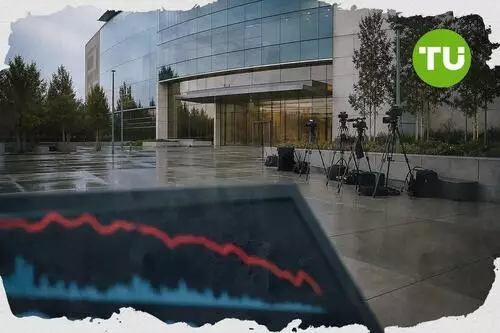
Nvidia shares fell sharply as the company dealt with a board investigation into reports involving Huang’s personal affairs and alleged foreign intelligence targeting. The stock was down 4.3% after earlier falling more steeply, while Google shares rose 3.4% and the broader Nasdaq gained more than 2%.Nvidia lost more than $250 billion in market value on Monday after the board announced the inquiry. Huang admitted an affair with a woman U.S. officials reportedly suspect was recruited by Chinese intelligence, while independent directors and outside lawyers are set to oversee the investigation.
Nvidia says it has no reason to believe national security or company secrets have been compromised, and the board expresses confidence in Huang, who pledges to cooperate. The developments come as the wider AI trade weakens, with neocloud and infrastructure stocks including IREN, Cipher Digital and CoreWeave down 70% or more from their all-time highs.










-
 Afghanistan
-
 Albania
-
 Algeria
-
 Angola
-
 Argentina
-
 Armenia
-
 Australia
-
 Austria
-
 Azerbaijan
-
 Bahamas
-
 Bahrain
-
 Bangladesh
-
 Belarus
-
 Belgium
-
 Bolivia
-
 Botswana
-
 Brazil
-
 Brunei
-
 Bulgaria
-
 Cambodia
-
 Cameroon
-
 Canada
-
 Chile
-
 China
-
 Colombia
-
 Congo
-
 Costa Rica
-
 Cote d'Ivoire
-
 Croatia
-
 Cuba
-
 Cyprus
-
 Czechia
-
 DR Congo
-
 Denmark
-
 Dominican Republic
-
 Ecuador
-
 Egypt
-
 El Salvador
-
 Estonia
-
 Eswatini
-
 Ethiopia
-
 Finland
-
 France
-
 Georgia
-
 Germany
-
 Ghana
-
 Greece
-
 Haiti
-
 Hong Kong
-
 Hungary
-
 India
-
 Indonesia
-
 Iran, Islamic republic
-
 Iraq
-
 Ireland
-
 Israel
-
 Italy
-
 Jamaica
-
 Japan
-
 Jordan
-
 Kazakhstan
-
 Kenya
-
 Korea
-
 Kuwait
-
 Kyrgyzstan
-
 Laos
-
 Latvia
-
 Lebanon
-
 Lesotho
-
 Libya
-
 Lithuania
-
 Luxembourg
-
 Madagascar
-
 Malaysia
-
 Malta
-
 Mauritius
-
 Mexico
-
 Moldova
-
 Mongolia
-
 Montenegro
-
 Morocco
-
 Mozambique
-
 Myanmar
-
 Namibia
-
 Nepal
-
 Netherlands
-
 New Zealand
-
 Nigeria
-
 North Macedonia
-
 Norway
-
 Oman
-
 Pakistan
-
 Palestine
-
 Panama
-
 Papua New Guinea
-
 Paraguay
-
 Peru
-
 Philippines
-
 Poland
-
 Portugal
-
 Puerto Rico
-
 Qatar
-
 Reunion
-
 Romania
-
 Rwanda
-
 Saudi Arabia
-
 Serbia
-
 Singapore
-
 Slovakia
-
 Slovenia
-
 Somalia
-
 South Africa
-
 Spain
-
 Sri Lanka
-
 Sweden
-
 Switzerland
-
 Syria
-
 Taiwan
-
 Tajikistan
-
 Tanzania
-
 Thailand
-
 Trinidad and Tobago
-
 Tunisia
-
 Turkey
-
 UAE
-
 Uganda
-
 Ukraine
-
 United Kingdom
-
United States
-
 Uruguay
-
 Uzbekistan
-
 Venezuela
-
 Vietnam
-
 Yemen
-
 Zambia
-
 Zimbabwe
- Forex
- Crypto












