

Weekend Nvidia trading spotlights rise of perpetual futures

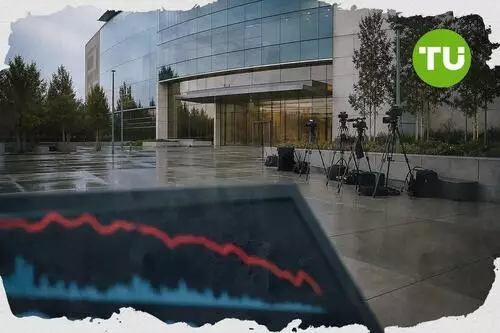
New trading venues are giving investors ways to react to market-moving news before traditional equity markets reopen. Activity tied to Nvidia over the weekend shows how perpetual futures, prediction contracts and extended-hours options are increasingly used for price discovery when regular exchanges are closed.
Highlights
- Nvidia perpetual futures on Hyperliquid's xyz contract fell to $180.15 with $200 million volume Sunday, ahead of Nvidia shares trading 7% lower Monday.
- Prediction contracts on Kalshi regarding Jensen Huang's potential exit as Nvidia CEO saw over $105,000 in volume Sunday, and pre-market Nvidia options volume reached $15 million across 40,000 contracts.
- Rising demand for perpetual futures and after-hours options trading signals persistent investor appetite for round-the-clock price discovery and liquidity amid off-session market-moving news.
Weekend moves reveal demand for round-the-clock pricing
As reported by CNBC, traders turned to newer market instruments on Sunday as questions emerged about a potential scandal involving Nvidia CEO Jensen Huang and its possible effect on the stock.At 3 p.m. E.T., before pre-market equity trading begins, bearish positions start building in Nvidia perpetual futures. Hyperliquid's xyz contract falls as low as $180.15 by 3:30 p.m. E.T. on $200 million in volume, and both Nvidia shares and related perpetual contracts drop below $178 overnight. Nvidia then trades 7% lower on Monday.
Perpetual futures, commonly known as perps, are leveraged contracts that do not expire and can track a range of assets while trading 24 hours a day, seven days a week. Rich Repetto, a former exchange analyst and market structure expert, says the products fill a gap by offering access and price discovery when traditional markets would otherwise leave a vacuum.
David Schamis, chief executive of Hyperliquid Strategies, says investors want deep liquidity and price discovery when needed, not only during standard market hours. He argues that market-moving developments continue even when exchanges are shut, increasing the appeal of always-on trading products.
Broader product growth reshapes off-hours trading
Weekend activity is not limited to perpetual futures. Prediction contracts linked to Huang's potential exit also record heavier trading, with a Kalshi contract on when he might leave as Nvidia chief executive generating more than $105,000 in volume on Sunday.Pre-market Nvidia options, which began trading only weeks ago, also see elevated demand. About $15 million in options premium changes hands across roughly 40,000 contracts, and a little more than half of those contracts are puts, with just under $10 million of premium tied to bearish positions.
The trend reflects a wider shift in market structure as trading firms and exchanges push into longer hours and investors seek faster signals outside the traditional session. Mike Khouw, an Options Action contributor, says futures, prediction markets and expanded after-hours trading help restore real-time feedback when standard markets close.
The pattern echoes earlier periods of geopolitical stress, including Iran's drone attack on Israel on April 13, 2024, when traditional markets are closed and crypto-native exchanges offering perpetual futures serve as one of the few real-time gauges for sentiment in assets such as oil and the S&P 500. That backdrop is reinforcing the role of alternative products as a bridge between major news events and the next regular market open.










-
 Afghanistan
-
 Albania
-
 Algeria
-
 Angola
-
 Argentina
-
 Armenia
-
 Australia
-
 Austria
-
 Azerbaijan
-
 Bahamas
-
 Bahrain
-
 Bangladesh
-
 Belarus
-
 Belgium
-
 Bolivia
-
 Botswana
-
 Brazil
-
 Brunei
-
 Bulgaria
-
 Cambodia
-
 Cameroon
-
 Canada
-
 Chile
-
 China
-
 Colombia
-
 Congo
-
 Costa Rica
-
 Cote d'Ivoire
-
 Croatia
-
 Cuba
-
 Cyprus
-
 Czechia
-
 DR Congo
-
 Denmark
-
 Dominican Republic
-
 Ecuador
-
 Egypt
-
 El Salvador
-
 Estonia
-
 Eswatini
-
 Ethiopia
-
 Finland
-
 France
-
 Georgia
-
 Germany
-
 Ghana
-
 Greece
-
 Haiti
-
 Hong Kong
-
 Hungary
-
 India
-
 Indonesia
-
 Iran, Islamic republic
-
 Iraq
-
 Ireland
-
 Israel
-
 Italy
-
 Jamaica
-
 Japan
-
 Jordan
-
 Kazakhstan
-
 Kenya
-
 Korea
-
 Kuwait
-
 Kyrgyzstan
-
 Laos
-
 Latvia
-
 Lebanon
-
 Lesotho
-
 Libya
-
 Lithuania
-
 Luxembourg
-
 Madagascar
-
 Malaysia
-
 Malta
-
 Mauritius
-
 Mexico
-
 Moldova
-
 Mongolia
-
 Montenegro
-
 Morocco
-
 Mozambique
-
 Myanmar
-
 Namibia
-
 Nepal
-
 Netherlands
-
 New Zealand
-
 Nigeria
-
 North Macedonia
-
 Norway
-
 Oman
-
 Pakistan
-
 Palestine
-
 Panama
-
 Papua New Guinea
-
 Paraguay
-
 Peru
-
 Philippines
-
 Poland
-
 Portugal
-
 Puerto Rico
-
 Qatar
-
 Reunion
-
 Romania
-
 Rwanda
-
 Saudi Arabia
-
 Serbia
-
 Singapore
-
 Slovakia
-
 Slovenia
-
 Somalia
-
 South Africa
-
 Spain
-
 Sri Lanka
-
 Sweden
-
 Switzerland
-
 Syria
-
 Taiwan
-
 Tajikistan
-
 Tanzania
-
 Thailand
-
 Trinidad and Tobago
-
 Tunisia
-
 Turkey
-
 UAE
-
 Uganda
-
 Ukraine
-
 United Kingdom
-
United States
-
 Uruguay
-
 Uzbekistan
-
 Venezuela
-
 Vietnam
-
 Yemen
-
 Zambia
-
 Zimbabwe
- Forex
- Crypto












