

U.S. core capital goods orders rise as equipment spending stays firm

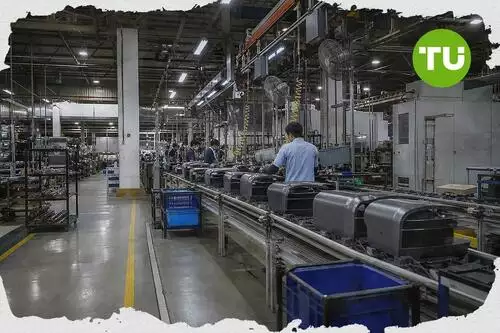
September data point to continued strength in U.S. business equipment demand as manufacturers report higher core capital goods orders and faster shipments. The figures indicate robust third-quarter spending momentum even as investors question the high cost and uncertain returns of long-term AI infrastructure projects.
Highlights
- U.S. non-defense core capital goods orders rise 0.5% in September after a 1.6% increase in August, missing economists' 0.7% forecast.
- Core capital goods shipments, key for GDP equipment spending, jump 1.2% in September following a 0.6% gain the previous month.
- AI-driven equipment investment fuels two quarters of double-digit growth, supporting manufacturing, despite investor caution over rising long-term project costs.
September orders and shipments signal solid investment
As reported by Reuters, citing the Commerce Department's Census Bureau, non-defense capital goods orders excluding aircraft, a closely watched measure of business spending, rise 0.5% in September after an unrevised 1.6% increase in August.Economists polled by Reuters had expected these so-called core capital goods orders to advance 0.7%. Shipments of core capital goods, which feed into the equipment spending component of gross domestic product, surge 1.2% in September after rising 0.6% in the prior month.
AI spending supports growth amid cost concerns
Business spending on equipment records two straight quarters of double-digit growth, driven largely by aggressive investment in AI, helping support manufacturing and the broader economy.Economists expect the government's advance gross domestic product estimate on Thursday to show the U.S. economy grows at more than a 3.0% annualized rate in the third quarter. Still, investors are paying closer attention to rising costs for long-term projects with uncertain returns, while technology companies have borrowed heavily over the past year to finance AI spending.
In our earlier article on the U.S. AI data center boom, we examined how soaring funding costs, construction delays, and power constraints are starting to challenge developers’ expansion plans. We also highlighted mounting investor skepticism as some projects are postponed or canceled and companies face cost overruns that can erode the economics of long-term AI infrastructure commitments.









-
 Afghanistan
-
 Albania
-
 Algeria
-
 Angola
-
 Argentina
-
 Armenia
-
 Australia
-
 Austria
-
 Azerbaijan
-
 Bahamas
-
 Bahrain
-
 Bangladesh
-
 Belarus
-
 Belgium
-
 Bolivia
-
 Botswana
-
 Brazil
-
 Brunei
-
 Bulgaria
-
 Cambodia
-
 Cameroon
-
 Canada
-
 Chile
-
 China
-
 Colombia
-
 Congo
-
 Costa Rica
-
 Cote d'Ivoire
-
 Croatia
-
 Cuba
-
 Cyprus
-
 Czechia
-
 DR Congo
-
 Denmark
-
 Dominican Republic
-
 Ecuador
-
 Egypt
-
 El Salvador
-
 Estonia
-
 Eswatini
-
 Ethiopia
-
 Finland
-
 France
-
 Georgia
-
 Germany
-
 Ghana
-
 Greece
-
 Haiti
-
 Hong Kong
-
 Hungary
-
 India
-
 Indonesia
-
 Iran, Islamic republic
-
 Iraq
-
 Ireland
-
 Israel
-
 Italy
-
 Jamaica
-
 Japan
-
 Jordan
-
 Kazakhstan
-
 Kenya
-
 Korea
-
 Kuwait
-
 Kyrgyzstan
-
 Laos
-
 Latvia
-
 Lebanon
-
 Lesotho
-
 Libya
-
 Lithuania
-
 Luxembourg
-
 Madagascar
-
 Malaysia
-
 Malta
-
 Mauritius
-
 Mexico
-
 Moldova
-
 Mongolia
-
 Montenegro
-
 Morocco
-
 Mozambique
-
 Myanmar
-
 Namibia
-
 Nepal
-
 Netherlands
-
 New Zealand
-
 Nigeria
-
 North Macedonia
-
 Norway
-
 Oman
-
 Pakistan
-
 Palestine
-
 Panama
-
 Papua New Guinea
-
 Paraguay
-
 Peru
-
 Philippines
-
 Poland
-
 Portugal
-
 Puerto Rico
-
 Qatar
-
 Reunion
-
 Romania
-
 Rwanda
-
 Saudi Arabia
-
 Serbia
-
 Singapore
-
 Slovakia
-
 Slovenia
-
 Somalia
-
 South Africa
-
 Spain
-
 Sri Lanka
-
 Sweden
-
 Switzerland
-
 Syria
-
 Taiwan
-
 Tajikistan
-
 Tanzania
-
 Thailand
-
 Trinidad and Tobago
-
 Tunisia
-
 Turkey
-
 UAE
-
 Uganda
-
 Ukraine
-
 United Kingdom
-
United States
-
 Uruguay
-
 Uzbekistan
-
 Venezuela
-
 Vietnam
-
 Yemen
-
 Zambia
-
 Zimbabwe
- Forex
- Crypto












