
Donald Trump memecoin anniversary: Why TRUMP failed to become next DOGE

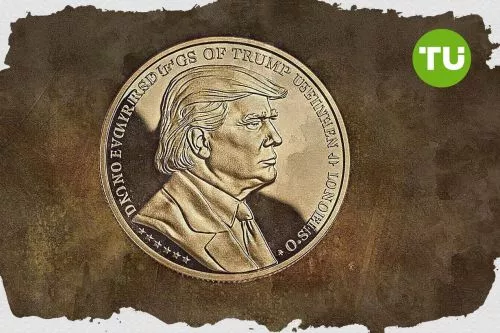
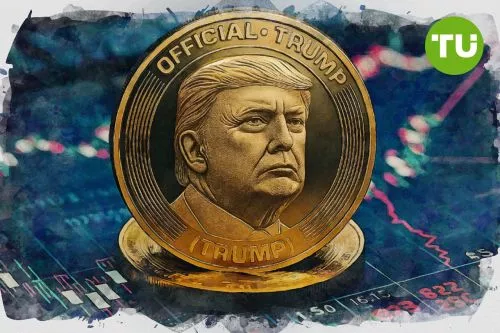
A year ago, Donald Trump did something no U.S. president before him had ever done: he launched his own memecoin. Trump Official debuted as a symbol of its era—big names, big expectations, explosive demand. But just one year later, TRUMP has become less a success story and more a case study the market is carefully dissecting for mistakes—from the mechanics of the launch to the accountability of the person behind the brand.
TRUMP’s launch: Big noise, fast money, and the first cracks
On January 17, 2025, Donald Trump launched the Trump Official (TRUMP) memecoin on the Solana network—just days before his inauguration. The first posts about the token looked suspicious: some users even suspected the accounts had been hacked. But within hours, Trump confirmed the launch on X and Truth Social—and that alone was enough to send the market into overdrive.TRUMP became a rare example of a memecoin entering the crypto space not through internet culture, but through a political brand. For Trump supporters, it looked like a symbolic endorsement of crypto. For traders, it was a moment to grab quick profits from hype amplified by media coverage and the creator’s status.
From day one, the tokenomics gave plenty of reasons to be skeptical. TRUMP had a total supply of 1 billion tokens, with only 20% released into circulation. The remaining 80% went to two companies affiliated with the Trump Organization, with a vesting schedule planned over three years. In other words, the core supply was concentrated from the start in the hands of entities tied to Trump himself.
Formally, TRUMP promised nothing. The project’s website described it not as an investment, but as a “collectible coin.” In practice, the market ignored those disclaimers: the coin surged rapidly, peak trading volumes reached tens of billions of dollars, and market capitalization climbed into double-digit billions.
Yet the first cracks appeared almost immediately. Centralized supply, no intrinsic value, and reliance on a single name created a classic asymmetry: some players could exit at the top, while others entered only after the explosion.
Who profited early—and why most ended up in the red
So who actually made money on TRUMP? First and foremost, Trump’s team and family. Thanks to the initial allocation and the sharp price surge, the Trump family reportedly added hundreds of millions to their wealth within weeks. According to Coinbase analyst Conor Grogan, by early February 2025 the $TRUMP team may have earned more than $800 million through token sales and liquidity-related fees. Roughly $482 million in crypto assets (USDC, SOL, and TRUMP itself) was moved by the developers to exchanges, while another $29 million was reportedly collected as liquidity provider fees on DEXs. Even if not all of the exchange transfers were sold immediately, it’s clear that substantial amounts were monetized near the peak.The frenzy was sustained by liquidity: at its height, trading volume reached as much as $55 billion in 24 hours, allowing large players to lock in profits. Beneficiaries also included early whales: the 25 largest investors—among them Tron Foundation founder Justin Sun—received invitations to a gala dinner with Trump in May 2025. That event brought in around $148 million in additional inflows into the token (a large share coming from anonymous foreign investors) and effectively turned memecoin buying into a form of political fundraising. In the end, Trump and his circle simply monetized loyalty—through demand they helped ignite themselves.
At the same time, many investors lost money—especially those who bought TRUMP near the peak or during the first days. Soon after the launch, the token fell nearly 50% from its highs, a harsh wake-up call for speculators who didn’t manage to exit in time. Over a longer horizon, the picture looks even more brutal: a year after launch, TRUMP had dropped more than 90% from its all-time high, meaning buyers who entered “on the wave” were left holding a heavily devalued asset. Critics called it a telling example: in their view, Trump used popularity and status to launch a high-risk speculative product for personal gain—while the biggest losses were borne by ordinary supporters and traders who believed in a “coin from the president.”
One year later: from euphoria to inertia
After its explosive debut, TRUMP almost immediately entered a correction—and never truly left it. At launch, the token traded around $7–8, then surged to an all-time high near $70+ in less than a day, with peak market capitalization reaching $13–15 billion. But the rally was short-lived. Within days, the price was nearly cut in half, and a slow, steady decline followed.The situation worsened when a separate token associated with the U.S. president’s wife, Melania Trump, appeared. The launch of MELANIA diluted the already fragile “official memecoin” narrative and highlighted the lack of a unified strategy. Instead of synergy, the market saw internal brand competition. According to CoinDesk, TRUMP’s price dropped nearly 40% on the day Melania’s token was announced. Two “family-branded” cryptocurrencies appeared to compete for the same community attention: some investors switched to MELANIA hoping to repeat the early hype, while others saw it as a sign of unseriousness and exited the political memecoin narrative altogether.
By early March 2025, TRUMP had slipped into the $12–14 range, and every attempt at a rebound faded quickly. Through spring and summer, the coin drifted lower without sharp crashes—not because of panic, but because interest evaporated. In autumn, the price hit fresh lows, and as of the one-year anniversary, TRUMP trades around $5—more than 90% below its peak. The chart reflects not just a fall, but a regime shift: from frenzy to inertia.
But the key point isn’t even the price—it’s what disappeared around it. After the first few months, TRUMP largely vanished from public discussion. It appeared less frequently in news cycles, showed up less in trader chatter, and lost its status as a speculative “hot topic.” And that’s no surprise: even Donald Trump himself rarely mentioned TRUMP publicly after launch. For a memecoin built entirely around a name, that silence meant losing its primary source of attention—and sliding quickly into the background.
Does TRUMP have a future—and why its prospects look weak
Today, TRUMP still looks alive on paper: it trades actively, holds a market cap of around $1 billion, and remains listed on major exchanges. But beyond the numbers, the picture is far colder. The project had its defining moment in the first days after launch and never found a new reason to exist. Once the initial noise faded, it was left alone with a question it never answered: what is this token actually for?In that context, TRUMP—despite trading at a higher price—still loses decisively to classic memecoins. When hype dies down, a meme survives either through utility or through a community that keeps playing with the narrative and sustaining demand. Dogecoin and Pepe built that foundation from the ground up: internet culture, organic holders, constant meme replication. TRUMP launched the opposite way—top-down, as a political brand. And when the media pressure disappeared, demand disappeared with it, because there was nothing underneath to keep the meme afloat.
Over a year of existence, the token never gained utility, never became part of any ecosystem, and never integrated into DeFi, payments, or even media platforms and apps. It’s telling that while the Trump family actively develops WLFI as a separate DeFi project, TRUMP remains completely outside that story.
This fragile setup is further weakened by the project’s model itself. Unlocks scheduled for 2026–2027 keep the market in constant anticipation of future selling. Even without dramatic dumps, that alone is enough to suppress long-term demand: the asset begins to feel less like a growth narrative and more like a slow insider exit into cash. For new participants, it’s a clear signal to stay away.
Ultimately, the most likely scenario for TRUMP is a slow fade at low levels with occasional speculative spikes. For the market, it’s no longer a growth story—it’s a lesson: even the loudest name doesn’t guarantee a second act for a memecoin.
The TRUMP lesson: When the creator isn’t invested in the token’s growth
Today, Trump Official remains on the market not only as a reminder of last year’s boom, but also as a lesson traders have already learned in practice. The project exposed the typical problems behind such launches: excessive centralization, insider enrichment, ethical conflicts, and dependence on hype and political cycles.As The Economist noted, TRUMP’s launch became a symbol of a new kind of insider capitalism, where power and business intertwine in crypto—and the consequences fall on those who buy on emotion.
What stands out most in this story is the issue of responsibility. Trump formally warned that the token was merely a collectible and not an investment, yet his name was the trigger for mass demand. As a result, many people entered an asset that quickly lost most of its value.
The core takeaway is simple: a memecoin is doomed if its “creator” has no interest in the token’s long-term life. When the founder’s incentives are limited to launch hype and monetizing the wave, the asset has no foundation for recovery. Ironically, if Trump had released a traditional commemorative silver coin instead of a digital token, it likely would have delivered more value to its holders.
Trump Official became a story of how a memecoin born in the corridors of power failed to preserve trust or economic momentum even for a single year. So hopefully, in the future, both regulators and investors will take this case into account.


Latest TRUMP News





-
 Afghanistan
-
 Albania
-
 Algeria
-
 Angola
-
 Argentina
-
 Armenia
-
 Australia
-
 Austria
-
 Azerbaijan
-
 Bahamas
-
 Bahrain
-
 Bangladesh
-
 Belarus
-
 Belgium
-
 Bolivia
-
 Botswana
-
 Brazil
-
 Brunei
-
 Bulgaria
-
 Cambodia
-
 Cameroon
-
 Canada
-
 Chile
Chile
-
 China
China
-
 Colombia
-
 Congo
Congo
-
 Costa Rica
-
 Cote d'Ivoire
-
 Croatia
-
 Cuba
Cuba
-
 Cyprus
-
 Czechia
-
 DR Congo
-
 Denmark
-
 Dominican Republic
-
 Ecuador
-
 Egypt
Egypt
-
 El Salvador
-
 Estonia
-
 Eswatini
-
 Ethiopia
-
 Finland
-
 France
-
 Georgia
-
 Germany
-
 Ghana
Ghana
-
 Greece
-
 Haiti
Haiti
-
 Hong Kong
-
 Hungary
-
 India
India
-
 Indonesia
-
 Iran, Islamic republic
-
 Iraq
Iraq
-
 Ireland
-
 Israel
-
 Italy
Italy
-
 Jamaica
-
 Japan
Japan
-
 Jordan
-
 Kazakhstan
-
 Kenya
Kenya
-
 Korea
Korea
-
 Kuwait
-
 Kyrgyzstan
-
 Laos
Laos
-
 Latvia
-
 Lebanon
-
 Lesotho
-
 Libya
Libya
-
 Lithuania
-
 Luxembourg
-
 Madagascar
-
 Malaysia
-
 Malta
Malta
-
 Mauritius
-
 Mexico
-
 Moldova
-
 Mongolia
-
 Montenegro
-
 Morocco
-
 Mozambique
-
 Myanmar
-
 Namibia
-
 Nepal
Nepal
-
 Netherlands
-
 New Zealand
-
 Nigeria
-
 North Macedonia
-
 Norway
-
 Oman
Oman
-
 Pakistan
-
 Palestine
-
 Panama
-
 Papua New Guinea
-
 Paraguay
-
 Peru
Peru
-
 Philippines
-
 Poland
-
 Portugal
-
 Puerto Rico
-
 Qatar
Qatar
-
 Reunion
-
 Romania
-
 Rwanda
-
 Saudi Arabia
-
 Serbia
-
 Singapore
-
 Slovakia
-
 Slovenia
-
 Somalia
-
 South Africa
-
 Spain
Spain
-
 Sri Lanka
-
 Sweden
-
 Switzerland
-
 Syria
Syria
-
 Taiwan
-
 Tajikistan
-
 Tanzania
-
 Thailand
-
 Trinidad and Tobago
-
 Tunisia
-
 Turkey
-
 UAE
UAE
-
 Uganda
-
 Ukraine
-
 United Kingdom
-
United States
-
 Uruguay
-
 Uzbekistan
-
 Venezuela
-
 Vietnam
-
 Yemen
Yemen
-
 Zambia
-
 Zimbabwe
- Forex
- Crypto












