The tweet was deleted by the author.
But we saved everything 🙂.

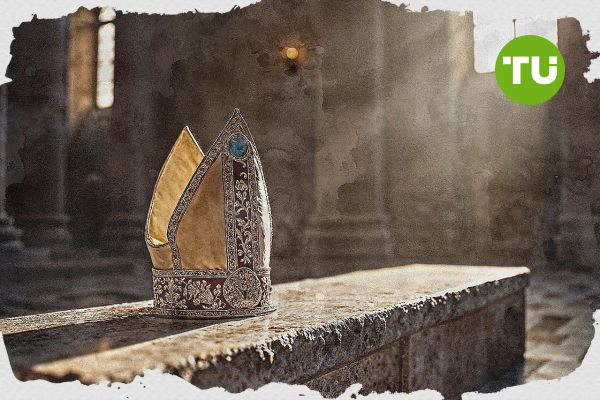
The Vatican is not only the spiritual center for 1.4 billion Catholics but also a state with its own financial system and investment assets. Its revenues come not only from donations and tourism but also from managing real estate and capital. So how large is this financial machine — and where exactly does it invest its money?
The Vatican has its own bank — the Institute for the Works of Religion (IOR) — and it is this institution that manages the financial assets of the Holy See. It is not a retail bank for ordinary customers, but a structure that serves Church institutions and oversees investments. Recently, the IOR introduced a new tool: two stock market indexes built around Catholic principles.
View post on X Loading...
The indexes were developed in partnership with Morningstar and are called the Morningstar IOR US Catholic Principles and the Morningstar IOR Eurozone Catholic Principles. Each includes 50 mid- and large-cap companies. In the European version, the largest holdings include ASML and Deutsche Telekom; in the US version, Meta and Amazon.
The IOR says the indexes are designed to serve as benchmarks for evaluating investment performance and reporting. In the future, they could form the basis for an ETF. This marks a step toward a more structured and transparent investment model — especially at a time when the global ETF market already exceeds $14 trillion and continues to grow.
The new indexes are only a small part of the Vatican’s financial system. Money flows through two parallel channels. On one side is Vatican City as a physical state within Rome, generating income from tourism — museum tickets, guided tours, coins, stamps, and souvenirs. On the other side is the Holy See, the administrative and diplomatic center through which donations and investments are managed.
The Vatican Bank plays a central role in this system, working alongside other structures, including APSA — the Administration of the Patrimony of the Apostolic See. APSA manages real estate and the investment portfolio, while the IOR services Church institutions and oversees financial flows. Through these entities, the Vatican holds funds in bonds, equities, deposits, and property — not only in Italy but also across Europe.
The Vatican does not fully disclose its portfolio. However, available figures give a sense of scale. According to APSA data from 2020, the Vatican owns more than 5,000 properties, mainly in prime areas of Rome, as well as in Paris, London, Geneva, and Lausanne. Part of this real estate generates rental income, although a significant portion is used for monasteries, schools, hospitals, and shelters.
The modern financial history of the Vatican began on February 11, 1929, when the Lateran Pacts were signed between the Holy See and the Italian government led by Benito Mussolini. Under the financial convention, the Vatican received 750 million lire in cash (about $81 million at the time) and another 1 billion lire in Italian government bonds paying 5% interest. For comparison, before that the Vatican’s annual budget was only $1–2 million.
The capital was entrusted to Bernardino Nogara, a financier with international experience. He agreed to take the role on one condition: no moral restrictions on investments. He acted decisively and pragmatically. During the 1929 US stock market crash, Nogara bought shares of IBM, General Motors, RCA, and other major companies at extremely low prices. Those stocks later surged during World War II and the post-war economic boom.
Within ten years, Vatican assets increased by roughly 2,000%. Nogara diversified holdings into US dollars, protecting the capital when the Italian lira sharply depreciated during the war. Later, the Vatican invested in the Italian industrial holding IRI, which controlled companies such as Alfa Romeo and Alitalia, and expanded heavily into real estate through Società Generale Immobiliare. At that point, the Vatican transformed from a religious center compensated by the state into one of Italy’s largest investors.
For decades, Vatican investments followed a simple logic: preserve and grow capital while keeping portfolio details out of public view. That discretion helped generate returns but eventually became a weakness. The less transparency and oversight, the higher the risks of mistakes, inflated fees, and abuse. Over time, this damaged the Holy See’s reputation.
In the 2000s and 2010s, the Vatican was involved in several major scandals. One example was the case of former Vatican Bank president Angelo Caloia, who in 2021 was sentenced to nine years in prison for money laundering and embezzlement linked to real estate deals involving around €57 million. Another was the London property deal of 2013–2014, when about €350 million was allocated through the Vatican Secretariat of State for a real estate purchase that later resulted in a loss of roughly €140 million upon sale. In 2023, Cardinal Angelo Becciu received a 5.5-year sentence in connection with that case.
View post on X Loading...
Following these events, the Vatican publicly changed its rules. In September 2022, a new investment policy came into force. Departments were prohibited from holding investment accounts and equity stakes in foreign banks — all assets must now be concentrated within the Vatican Bank under APSA’s oversight. A committee for ethical investment supervision was also established to ensure compliance with the new principles.
The Vatican committed to making investments more transparent and value-driven. It officially banned investments in funds linked to pornography, gambling, weapons and defense industries, abortion, contraception, and embryonic stem cell research. Speculative strategies — such as complex structured products, short selling, and intraday trading — are discouraged. Priority is given to companies with transparent governance, ethical codes, and responsible management.
How successful has the new policy been? According to the latest public report for 2024, the Holy See posted a surplus of €1.6 million after a €51.2 million deficit the previous year — its first surplus in two years. Investment income rose to €75 million, but Vatican officials noted that part of this increase resulted from a one-off portfolio restructuring, and such performance may not be easily repeated.
Today, the Vatican looks like an investor that has fundamentally shifted priorities. In the past, the focus was on earning returns quietly; now the emphasis is on earning returns that can be justified through rules and reporting. Hence the new indexes, asset centralization, and strict sectoral restrictions. The numbers suggest that the system has become more stable.
But this model comes at a cost. The era of aggressive capital growth and extraordinary returns appears to be over. Even the 2024 income increase is described by the Vatican itself as a “one-off” effect. The key question for the coming years is no longer how much the Vatican can earn, but whether it can generate steady returns within its new ethical framework.



 Afghanistan
 Albania
 Algeria
 Angola
 Argentina
 Armenia
 Australia
 Austria
 Azerbaijan
 Bahamas
 Bahrain
 Bangladesh
 Belarus
 Belgium
 Bolivia
 Botswana
 Brazil
 Brunei
 Bulgaria
 Cambodia
 Cameroon
 Canada
 Chile
Chile
 China
China
 Colombia
 Congo
Congo
 Costa Rica
 Cote d'Ivoire
 Croatia
 Cuba
Cuba
 Cyprus
 Czechia
 DR Congo
 Denmark
 Dominican Republic
 Ecuador
 Egypt
Egypt
 El Salvador
 Estonia
 Eswatini
 Ethiopia
 Finland
 France
 Georgia
 Germany
 Ghana
Ghana
 Greece
 Haiti
Haiti
 Hong Kong
 Hungary
 India
India
 Indonesia
 Iran, Islamic republic
 Iraq
Iraq
 Ireland
 Israel
 Italy
Italy
 Jamaica
 Japan
Japan
 Jordan
 Kazakhstan
 Kenya
Kenya
 Korea
Korea
 Kuwait
 Kyrgyzstan
 Laos
Laos
 Latvia
 Lebanon
 Lesotho
 Libya
Libya
 Lithuania
 Luxembourg
 Madagascar
 Malaysia
 Malta
Malta
 Mauritius
 Mexico
 Moldova
 Mongolia
 Montenegro
 Morocco
 Mozambique
 Myanmar
 Namibia
 Nepal
Nepal
 Netherlands
 New Zealand
 Nigeria
 North Macedonia
 Norway
 Oman
Oman
 Pakistan
 Palestine
 Panama
 Papua New Guinea
 Paraguay
 Peru
Peru
 Philippines
 Poland
 Portugal
 Puerto Rico
 Qatar
Qatar
 Reunion
 Romania
 Rwanda
 Saudi Arabia
 Serbia
 Singapore
 Slovakia
 Slovenia
 Somalia
 South Africa
 Spain
Spain
 Sri Lanka
 Sweden
 Switzerland
 Syria
Syria
 Taiwan
 Tajikistan
 Tanzania
 Thailand
 Trinidad and Tobago
 Tunisia
 Turkey
 UAE
UAE
 Uganda
 Ukraine
 United Kingdom
United States
United Kingdom
United States
 Uruguay
 Uzbekistan
 Venezuela
 Vietnam
 Yemen
Yemen
 Zambia
 Zimbabwe