The tweet was deleted by the author.
But we saved everything 🙂.
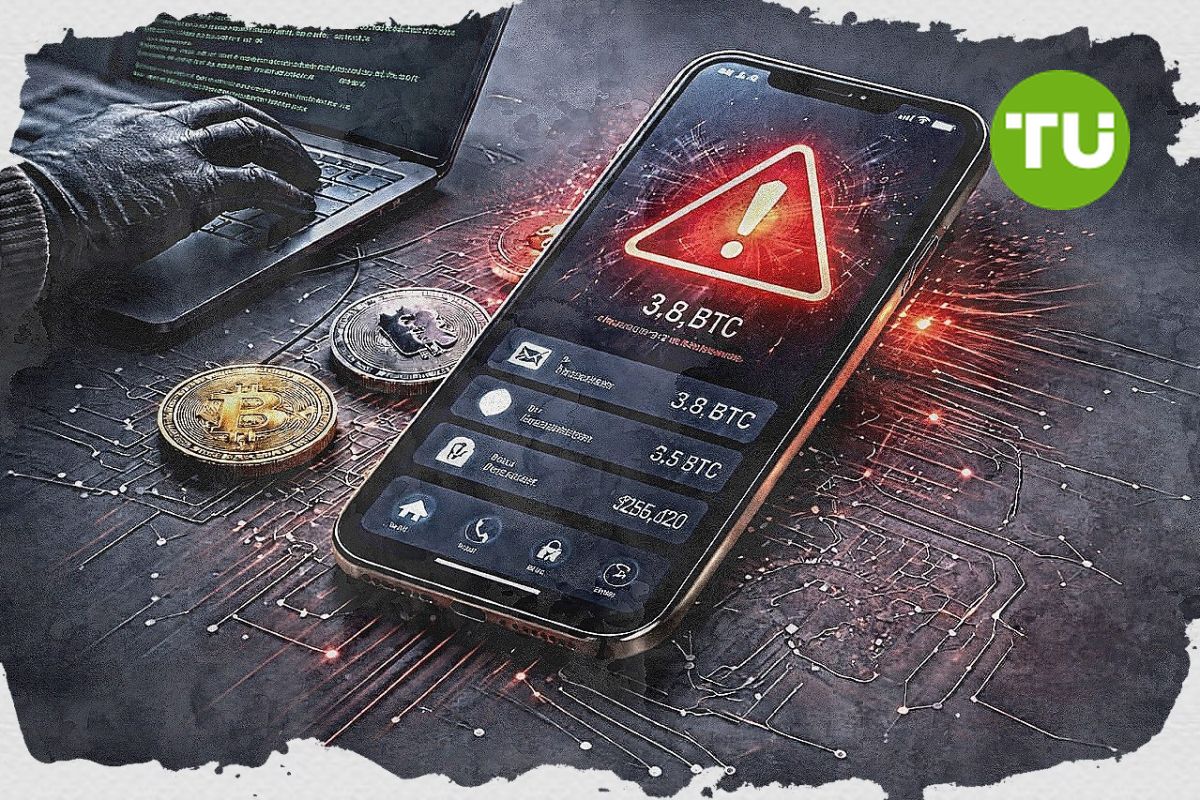
Google experts have discovered a new iPhone hacking tool that is already being used by crypto scammers. Vulnerabilities in Apple smartphones may allow attackers to gain access to crypto wallets and users’ personal data. If even the iPhone can no longer be considered secure, where should digital assets be stored?
On March 4, 2026, Google security researchers reported a new set of tools for hacking iPhones called Coruna. According to the company, this exploit kit uses 23 vulnerabilities in iOS, allowing attackers to gain control of users’ devices. Some of these vulnerabilities are related to the browser and web content processing components, making it possible to infect a smartphone simply by visiting a website. As a result, the attack can occur without installing any apps and without any action from the user.
Coruna is a full exploit toolkit designed for remote compromise of Apple devices. Researchers say the attack chain uses multiple sequential vulnerabilities that allow attackers to bypass system protection mechanisms and gain access to device data. Once infected, attackers can extract information from the smartphone, including files, messages, and app data. In several documented campaigns, this tool has been used to target cryptocurrency holders.
Mobile crypto wallets are an important tool for managing digital assets. According to research published by TimesTabloid, about 78 percent of users interact with cryptocurrencies through smartphones. At the same time, the number of active mobile crypto wallets exceeds 36 million, reflecting the growing use of DeFi services and mobile apps for storing tokens. For users, this is convenient: a single smartphone allows them to store assets, sign transactions, and connect to decentralized applications.
But this same versatility turns the phone into a single center of financial risk. A browser, messaging apps, social networks, and a crypto wallet all operate on the same device, meaning that any malicious code that enters the system can access many data channels at once. A phishing link may arrive through a messaging app, open in a mobile browser, and lead to the installation of malware, after which attackers can intercept wallet data or gain access to user accounts.
In August 2025, Binance analyzed a real case involving one of its users who nearly lost all of their digital assets after receiving a fake email. In a post on social media, the exchange said that phishing combined with malware had become the most dangerous combination in modern scam schemes.
The scale of the problem is confirmed by the numbers. According to Chainalysis, more than $2.17 billion was stolen from crypto services in the first half of 2025 alone, and a growing share of attacks are aimed at end users and their wallets. Because cryptocurrency transactions are almost impossible to reverse, a compromised device often means a direct loss of funds. As a result, more security experts now believe that hackers are increasingly targeting not exchanges but the smartphones of crypto holders themselves.
The rise in mobile attacks is changing how cryptocurrencies are protected. In the past, the main threat came from exchange hacks, but today attackers increasingly target users’ own devices. That is why experts recommend using hardware wallets, which store private keys offline. Devices such as Ledger or Trezor isolate keys from the smartphone or computer operating system, significantly reducing the risk of theft even if the device becomes infected with malware. According to the Financial Times, sales of hardware wallets have risen by tens of percent following major crypto hacks recently, as investors look for safer ways to store their assets.
Another important protection tool is multisignature wallets, or multisig. This technology requires a transaction to be confirmed by multiple keys at the same time, making theft far more difficult. Even if an attacker gains access to one device or one key, they cannot move funds without additional approvals. Such solutions are already widely used by institutional investors and crypto funds and are gradually spreading among individual users as well.
At the same time, interest is growing in separating devices used to store assets. More investors are choosing to keep large amounts on dedicated devices or in cold wallets, using a smartphone only to check balances or make small transactions. New standards of mobile security are also being discussed, from isolating crypto apps to strengthening private key protection at the operating system level. This trend reflects an essential shift in the industry: if exchanges were once the primary targets for hackers, smartphones are now increasingly under threat as the place where crypto assets are stored.

 Afghanistan
 Albania
 Algeria
 Angola
 Argentina
 Armenia
 Australia
 Austria
 Azerbaijan
 Bahamas
 Bahrain
 Bangladesh
 Belarus
 Belgium
 Bolivia
 Botswana
 Brazil
 Brunei
 Bulgaria
 Cambodia
 Cameroon
 Canada
 Chile
Chile
 China
China
 Colombia
 Congo
Congo
 Costa Rica
 Cote d'Ivoire
 Croatia
 Cuba
Cuba
 Cyprus
 Czechia
 DR Congo
 Denmark
 Dominican Republic
 Ecuador
 Egypt
Egypt
 El Salvador
 Estonia
 Eswatini
 Ethiopia
 Finland
 France
 Georgia
 Germany
 Ghana
Ghana
 Greece
 Haiti
Haiti
 Hong Kong
 Hungary
 India
India
 Indonesia
 Iran, Islamic republic
 Iraq
Iraq
 Ireland
 Israel
 Italy
Italy
 Jamaica
 Japan
Japan
 Jordan
 Kazakhstan
 Kenya
Kenya
 Korea
Korea
 Kuwait
 Kyrgyzstan
 Laos
Laos
 Latvia
 Lebanon
 Lesotho
 Libya
Libya
 Lithuania
 Luxembourg
 Madagascar
 Malaysia
 Malta
Malta
 Mauritius
 Mexico
 Moldova
 Mongolia
 Montenegro
 Morocco
 Mozambique
 Myanmar
 Namibia
 Nepal
Nepal
 Netherlands
 New Zealand
 Nigeria
 North Macedonia
 Norway
 Oman
Oman
 Pakistan
 Palestine
 Panama
 Papua New Guinea
 Paraguay
 Peru
Peru
 Philippines
 Poland
 Portugal
 Puerto Rico
 Qatar
Qatar
 Reunion
 Romania
 Rwanda
 Saudi Arabia
 Serbia
 Singapore
 Slovakia
 Slovenia
 Somalia
 South Africa
 Spain
Spain
 Sri Lanka
 Sweden
 Switzerland
 Syria
Syria
 Taiwan
 Tajikistan
 Tanzania
 Thailand
 Trinidad and Tobago
 Tunisia
 Turkey
 UAE
UAE
 Uganda
 Ukraine
 United Kingdom
United States
United Kingdom
United States
 Uruguay
 Uzbekistan
 Venezuela
 Vietnam
 Yemen
Yemen
 Zambia
 Zimbabwe