The tweet was deleted by the author.
But we saved everything 🙂.

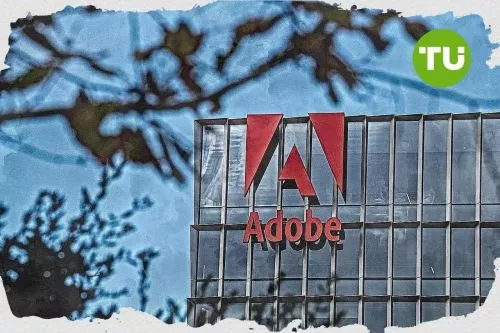
Adobe shares fell after the company released its quarterly report and announced an upcoming leadership change. The results exceeded analysts’ expectations for both revenue and profit, but the market focused instead on the news that CEO Shantanu Narayen will step down in the future. Investors will now be watching closely to see whether the developer behind Photoshop can maintain market confidence and regain its footing.
Adobe published its financial results for the first quarter of fiscal year 2026, and they came in significantly stronger than expected. The company reported revenue of $6.4 billion, up 12% year over year and above analysts’ forecasts of $6.28 billion. Adjusted earnings reached $6.06 per share, beating expectations of $5.87, while operating income totaled $3.04 billion.
The developer also provided guidance for the next quarter. Adobe expects revenue between $6.43 billion and $6.48 billion, with earnings projected at $5.80–$5.85 per share. Annual recurring revenue from subscriptions (ARR), one of the key metrics for software companies, reached $26.06 billion, rising about 11% year over year.
Adobe also highlighted the growing role of artificial intelligence in its business. Annual revenue from the company’s AI-driven products has more than tripled over the past year and could become the next major growth area for the business. Adobe’s ecosystem—including Acrobat, Creative Cloud, Express, and Firefly—now has around 850 million monthly users, up 17% from a year earlier.
However, the strong quarterly report was overshadowed by another announcement. CEO Shantanu Narayen said he will step down after Adobe selects a successor. Narayen has led the company for 18 years and has worked at Adobe since 1988. During his tenure, Adobe shifted from selling software licenses to a Creative Cloud subscription model, significantly strengthening its position in the market. After stepping down, Narayen will remain chair of the board.
Despite the strong financial results, the market reaction was negative. Following the earnings release and news of the CEO’s departure, Adobe shares dropped about 6.7% in extended trading, falling to roughly $250 per share.
However, this is far from the company’s only challenge, and its shares have been declining for some time. Since the start of 2026, Adobe stock has fallen by about 23%, while the S&P 500 index has lost roughly 3% over the same period. Compared with peak levels, the decline is even more striking—Adobe shares are now more than 60% below their record price of $688, reached in November 2021.
Much of the concern centers on artificial intelligence, which is increasingly seen as a potential threat to Adobe’s business model despite its own AI development efforts. Many market participants fear that new AI tools could partially replace traditional software used for design and content creation—especially as startups and large technology companies continue launching generative tools for creating images and video.
Photoshop remains one of Adobe’s best-known and most important products, and for many users it is still synonymous with the company itself. In recent years, the developer has been actively adding AI-powered tools to Photoshop to simplify the process of creating and editing images. For Adobe, this is a key strategic move: the company aims to demonstrate that artificial intelligence will not destroy its core business but instead strengthen it.
Adobe is pursuing the same strategy through new integrations. Recently, the company announced that Acrobat, Express, and Photoshop applications are now available through the ChatGPT assistant. The idea is to integrate Adobe’s tools into new AI-driven workflows where users are already working with generative technologies rather than competing with them solely through traditional software.
At the same time, Adobe continues to expand its ecosystem through deals and partnerships. Back in fall 2025, the company announced an agreement to acquire Semrush, a platform for SEO analytics, online visibility tracking, and competitive research. Such a service could strengthen Adobe’s marketing segment and give the company greater capabilities not only in design but also in content promotion and digital advertising.
Adobe is now entering a critical period. The company must not only appoint a new chief executive but also convince the market that its AI strategy is truly working. How quickly Adobe can demonstrate tangible revenue growth from AI-powered tools and new services will likely play a major role in shaping investor sentiment toward its stock.
At the same time, the company still holds strong advantages: a massive user base, globally recognized products such as Photoshop, and a mature subscription model generating more than $26 billion in annual recurring revenue. If Adobe successfully integrates AI across its ecosystem and incorporates new services like Semrush, it could regain market confidence. Otherwise, pressure on the stock may persist as competition in the generative AI sector continues to intensify.

 Afghanistan
 Albania
 Algeria
 Angola
 Argentina
 Armenia
 Australia
 Austria
 Azerbaijan
 Bahamas
 Bahrain
 Bangladesh
 Belarus
 Belgium
 Bolivia
 Botswana
 Brazil
 Brunei
 Bulgaria
 Cambodia
 Cameroon
 Canada
 Chile
Chile
 China
China
 Colombia
 Congo
Congo
 Costa Rica
 Cote d'Ivoire
 Croatia
 Cuba
Cuba
 Cyprus
 Czechia
 DR Congo
 Denmark
 Dominican Republic
 Ecuador
 Egypt
Egypt
 El Salvador
 Estonia
 Eswatini
 Ethiopia
 Finland
 France
 Georgia
 Germany
 Ghana
Ghana
 Greece
 Haiti
Haiti
 Hong Kong
 Hungary
 India
India
 Indonesia
 Iran, Islamic republic
 Iraq
Iraq
 Ireland
 Israel
 Italy
Italy
 Jamaica
 Japan
Japan
 Jordan
 Kazakhstan
 Kenya
Kenya
 Korea
Korea
 Kuwait
 Kyrgyzstan
 Laos
Laos
 Latvia
 Lebanon
 Lesotho
 Libya
Libya
 Lithuania
 Luxembourg
 Madagascar
 Malaysia
 Malta
Malta
 Mauritius
 Mexico
 Moldova
 Mongolia
 Montenegro
 Morocco
 Mozambique
 Myanmar
 Namibia
 Nepal
Nepal
 Netherlands
 New Zealand
 Nigeria
 North Macedonia
 Norway
 Oman
Oman
 Pakistan
 Palestine
 Panama
 Papua New Guinea
 Paraguay
 Peru
Peru
 Philippines
 Poland
 Portugal
 Puerto Rico
 Qatar
Qatar
 Reunion
 Romania
 Rwanda
 Saudi Arabia
 Serbia
 Singapore
 Slovakia
 Slovenia
 Somalia
 South Africa
 Spain
Spain
 Sri Lanka
 Sweden
 Switzerland
 Syria
Syria
 Taiwan
 Tajikistan
 Tanzania
 Thailand
 Trinidad and Tobago
 Tunisia
 Turkey
 UAE
UAE
 Uganda
 Ukraine
 United Kingdom
United States
United Kingdom
United States
 Uruguay
 Uzbekistan
 Venezuela
 Vietnam
 Yemen
Yemen
 Zambia
 Zimbabwe