
Passive crypto income: How to earn through staking and deposits
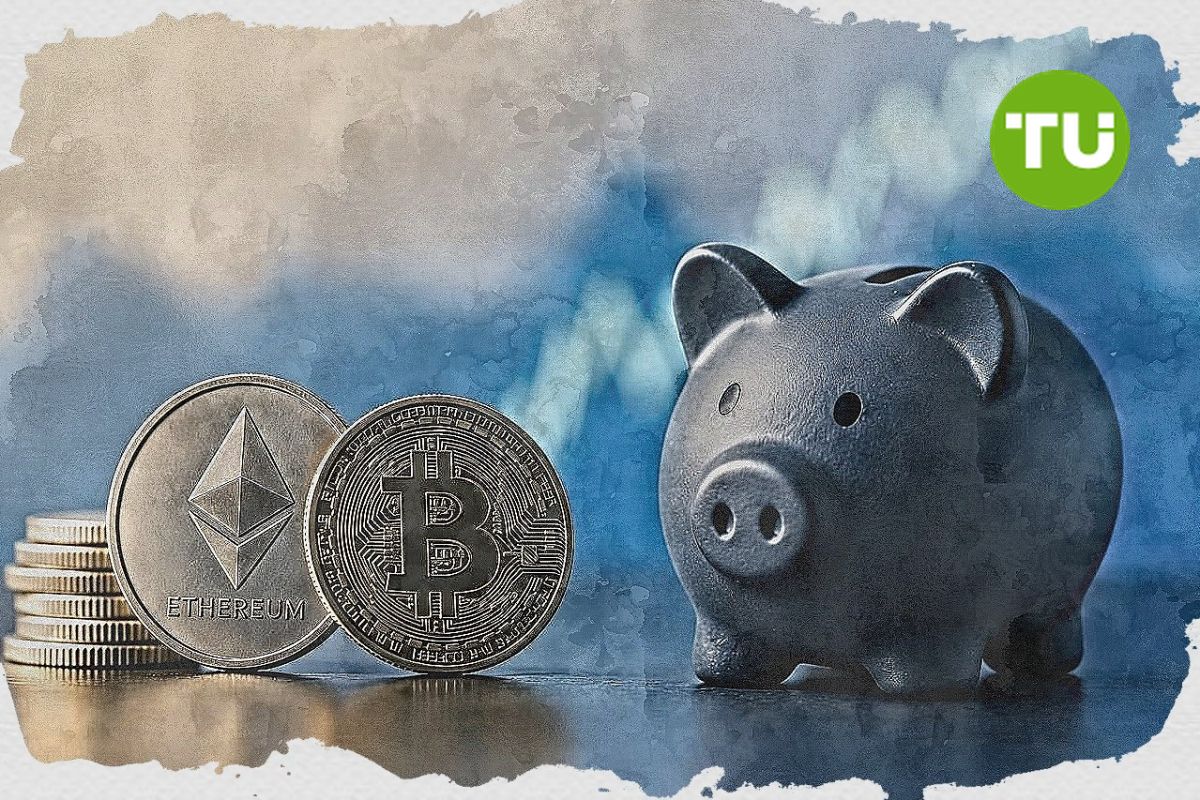
Passive crypto income in 2026 has already moved far beyond complex DeFi protocols and technical intricacies. Most convenient opportunities are now available directly on crypto exchanges, including staking and Earn products. It is worth understanding how these tools actually work, what their real advantages are, and what risks hide behind attractive interest rates.
Centralized staking: A classic without technical complexity
Staking has become one of the first and most reliable ways to generate passive income in the crypto market. Its essence is quite simple: an investor locks coins in a Proof-of-Stake network, helps maintain the blockchain, and receives rewards in return. Running staking independently requires significant effort — from using a non-custodial wallet to choosing a validator, tracking fees, lock-up periods, and potential penalties. On centralized exchanges, everything is much simpler. Binance, Kraken, Coinbase, OKX, and other platforms handle the technical side entirely, allowing users to enable staking in just a few clicks.
Returns depend on the selected asset and platform conditions. For Ethereum, they usually remain within a few percent annually. For example, Binance currently offers up to 2.6% APR for ETH staking and up to 5.6% APR for SOL. On Kraken, maximum rewards can sometimes reach 21%, although such high rates typically apply to less popular assets rather than large, liquid coins.
Exchange-based staking is attractive due to its convenience: everything happens within a single interface, where users can immediately see expected rates, available assets, and withdrawal conditions. At the same time, funds remain on the exchange, meaning the investor takes on not only the market risk of the asset but also the platform risk.
That is why staking on centralized exchanges is better viewed not as a way to get rich quickly, but as a useful addition to assets the investor already plans to hold long term. For major coins, a few percent annually is a realistic expectation, while unusually high APYs should be treated as a signal to carefully examine the conditions and potential pitfalls.
Earn products as analogs of bank deposits
Staking works well with PoS coins, but when Bitcoin or stablecoins appear in a portfolio, this model no longer applies. Exchanges have gone further by introducing Earn products — a format that allows users to earn interest on almost any asset.
These products operate similarly to traditional bank deposits. Users place USDT, USDC, BTC, or other assets on a platform, and the exchange uses them in its financial operations, sharing part of the profit. The most conservative option for most investors is stablecoin deposits. Their main advantage is that returns can be relatively accurately estimated in dollars, as volatility is minimal.
On Binance, Simple Earn currently offers around 1.25–3.85% APR for USDT and 3.36–5.74% APR for USDC, depending on the product format. On Bybit, certain USDT/BYUSDT products during promotions may offer up to 10% APR, while MEXC in 2026 has raised rates on USDT Flexible Savings to as much as 20% APR within limited-time offers.
However, stablecoins do not make an investment completely risk-free. Exchanges can change rates at any time, impose limits on high-yield allocations, or end promotions. In addition, regulatory uncertainty around stablecoins in the U.S., particularly amid discussions of the CLARITY Act, introduces political and legal risks even for “dollar-pegged” products.
Deposits in Bitcoin and altcoins are more dynamic — but also significantly more volatile. Major assets typically offer modest yields: on Binance, BTC in Simple Earn provides up to 0.28% APR, ETH around 1.4–2.57%, and SOL about 1.8–5.43%. Meanwhile, riskier tokens show very different figures — for example, KERNEL on the same Binance page displays a range of 21.9–43.61% APR.
This highlights the core nature of Earn products. They are much simpler than DeFi and more accessible for beginners, but high returns almost always imply promotions, caps, lower liquidity, or higher asset risk. Therefore, it is important to look beyond APY and consider which asset is being held, as well as whether the investor can comfortably withstand potential drawdowns.
Bonuses as a nice perk, not income
Bonuses on crypto exchanges can be particularly tempting. Bybit advertises welcome rewards of up to $5,000, Binance offers task-based rewards of up to $100 in vouchers, OKX uses mystery boxes after verification and a deposit of 50 USDT or more, and MEXC promotes bonuses of up to 10,000 USDT in its Rewards Hub.
However, it is important to focus not on headline figures but on actual conditions. In most cases, these are not funds that can be immediately withdrawn. Bonuses often come in the form of trading vouchers, fee rebates, coupons, or bonus funds that activate only after deposits, trades, or reaching specific trading volumes.
For the average user, the real value is usually more modest. Small bonuses of $5–$50 are relatively easy to obtain, while amounts in the hundreds or thousands typically require active trading. For example, Bybit promotes bonuses of up to $5,000, but they are closely tied to deposits, trading tasks, and campaign participation.
Therefore, bonuses should be seen as an additional benefit rather than a standalone income source. If an investor already plans to use an exchange, vouchers or cashback can reduce costs and slightly improve overall returns. But if earning a bonus requires depositing more funds, trading more frequently, or taking on additional risk, it no longer qualifies as passive income.
Convenience that requires healthy skepticism
In 2026, crypto exchanges have indeed become a convenient platform for generating passive income from digital assets. They have removed technical barriers, integrated staking, Earn products, deposits, and bonus programs into a single interface, and made these tools accessible even to complete beginners.
However, simplicity never equals complete safety. Investors still bear asset risk, platform risk, changing rates, withdrawal restrictions, and the “fine print” where the true cost of high APY often lies.
The key rule remains unchanged: do not chase the highest number on a banner. Passive income on exchanges only makes sense when the investor clearly understands where the yield comes from, how long funds are locked, and what worst-case scenarios may unfold. With this approach, staking and Earn products become powerful and useful additions to an investment strategy. If promises of extraordinary returns sound too good, it is likely not passive income — but effective marketing designed to encourage more active and riskier behavior.


Latest Crypto News






-
 Afghanistan
-
 Albania
-
 Algeria
-
 Angola
-
 Argentina
-
 Armenia
-
 Australia
-
 Austria
-
 Azerbaijan
-
 Bahamas
-
 Bahrain
-
 Bangladesh
-
 Belarus
-
 Belgium
-
 Bolivia
-
 Botswana
-
 Brazil
-
 Brunei
-
 Bulgaria
-
 Cambodia
-
 Cameroon
-
 Canada
-
 Chile
Chile
-
 China
China
-
 Colombia
-
 Congo
Congo
-
 Costa Rica
-
 Cote d'Ivoire
-
 Croatia
-
 Cuba
Cuba
-
 Cyprus
-
 Czechia
-
 DR Congo
-
 Denmark
-
 Dominican Republic
-
 Ecuador
-
 Egypt
Egypt
-
 El Salvador
-
 Estonia
-
 Eswatini
-
 Ethiopia
-
 Finland
-
 France
-
 Georgia
-
 Germany
-
 Ghana
Ghana
-
 Greece
-
 Haiti
Haiti
-
 Hong Kong
-
 Hungary
-
 India
India
-
 Indonesia
-
 Iran, Islamic republic
-
 Iraq
Iraq
-
 Ireland
-
 Israel
-
 Italy
Italy
-
 Jamaica
-
 Japan
Japan
-
 Jordan
-
 Kazakhstan
-
 Kenya
Kenya
-
 Korea
Korea
-
 Kuwait
-
 Kyrgyzstan
-
 Laos
Laos
-
 Latvia
-
 Lebanon
-
 Lesotho
-
 Libya
Libya
-
 Lithuania
-
 Luxembourg
-
 Madagascar
-
 Malaysia
-
 Malta
Malta
-
 Mauritius
-
 Mexico
-
 Moldova
-
 Mongolia
-
 Montenegro
-
 Morocco
-
 Mozambique
-
 Myanmar
-
 Namibia
-
 Nepal
Nepal
-
 Netherlands
-
 New Zealand
-
 Nigeria
-
 North Macedonia
-
 Norway
-
 Oman
Oman
-
 Pakistan
-
 Palestine
-
 Panama
-
 Papua New Guinea
-
 Paraguay
-
 Peru
Peru
-
 Philippines
-
 Poland
-
 Portugal
-
 Puerto Rico
-
 Qatar
Qatar
-
 Reunion
-
 Romania
-
 Rwanda
-
 Saudi Arabia
-
 Serbia
-
 Singapore
-
 Slovakia
-
 Slovenia
-
 Somalia
-
 South Africa
-
 Spain
Spain
-
 Sri Lanka
-
 Sweden
-
 Switzerland
-
 Syria
Syria
-
 Taiwan
-
 Tajikistan
-
 Tanzania
-
 Thailand
-
 Trinidad and Tobago
-
 Tunisia
-
 Turkey
-
 UAE
UAE
-
 Uganda
-
 Ukraine
-
 United Kingdom
-
United States
-
 Uruguay
-
 Uzbekistan
-
 Venezuela
-
 Vietnam
-
 Yemen
Yemen
-
 Zambia
-
 Zimbabwe
- Forex
- Crypto












