The tweet was deleted by the author.
But we saved everything 🙂.

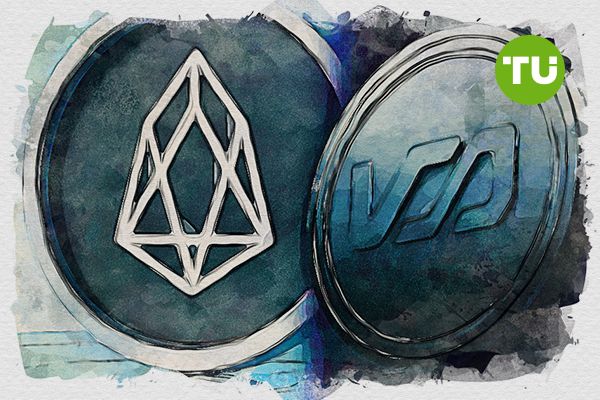
Once a highly touted project, EOS is soon to be rebranded as Vaulta. The cryptocurrency, once considered “the best and most promising,” failed to meet investor expectations and is now betting on a fresh start.
On May 14, the EOS crypto project will officially rebrand to Vaulta. The company’s leadership explains this move as part of a new strategy focused on Web3 banking — blockchain-based financial solutions aimed at bridging traditional finance with decentralized tools.
View post on X Loading...
As part of the rebrand, the EOS token will be swapped 1:1 for the Vaulta token. The new token will retain all the same technology and features as its predecessor and can be exchanged via the Vaulta Swap Portal or through supported partner exchanges.
“Vaulta is not a fork or a reset. It’s the EOS network reimagined and rebranded, fully compatible with the existing infrastructure and state history,” the EOS team commented.
The new project is also looking to attract users with staking rewards of 17%, significantly higher than those of other cryptocurrencies like Ethereum (2.7%) or Solana (5.4%).
As the rebrand date approaches, EOS’s price has started to rise. On May 8, the cryptocurrency’s price jumped 22% to $0.84, while its market cap exceeded $1.2 billion, fueled by a 285% surge in trading volume, which reached nearly $500 million in 24 hours.
There has also been excitement in the derivatives market, with open interest in EOS futures rising by 45% to over $188 million. However, this is still far from EOS’s all-time highs in 2018, when the token briefly reached nearly $19.

Fluctuations in the EOS price. Source: CoinMarketCap.
EOS was launched in 2017 by Block.one, founded by entrepreneurs Brendan Blumer and Dan Larimer. The project gained attention for its ambitious goal of building a high-performance blockchain for decentralized applications (dApps) with instant transactions and zero fees.
EOS raised around $4 billion in one of the largest ICOs in crypto history, attracting both institutional and retail investors. In June 2018, the project launched its own blockchain — EOSIO (or EOS Mainnet) — transitioning from an ERC-20 token on Ethereum to an independent network built on its own blockchain protocol.
View post on X Loading...
In 2019, Block.one announced Voice, a decentralized social media platform built on EOS, aimed at promoting transparency and user engagement. Despite the hype, the project failed to gain traction and was ultimately shut down.
In its early days, EOS was frequently ranked as one of the most promising cryptocurrencies. China’s CCID placed EOS at the top of its monthly rankings for several years, even ahead of Bitcoin and Ethereum.
View post on X Loading...
Experts praised EOS for its scalability, transaction speed, and potential for mass adoption. Some even labeled it the "Ethereum killer." However, things started to change.
Despite the strong start, EOS fell out of the top 50 cryptocurrencies by market cap over the years. The project failed to deliver on its promises and lost support from developers and institutional backers. A major blow came in early 2021, when co-founder Dan Larimer left the project, shaking confidence in its future. Soon after, the EOS Network Foundation filed a $1 billion lawsuit against Block.one, accusing the company of failing to support the ecosystem and betraying the community’s interests.
The situation worsened when Tether discontinued support for EOS in 2023, removing a key liquidity component from the network. Developer activity declined, user numbers dropped, and a lack of major projects and DeFi growth pushed EOS further to the margins of the crypto market.
Rebranding EOS as Vaulta appears to be an attempt to breathe new life into a project that has struggled for relevance in recent years. Focusing on Web3 banking and integrating traditional finance could, in theory, attract institutional partners and investors. Recent spikes in spot and derivatives market activity show that there’s still some interest in the project, suggesting the team has a chance to reboot its ecosystem.
However, a rebrand alone is not enough to restore EOS to its former glory. Changing the name does not solve the fundamental issues, such as lost trust after Larimer’s departure, failed initiatives like Voice, and legal disputes with Block.one. Without true technological breakthroughs and meaningful market demand, Vaulta risks repeating EOS’s decline. Whether the team can deliver more than just a new name and attractive staking yields remains to be seen.


 Afghanistan
 Albania
 Algeria
 Angola
 Argentina
 Armenia
 Australia
 Austria
 Azerbaijan
 Bahamas
 Bahrain
 Bangladesh
 Belarus
 Belgium
 Bolivia
 Botswana
 Brazil
 Brunei
 Bulgaria
 Cambodia
 Cameroon
 Canada
 Chile
Chile
 China
China
 Colombia
 Congo
Congo
 Costa Rica
 Cote d'Ivoire
 Croatia
 Cuba
Cuba
 Cyprus
 Czechia
 DR Congo
 Denmark
 Dominican Republic
 Ecuador
 Egypt
Egypt
 El Salvador
 Estonia
 Eswatini
 Ethiopia
 Finland
 France
 Georgia
 Germany
 Ghana
Ghana
 Greece
 Haiti
Haiti
 Hong Kong
 Hungary
 India
India
 Indonesia
 Iran, Islamic republic
 Iraq
Iraq
 Ireland
 Israel
 Italy
Italy
 Jamaica
 Japan
Japan
 Jordan
 Kazakhstan
 Kenya
Kenya
 Korea
Korea
 Kuwait
 Kyrgyzstan
 Laos
Laos
 Latvia
 Lebanon
 Lesotho
 Libya
Libya
 Lithuania
 Luxembourg
 Madagascar
 Malaysia
 Malta
Malta
 Mauritius
 Mexico
 Moldova
 Mongolia
 Montenegro
 Morocco
 Mozambique
 Myanmar
 Namibia
 Nepal
Nepal
 Netherlands
 New Zealand
 Nigeria
 North Macedonia
 Norway
 Oman
Oman
 Pakistan
 Palestine
 Panama
 Papua New Guinea
 Paraguay
 Peru
Peru
 Philippines
 Poland
 Portugal
 Puerto Rico
 Qatar
Qatar
 Reunion
 Romania
 Rwanda
 Saudi Arabia
 Serbia
 Singapore
 Slovakia
 Slovenia
 Somalia
 South Africa
 Spain
Spain
 Sri Lanka
 Sweden
 Switzerland
 Syria
Syria
 Taiwan
 Tajikistan
 Tanzania
 Thailand
 Trinidad and Tobago
 Tunisia
 Turkey
 UAE
UAE
 Uganda
 Ukraine
 United Kingdom
United States
United Kingdom
United States
 Uruguay
 Uzbekistan
 Venezuela
 Vietnam
 Yemen
Yemen
 Zambia
 Zimbabwe