The tweet was deleted by the author.
But we saved everything 🙂.
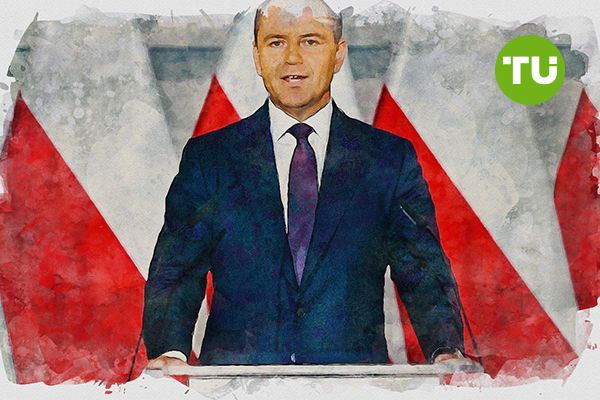
Karol Nawrocki has become the new president of Poland. While widely known as a conservative and Eurosceptic, he also positions himself as a supporter of Bitcoin. During the election campaign, he pledged comprehensive support for the cryptocurrency industry if elected. But can his words be trusted?
Over the weekend, Poland held the second round of its presidential elections, in which the candidate from the opposition Law and Justice party, Karol Nawrocki, secured victory. With a narrow margin, he edged out his opponent, Warsaw Mayor Rafał Trzaskowski, receiving 50.89% of the vote.
During the campaign, the new head of state voiced opposition to Ukraine joining NATO and set specific conditions for its integration into the European Union. In terms of security, he aligns himself with the policies of the U.S. president. He has expressed skepticism regarding Brussels’ energy and migration strategies, earning him the nickname “The Polish Trump.”
Experts believe that Karol Nawrocki will pursue reparations from Berlin for the actions of Nazi Germany. Overall, his victory could lead to heightened tensions between Poland and the EU.
However, what interests us more than the geopolitical ambitions of Poland's new president is his stance on digital assets.
During the campaign, Karol Nawrocki promised strong support for the crypto industry if elected president. He even published a video where he spoke out firmly against any restrictions on the “freedom of investing.”
Yet the politician openly admitted that he doesn’t personally invest in digital assets, though he said he is ready to make life easier for crypto enthusiasts.
“Poland should be a place where innovation is created, not where new restrictions are imposed. As president, I guarantee that no destructive regulations limiting your freedom will be enacted,” he stressed.
If Nawrocki keeps his promises, Poland could become a magnet for crypto companies and blockchain experts in Europe. But to achieve this, he will need full government support and a willingness to adapt to EU regulations, such as MiCA.
However, there’s one thing that casts doubt on Nawrocki’s promises — his controversial reputation. His campaign was accompanied by a series of scandals that triggered widespread public reaction.
One involved purchasing an apartment at a reduced price from an elderly disabled man. During a debate, Nawrocki had mentioned owning only one — a completely different — apartment. Even more uproar was caused by allegations of his involvement in a prostitution network during his employment at a hotel in Sopot. Nawrocki denied all accusations and threatened legal action, but journalists at Onet stood by the credibility of their investigation.
The public also learned of his ambiguous ties to the criminal underworld. In 2018, a biography of mafia boss Nikodem Skotarczak was published under the pseudonym Tadeusz Baty. It was later revealed that Karol Nawrocki himself was the author behind the fake name. Moreover, in 2009, he took part in an organized football hooligan brawl — some of the participants were later convicted of serious crimes, including drug trafficking, illegal arms trade, and even murder. Nawrocki did not deny his involvement, calling the incident a “noble and manly fight.”
Given all of this, Nawrocki’s pro-crypto declarations may turn out to be just words. It’s highly likely that he was attempting to appeal to voters of the far-right candidate Sławomir Mentzen, who earned 14.8% of the vote in the first round and is known as a devoted Bitcoin enthusiast.
As early as 2023, Poland became a leader in the number of crypto companies within the EU. Two years ago, 938 entities were registered in the country. It has outpaced Lithuania, Italy, France, and Spain in crypto industry development and has continued advancing steadily in that direction.
That’s why it’s crucial for the new president to support the crypto sector. But whether Karol Nawrocki will actually do that remains an open question. Despite his promises to champion Bitcoin, the politician is not a genuine digital asset enthusiast.
And if Nawrocki’s statements aren’t followed by real action, Poland could miss its chance to secure a leading role in the European crypto market. Everything now depends on whether the new president proves to be a man of his word — or just another politician who skillfully used trends to win an election.

 Afghanistan
 Albania
 Algeria
 Angola
 Argentina
 Armenia
 Australia
 Austria
 Azerbaijan
 Bahamas
 Bahrain
 Bangladesh
 Belarus
 Belgium
 Bolivia
 Botswana
 Brazil
 Brunei
 Bulgaria
 Cambodia
 Cameroon
 Canada
 Chile
Chile
 China
China
 Colombia
 Congo
Congo
 Costa Rica
 Cote d'Ivoire
 Croatia
 Cuba
Cuba
 Cyprus
 Czechia
 DR Congo
 Denmark
 Dominican Republic
 Ecuador
 Egypt
Egypt
 El Salvador
 Estonia
 Eswatini
 Ethiopia
 Finland
 France
 Georgia
 Germany
 Ghana
Ghana
 Greece
 Haiti
Haiti
 Hong Kong
 Hungary
 India
India
 Indonesia
 Iran, Islamic republic
 Iraq
Iraq
 Ireland
 Israel
 Italy
Italy
 Jamaica
 Japan
Japan
 Jordan
 Kazakhstan
 Kenya
Kenya
 Korea
Korea
 Kuwait
 Kyrgyzstan
 Laos
Laos
 Latvia
 Lebanon
 Lesotho
 Libya
Libya
 Lithuania
 Luxembourg
 Madagascar
 Malaysia
 Malta
Malta
 Mauritius
 Mexico
 Moldova
 Mongolia
 Montenegro
 Morocco
 Mozambique
 Myanmar
 Namibia
 Nepal
Nepal
 Netherlands
 New Zealand
 Nigeria
 North Macedonia
 Norway
 Oman
Oman
 Pakistan
 Palestine
 Panama
 Papua New Guinea
 Paraguay
 Peru
Peru
 Philippines
 Poland
 Portugal
 Puerto Rico
 Qatar
Qatar
 Reunion
 Romania
 Rwanda
 Saudi Arabia
 Serbia
 Singapore
 Slovakia
 Slovenia
 Somalia
 South Africa
 Spain
Spain
 Sri Lanka
 Sweden
 Switzerland
 Syria
Syria
 Taiwan
 Tajikistan
 Tanzania
 Thailand
 Trinidad and Tobago
 Tunisia
 Turkey
 UAE
UAE
 Uganda
 Ukraine
 United Kingdom
United States
United Kingdom
United States
 Uruguay
 Uzbekistan
 Venezuela
 Vietnam
 Yemen
Yemen
 Zambia
 Zimbabwe