The tweet was deleted by the author.
But we saved everything 🙂.
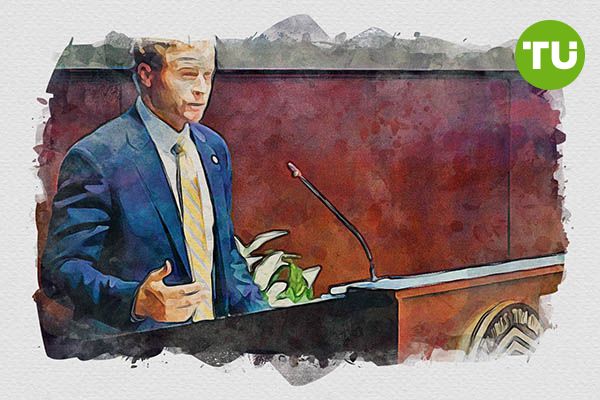
U.S. President Donald Trump has decided to appoint Brian Quintenz from Andreessen Horowitz as the chairman of the Commodity Futures Trading Commission (CFTC). This is positive news for the crypto industry, as Quintenz has long been an active advocate for regulatory changes in the digital asset sector.
The Commodity Futures Trading Commission (CFTC) is one of the key financial regulators in the U.S., responsible for overseeing derivatives markets, including futures and options.
At the beginning of 2025, it was revealed that CFTC chairman Rostin Behnam would step down when President-elect Donald Trump took office on January 20. In his farewell speech, he urged Congress to implement crypto regulation, as discussions on the topic had "stalled."
Donald Trump took this advice into account and promised to appoint someone knowledgeable about cryptocurrencies to the position. Caroline Pham was appointed as the acting chair of the CFTC, and her first initiative was to call for a review of regulations and approaches to digital assets. However, despite her proactive stance, she was seen as a temporary solution.
On February 12, it was announced that the U.S. president had finalized his choice for the CFTC chairmanship. Donald Trump decided to appoint Brian Quintenz, head of policy at the crypto investment firm a16z.
Brian Quintenz is no stranger to the Commodity Futures Trading Commission, having previously served as a commissioner during Trump's first term from 2017 to 2021. He was actively involved in the launch of the first fully regulated Bitcoin and Ethereum futures contracts and contributed to the development of the DeFi sector.
Quintenz has always been a strong advocate for regulatory reforms. He supported initiatives aimed at making it easier for companies dealing with digital assets, emerging technologies, and financial products to operate.
After leaving public service, Brian Quintenz led the policy department at a16z, the investment arm of venture capital firm Andreessen Horowitz, where he worked to bridge the gap between the crypto community and government agencies.
For a long time, the Commodity Futures Trading Commission played a secondary role in financial policy compared to the Securities and Exchange Commission (SEC). Under Brian Quintenz’s leadership, the CFTC is expected to become a more prominent player in the sector. The Trump administration is currently considering transferring cryptocurrency regulation to the CFTC, a move that Quintenz is unlikely to oppose, given his longstanding opposition to the SEC.
Last year, he strongly criticized the SEC’s "unconstitutional" approach to Ethereum. The SEC had approved Ethereum futures ETFs, effectively recognizing the asset as a commodity. However, the agency officially continued to classify Ethereum as a security, complicating the approval process for spot Ethereum ETFs and hindering industry growth.
Brian Quintenz also condemned the SEC for its "enforcement-driven regulation" of crypto exchanges like Binance and Coinbase. In his view, instead of engaging in dialogue with market participants to create clear rules, the commission was harming entrepreneurs, investors, and consumers. This, in turn, could lead to the crypto industry being pushed out of the U.S.
Brian Quintenz’s appointment as CFTC chairman could significantly alter the regulatory landscape for the crypto industry. His previous experience at the commission and strong support for digital assets make him an ideal candidate for driving reforms. Under his leadership, the CFTC is expected to take a more active role in crypto regulation, potentially leading to clearer jurisdictional boundaries with the SEC. This is especially important amid ongoing debates over the classification of Ethereum and other crypto assets.
Furthermore, Quintenz is likely to push initiatives aimed at creating a more transparent and favorable environment for crypto companies in the U.S. His leadership could also accelerate the approval of new financial products. Overall, his appointment signals a stronger CFTC presence and a potential easing of regulatory pressure on the crypto industry, which could positively impact the development of digital asset markets in the U.S.

 Afghanistan
 Albania
 Algeria
 Angola
 Argentina
 Armenia
 Australia
 Austria
 Azerbaijan
 Bahamas
 Bahrain
 Bangladesh
 Belarus
 Belgium
 Bolivia
 Botswana
 Brazil
 Brunei
 Bulgaria
 Cambodia
 Cameroon
 Canada
 Chile
Chile
 China
China
 Colombia
 Congo
Congo
 Costa Rica
 Cote d'Ivoire
 Croatia
 Cuba
Cuba
 Cyprus
 Czechia
 DR Congo
 Denmark
 Dominican Republic
 Ecuador
 Egypt
Egypt
 El Salvador
 Estonia
 Eswatini
 Ethiopia
 Finland
 France
 Georgia
 Germany
 Ghana
Ghana
 Greece
 Haiti
Haiti
 Hong Kong
 Hungary
 India
India
 Indonesia
 Iran, Islamic republic
 Iraq
Iraq
 Ireland
 Israel
 Italy
Italy
 Jamaica
 Japan
Japan
 Jordan
 Kazakhstan
 Kenya
Kenya
 Korea
Korea
 Kuwait
 Kyrgyzstan
 Laos
Laos
 Latvia
 Lebanon
 Lesotho
 Libya
Libya
 Lithuania
 Luxembourg
 Madagascar
 Malaysia
 Malta
Malta
 Mauritius
 Mexico
 Moldova
 Mongolia
 Montenegro
 Morocco
 Mozambique
 Myanmar
 Namibia
 Nepal
Nepal
 Netherlands
 New Zealand
 Nigeria
 North Macedonia
 Norway
 Oman
Oman
 Pakistan
 Palestine
 Panama
 Papua New Guinea
 Paraguay
 Peru
Peru
 Philippines
 Poland
 Portugal
 Puerto Rico
 Qatar
Qatar
 Reunion
 Romania
 Rwanda
 Saudi Arabia
 Serbia
 Singapore
 Slovakia
 Slovenia
 Somalia
 South Africa
 Spain
Spain
 Sri Lanka
 Sweden
 Switzerland
 Syria
Syria
 Taiwan
 Tajikistan
 Tanzania
 Thailand
 Trinidad and Tobago
 Tunisia
 Turkey
 UAE
UAE
 Uganda
 Ukraine
 United Kingdom
United States
United Kingdom
United States
 Uruguay
 Uzbekistan
 Venezuela
 Vietnam
 Yemen
Yemen
 Zambia
 Zimbabwe