
WTI price forecast: Crude slumps to $66 as Trump tariffs weigh on global demand
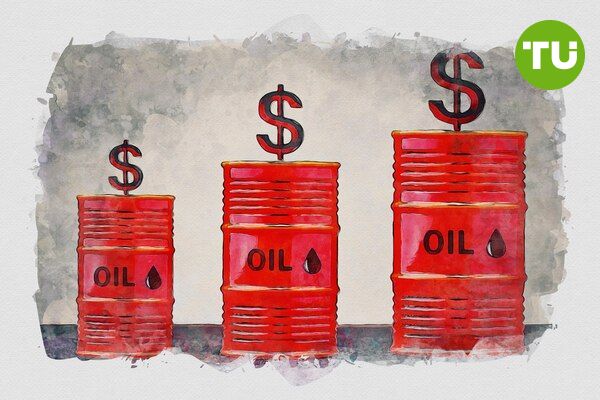
West Texas Intermediate (WTI) crude oil futures plunged nearly 4% to $65.6 per barrel, marking the lowest levels since November 2021. The decline follows escalating trade tensions as the U.S., China, Canada, and Mexico imposed retaliatory tariffs, raising concerns over a potential slowdown in global oil demand.
The 25% tariffs on Canadian and Mexican imports and the additional 10% levy on Chinese goods, which came into effect on Tuesday, have intensified fears that international trade disruptions could weaken energy consumption.
U.S. Commerce Secretary Howard Lutnick indicated that the Trump administration may reconsider tariffs on Mexico and Canada, though no formal decision has been made. Analysts warn that any adjustments to trade policies could disrupt oil flows, with Mexican crude potentially shifting to Asia and increased Latin American imports to the U.S..
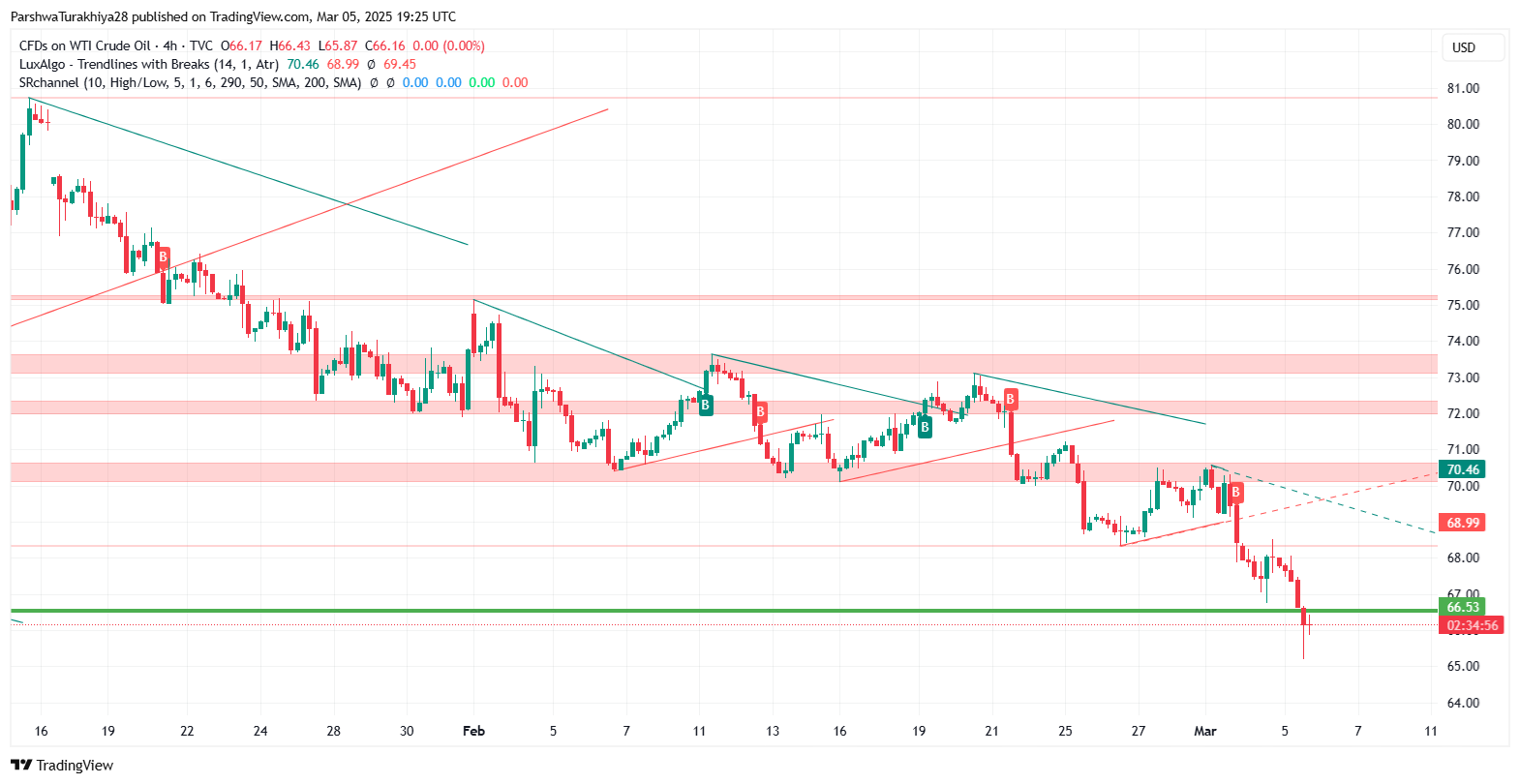
USOIL price forecast (Jan 2025 - Mar 2025) Source: TradingView.
OPEC+ confirms production increase
Adding to the downward pressure on oil prices, OPEC+ confirmed plans to increase oil production by 138,000 barrels per day starting in April. This marks the first production hike since 2022, signaling a shift from previous supply restrictions aimed at stabilizing global markets. The news has raised concerns about a potential supply glut, particularly as demand forecasts remain uncertain due to geopolitical tensions and trade policy shifts.
Meanwhile, China’s 2025 economic growth target of around 5% has bolstered expectations for potential economic stimulus measures. However, energy traders remain cautious, as a prolonged trade conflict could offset any benefits of increased Chinese demand.
WTI outlook: Further declines possible if trade uncertainty persists
From a technical perspective, WTI remains under strong selling pressure, with prices hovering near a critical support level at $66. If this level fails to hold, crude could decline toward $63-$64, reflecting additional market pessimism. Conversely, any easing of U.S. tariffs or fresh stimulus measures from China could provide relief, allowing prices to stabilize near $68-$70 per barrel.
With U.S. Nonfarm Payrolls (NFP) data set for release on Friday, traders will closely monitor labor market trends and inflation indicators as previously discussed, which could influence the Federal Reserve’s monetary policy stance and impact broader market sentiment.





Latest Finance News








-
 Afghanistan
-
 Albania
-
 Algeria
-
 Angola
-
 Argentina
-
 Armenia
-
 Australia
-
 Austria
-
 Azerbaijan
-
 Bahamas
-
 Bahrain
-
 Bangladesh
-
 Belarus
-
 Belgium
-
 Bolivia
-
 Botswana
-
 Brazil
-
 Brunei
-
 Bulgaria
-
 Cambodia
-
 Cameroon
-
 Canada
-
 Chile
Chile
-
 China
China
-
 Colombia
-
 Congo
Congo
-
 Costa Rica
-
 Cote d'Ivoire
-
 Croatia
-
 Cuba
Cuba
-
 Cyprus
-
 Czechia
-
 DR Congo
-
 Denmark
-
 Dominican Republic
-
 Ecuador
-
 Egypt
Egypt
-
 El Salvador
-
 Estonia
-
 Eswatini
-
 Ethiopia
-
 Finland
-
 France
-
 Georgia
-
 Germany
-
 Ghana
Ghana
-
 Greece
-
 Haiti
Haiti
-
 Hong Kong
-
 Hungary
-
 India
India
-
 Indonesia
-
 Iran, Islamic republic
-
 Iraq
Iraq
-
 Ireland
-
 Israel
-
 Italy
Italy
-
 Jamaica
-
 Japan
Japan
-
 Jordan
-
 Kazakhstan
-
 Kenya
Kenya
-
 Korea
Korea
-
 Kuwait
-
 Kyrgyzstan
-
 Laos
Laos
-
 Latvia
-
 Lebanon
-
 Lesotho
-
 Libya
Libya
-
 Lithuania
-
 Luxembourg
-
 Madagascar
-
 Malaysia
-
 Malta
Malta
-
 Mauritius
-
 Mexico
-
 Moldova
-
 Mongolia
-
 Montenegro
-
 Morocco
-
 Mozambique
-
 Myanmar
-
 Namibia
-
 Nepal
Nepal
-
 Netherlands
-
 New Zealand
-
 Nigeria
-
 North Macedonia
-
 Norway
-
 Oman
Oman
-
 Pakistan
-
 Palestine
-
 Panama
-
 Papua New Guinea
-
 Paraguay
-
 Peru
Peru
-
 Philippines
-
 Poland
-
 Portugal
-
 Puerto Rico
-
 Qatar
Qatar
-
 Reunion
-
 Romania
-
 Rwanda
-
 Saudi Arabia
-
 Serbia
-
 Singapore
-
 Slovakia
-
 Slovenia
-
 Somalia
-
 South Africa
-
 Spain
Spain
-
 Sri Lanka
-
 Sweden
-
 Switzerland
-
 Syria
Syria
-
 Taiwan
-
 Tajikistan
-
 Tanzania
-
 Thailand
-
 Trinidad and Tobago
-
 Tunisia
-
 Turkey
-
 UAE
UAE
-
 Uganda
-
 Ukraine
-
 United Kingdom
-
United States
-
 Uruguay
-
 Uzbekistan
-
 Venezuela
-
 Vietnam
-
 Yemen
Yemen
-
 Zambia
-
 Zimbabwe
- Forex
- Crypto











