

Natural gas price forecast: Can LNG disruption push gas back above $3.2?

U.S. natural gas futures rebounded toward $3.01 after a sharp intraday recovery, but the broader technical structure remains under pressure. The bounce follows renewed geopolitical tension around the Strait of Hormuz, a corridor that carries more than 20% of global LNG trade, yet prices are still trading below key moving averages that define the prevailing downtrend.
Highlights
- Natural gas trades near $3.01 but remains below all major daily EMAs.
- Strait of Hormuz risk supports near-term volatility in LNG flows.
- $3.2 and $3.6 mark key resistance levels for trend reversal.
The daily chart shows a continued decline from February’s spike above $7, which was a rally driven by specific events but has since been completely retraced. Since then, the contract has formed a pattern of lower highs and lower lows, dropping from around $4.5 to recent support levels near $2.85 to $2.9.
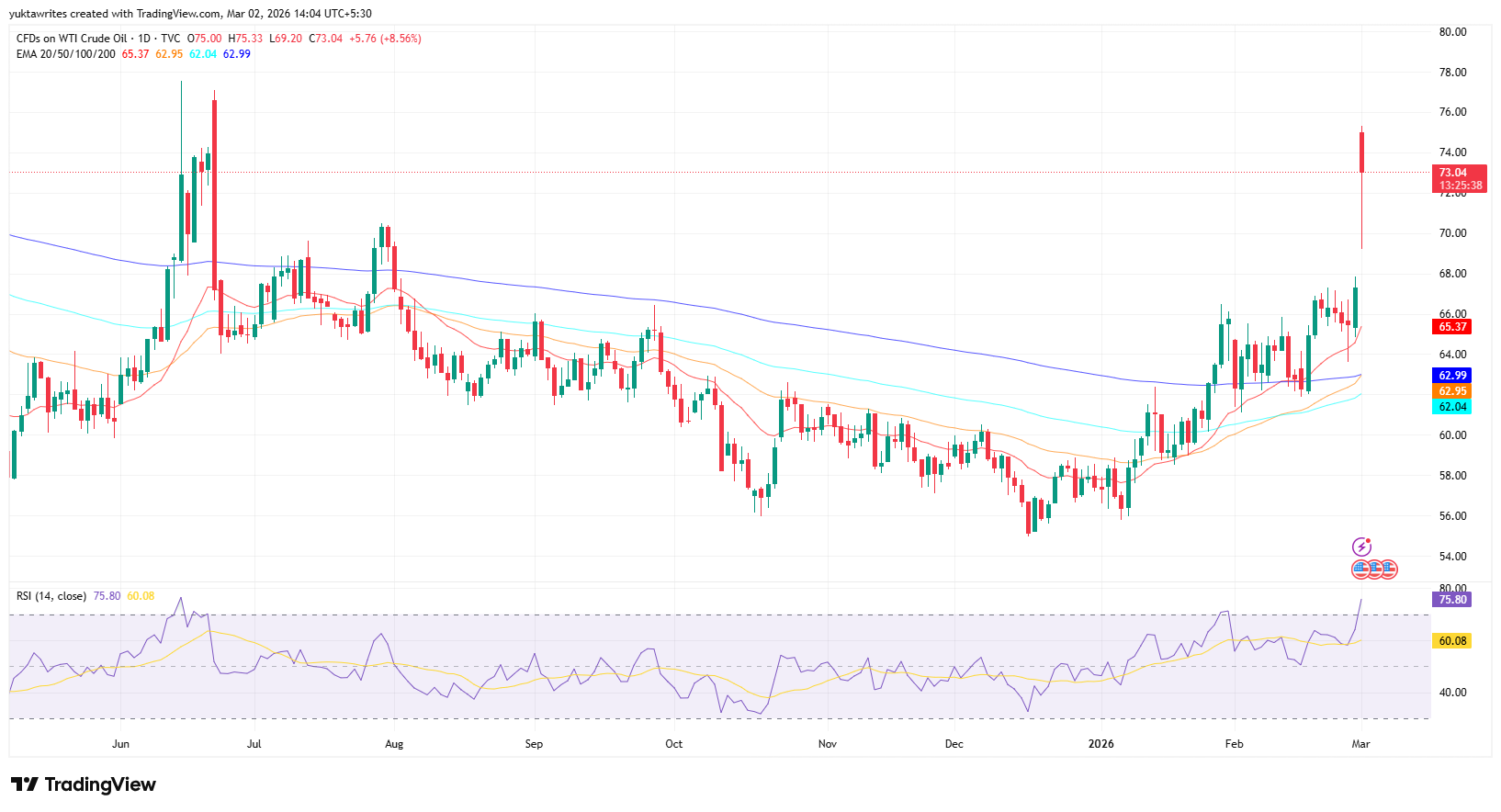
Natural has price dynamics (Source: TradingView)
Despite the latest recovery, natural gas remains below the 20-day EMA at $3.21, the 50-day at $3.57, the 100-day at $3.68 and the 200-day near $3.61. That stacked alignment keeps the medium-term structure bearish. RSI around 43 signals neutral to weak momentum rather than a deeply oversold condition, suggesting that while short covering is possible, a confirmed trend reversal has not yet materialized.
If the price goes above $3.20, it could go to $3.55, where the 50-day EMA meets the previous breakdown levels. To change the overall bias back to bullish, the price would need to stay above the $3.6 to $3.7 zone for a long time.
Geopolitical risk offsets longer-term supply growth
The near-term fundamental driver is shipping risk. Disruptions and rerouting of LNG cargoes through Hormuz have tightened supply visibility for Asian and European buyers. Oil’s surge has also spilled over into gas sentiment, as higher freight and energy costs ripple across markets.
However, the long-term outlook suggests that capacity is set to grow. Saudi Aramco has started production at its $100 billion Jafurah shale gas project, aiming for an output of up to 2 billion cubic feet per day by 2030. Meanwhile, Qatar and ADNOC are making progress on their LNG expansion initiatives, and the International Energy Agency anticipates a surge in global supply later this decade.
As previously discussed in our natural gas coverage, the market has struggled to sustain rallies once winter-driven demand fades. The current rebound reflects geopolitical risk rather than a structural tightening of supply.





Latest Natural Gas News




-
 Afghanistan
-
 Albania
-
 Algeria
-
 Angola
-
 Argentina
-
 Armenia
-
 Australia
-
 Austria
-
 Azerbaijan
-
 Bahamas
-
 Bahrain
-
 Bangladesh
-
 Belarus
-
 Belgium
-
 Bolivia
-
 Botswana
-
 Brazil
-
 Brunei
-
 Bulgaria
-
 Cambodia
-
 Cameroon
-
 Canada
-
 Chile
Chile
-
 China
China
-
 Colombia
-
 Congo
Congo
-
 Costa Rica
-
 Cote d'Ivoire
-
 Croatia
-
 Cuba
Cuba
-
 Cyprus
-
 Czechia
-
 DR Congo
-
 Denmark
-
 Dominican Republic
-
 Ecuador
-
 Egypt
Egypt
-
 El Salvador
-
 Estonia
-
 Eswatini
-
 Ethiopia
-
 Finland
-
 France
-
 Georgia
-
 Germany
-
 Ghana
Ghana
-
 Greece
-
 Haiti
Haiti
-
 Hong Kong
-
 Hungary
-
 India
India
-
 Indonesia
-
 Iran, Islamic republic
-
 Iraq
Iraq
-
 Ireland
-
 Israel
-
 Italy
Italy
-
 Jamaica
-
 Japan
Japan
-
 Jordan
-
 Kazakhstan
-
 Kenya
Kenya
-
 Korea
Korea
-
 Kuwait
-
 Kyrgyzstan
-
 Laos
Laos
-
 Latvia
-
 Lebanon
-
 Lesotho
-
 Libya
Libya
-
 Lithuania
-
 Luxembourg
-
 Madagascar
-
 Malaysia
-
 Malta
Malta
-
 Mauritius
-
 Mexico
-
 Moldova
-
 Mongolia
-
 Montenegro
-
 Morocco
-
 Mozambique
-
 Myanmar
-
 Namibia
-
 Nepal
Nepal
-
 Netherlands
-
 New Zealand
-
 Nigeria
-
 North Macedonia
-
 Norway
-
 Oman
Oman
-
 Pakistan
-
 Palestine
-
 Panama
-
 Papua New Guinea
-
 Paraguay
-
 Peru
Peru
-
 Philippines
-
 Poland
-
 Portugal
-
 Puerto Rico
-
 Qatar
Qatar
-
 Reunion
-
 Romania
-
 Rwanda
-
 Saudi Arabia
-
 Serbia
-
 Singapore
-
 Slovakia
-
 Slovenia
-
 Somalia
-
 South Africa
-
 Spain
Spain
-
 Sri Lanka
-
 Sweden
-
 Switzerland
-
 Syria
Syria
-
 Taiwan
-
 Tajikistan
-
 Tanzania
-
 Thailand
-
 Trinidad and Tobago
-
 Tunisia
-
 Turkey
-
 UAE
UAE
-
 Uganda
-
 Ukraine
-
 United Kingdom
-
United States
-
 Uruguay
-
 Uzbekistan
-
 Venezuela
-
 Vietnam
-
 Yemen
Yemen
-
 Zambia
-
 Zimbabwe
- Forex
- Crypto












