

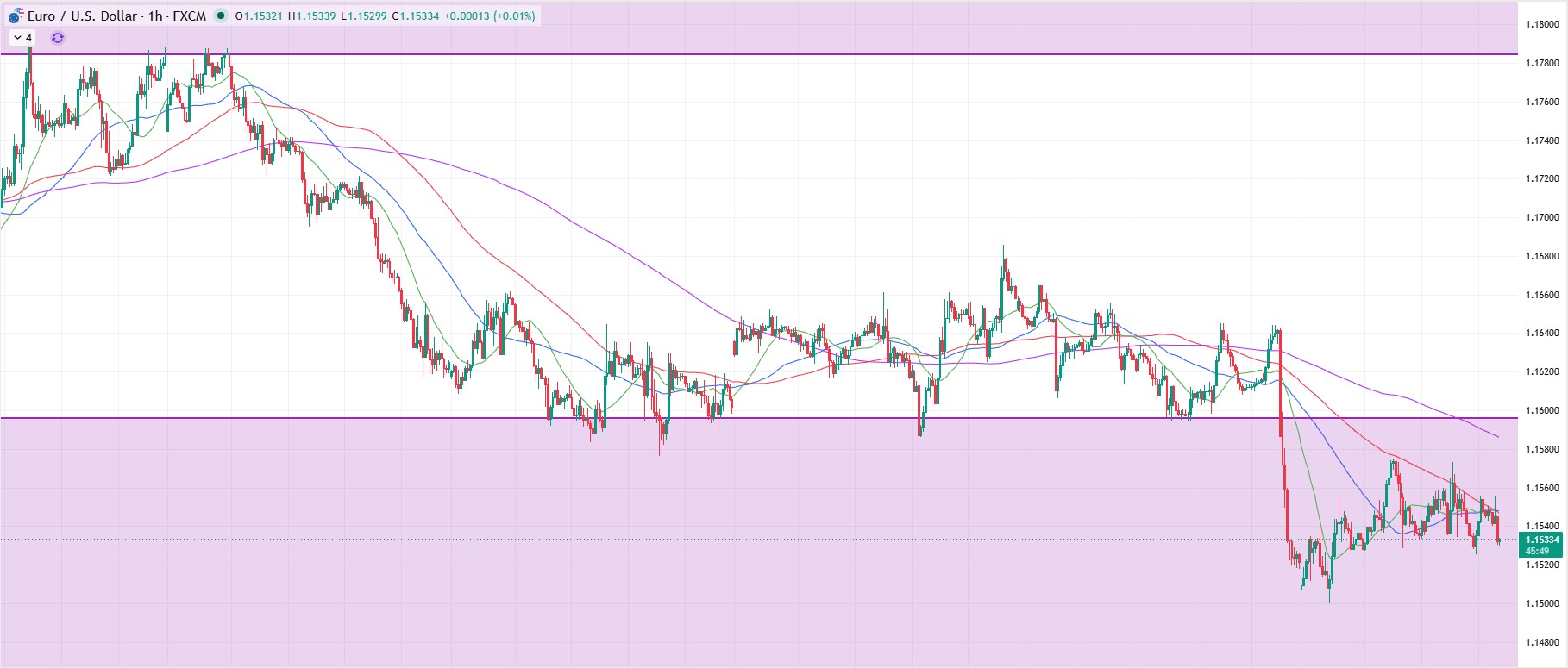
The euro continues to correct against the dollar after its recent rally, with EUR/USD holding near the 1.1500 area. Pressure on the single currency has increased following strong U.S. labor market and inflation data, which have reduced expectations of imminent Fed policy easing.
Markets await ECB signals and new macro data
The key event for the euro remains the European Central Bank meeting and the regulator’s updated forecasts. Despite expectations of a more hawkish ECB tone, the market remains cautious about the outlook for the European economy, which continues to show weak growth. Additional uncertainty comes from external trade risks and ongoing geopolitical tensions.
Analysts note deterioration in short-term technical picture
A number of major banks point out that after strong U.S. data, the upward trend in EUR/USD has been disrupted. I continue to maintain a bearish outlook on the euro for the summer months, citing the persistent yield advantage of the dollar and the resilience of the U.S. economy. Additional support for the dollar comes from rising U.S. Treasury yields and expectations of a more restrictive Fed policy compared to Europe.
Near-term outlook
In the short term, risks for the euro remain skewed to the downside. As long as U.S. macro data remains strong and the market continues to revise Fed rate expectations, the dollar retains its advantage. A sustained recovery in EUR/USD would require either weaker U.S. data or more hawkish signals from the ECB capable of narrowing the current yield gap between the two economies.
As long as EUR/USD trades below 1.1560–1.1580, the risks of a break below 1.1500 and a decline toward 1.1480–1.1460 will prevail, as I previously noted in the article EUR/USD holds above 1.1500 despite downside risks. In the event of an ECB rate hike today, a rebound toward 1.1580–1.1600 is possible, but such a move may be used as a selling opportunity.



Latest EUR/USD News






-
 Afghanistan
-
 Albania
-
 Algeria
-
 Angola
-
 Argentina
-
 Armenia
-
 Australia
-
 Austria
-
 Azerbaijan
-
 Bahamas
-
 Bahrain
-
 Bangladesh
-
 Belarus
-
 Belgium
-
 Bolivia
-
 Botswana
-
 Brazil
-
 Brunei
-
 Bulgaria
-
 Cambodia
-
 Cameroon
-
 Canada
-
 Chile
Chile
-
 China
China
-
 Colombia
-
 Congo
Congo
-
 Costa Rica
-
 Cote d'Ivoire
-
 Croatia
-
 Cuba
Cuba
-
 Cyprus
-
 Czechia
-
 DR Congo
-
 Denmark
-
 Dominican Republic
-
 Ecuador
-
 Egypt
Egypt
-
 El Salvador
-
 Estonia
-
 Eswatini
-
 Ethiopia
-
 Finland
-
 France
-
 Georgia
-
 Germany
-
 Ghana
Ghana
-
 Greece
-
 Haiti
Haiti
-
 Hong Kong
-
 Hungary
-
 India
India
-
 Indonesia
-
 Iran, Islamic republic
-
 Iraq
Iraq
-
 Ireland
-
 Israel
-
 Italy
Italy
-
 Jamaica
-
 Japan
Japan
-
 Jordan
-
 Kazakhstan
-
 Kenya
Kenya
-
 Korea
Korea
-
 Kuwait
-
 Kyrgyzstan
-
 Laos
Laos
-
 Latvia
-
 Lebanon
-
 Lesotho
-
 Libya
Libya
-
 Lithuania
-
 Luxembourg
-
 Madagascar
-
 Malaysia
-
 Malta
Malta
-
 Mauritius
-
 Mexico
-
 Moldova
-
 Mongolia
-
 Montenegro
-
 Morocco
-
 Mozambique
-
 Myanmar
-
 Namibia
-
 Nepal
Nepal
-
 Netherlands
-
 New Zealand
-
 Nigeria
-
 North Macedonia
-
 Norway
-
 Oman
Oman
-
 Pakistan
-
 Palestine
-
 Panama
-
 Papua New Guinea
-
 Paraguay
-
 Peru
Peru
-
 Philippines
-
 Poland
-
 Portugal
-
 Puerto Rico
-
 Qatar
Qatar
-
 Reunion
-
 Romania
-
 Rwanda
-
 Saudi Arabia
-
 Serbia
-
 Singapore
-
 Slovakia
-
 Slovenia
-
 Somalia
-
 South Africa
-
 Spain
Spain
-
 Sri Lanka
-
 Sweden
-
 Switzerland
-
 Syria
Syria
-
 Taiwan
-
 Tajikistan
-
 Tanzania
-
 Thailand
-
 Trinidad and Tobago
-
 Tunisia
-
 Turkey
-
 UAE
UAE
-
 Uganda
-
 Ukraine
-
 United Kingdom
-
United States
-
 Uruguay
-
 Uzbekistan
-
 Venezuela
-
 Vietnam
-
 Yemen
Yemen
-
 Zambia
-
 Zimbabwe
- Forex
- Crypto











