
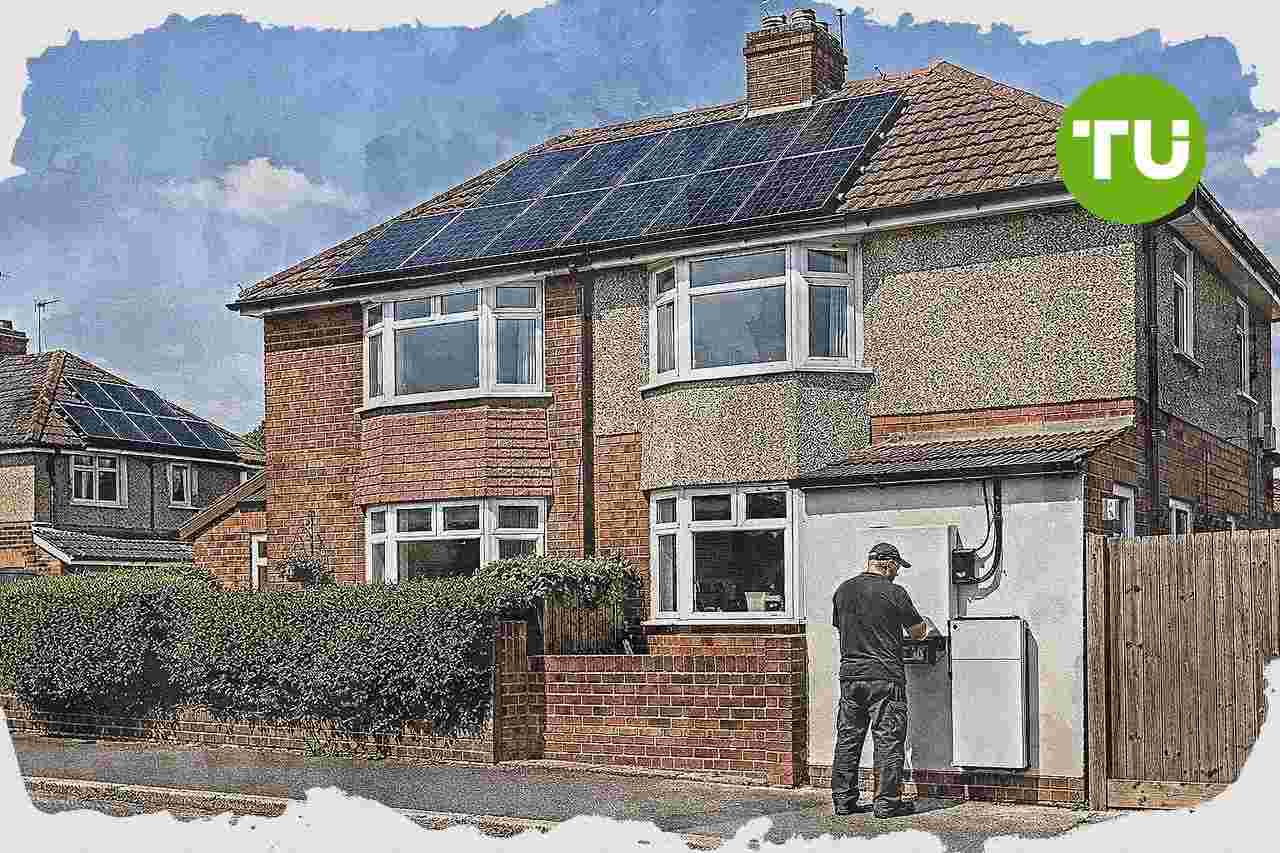
Rising electricity prices and wider efforts to reduce exposure to fossil fuel shocks are pushing more UK households to consider solar panels and batteries. The financial appeal depends on location, home energy use and export tariffs, while payback periods still typically stretch to a decade or more.
Highlights
- UK household solar installation costs remained stable at £2,008 per kilowatt in 2025-26 versus £2,049 in 2013-14, while grid electricity prices rose 54 per cent since 2019 to 24.6 pence per kWh.
- Battery adoption with solar increased to 22 per cent of installations from 14 per cent a year earlier, with 14,000 batteries installed in Q1—double last year's Q1 figure.
- March saw 18,000 UK households fitting solar panels, the highest monthly deployment in over a decade, as electricity prices are set to rise another 6.61 per cent in July due to ongoing gas supply constraints.
Economics of solar and battery adoption
As reported by the Microgeneration Certification Scheme, the financial case for household solar in Britain has strengthened as installation costs stay relatively stable while grid electricity becomes more expensive. Official MCS data show a typical system of under four kilowatts costs £2,008 per kilowatt in 2025-26, including installation, compared with £2,049 per kilowatt in 2013-14.At the same time, electricity under Britain’s price cap has risen by about 54 per cent since 2019, from roughly 16p per kWh to about 24.6 pence per kWh currently. A 3.5 kilowatt-peak system in Britain can generate around 3,000 kWh to 3,700 kWh, above the 2,700 kWh used by the average British gas-heated home.
Returns vary significantly because solar generation does not always match household consumption. Smart export guarantee tariffs for homes with panels but no batteries currently range from a few pence to as much as 16 pence per kWh, and the Energy Saving Trust estimates annual savings of about £430 to £650, implying payback periods of around 10 years in the south of Britain and roughly 13 years in the far north.
Adding a battery raises upfront costs by several thousand pounds, but it can improve returns by allowing households to store cheap power for later use or export. That matters more as growing solar output in Britain pushes wholesale electricity prices very low, and sometimes negative, during the middle of the day.
Energy price pressure and market impact
Household interest in solar is rising after another fossil fuel supply shock linked to the Iran war, following Russia’s full-scale invasion of Ukraine in February 2022. The unit cost of electricity is expected to rise by 6.61 per cent in July because it is tied to gas prices, which have climbed as supplies remain constrained beyond the Strait of Hormuz.Government figures show roughly 18,000 UK households fitted solar panels in March, the highest monthly deployment in more than a decade when non-domestic installations are included. In total, about 1.69 million UK households have installed solar panels.
Battery adoption is also accelerating alongside rooftop solar. MCS says about 22 per cent of solar installations now include batteries, up from about 14 per cent a year earlier, while around 14,000 batteries were installed in the first quarter of this year, double the level seen in the same quarter of the previous year.
Suppliers and industry groups say batteries are becoming central to the household value proposition because they give consumers more control over when electricity is used, stored or sold back to the grid. EDF says about 95 per cent of its solar panel customers in Britain now buy batteries as well, reflecting stronger demand for flexibility as power market volatility increases.
We previously reported on European utilities extending long-term LNG purchasing plans to reduce exposure to spot-market swings and strengthen energy security amid geopolitical disruptions. The piece highlighted Venture Global and Greece’s Atlantic-SEE LNG Trade expanding a 20-year agreement from 2030, with imports routed via Greece and the Alexandroupolis terminal to supply Central and Eastern Europe through the Vertical Corridor.



Latest UK News







-
 Afghanistan
-
 Albania
-
 Algeria
-
 Angola
-
 Argentina
-
 Armenia
-
 Australia
-
 Austria
-
 Azerbaijan
-
 Bahamas
-
 Bahrain
-
 Bangladesh
-
 Belarus
-
 Belgium
-
 Bolivia
-
 Botswana
-
 Brazil
-
 Brunei
-
 Bulgaria
-
 Cambodia
-
 Cameroon
-
 Canada
-
 Chile
Chile
-
 China
China
-
 Colombia
-
 Congo
Congo
-
 Costa Rica
-
 Cote d'Ivoire
-
 Croatia
-
 Cuba
Cuba
-
 Cyprus
-
 Czechia
-
 DR Congo
-
 Denmark
-
 Dominican Republic
-
 Ecuador
-
 Egypt
Egypt
-
 El Salvador
-
 Estonia
-
 Eswatini
-
 Ethiopia
-
 Finland
-
 France
-
 Georgia
-
 Germany
-
 Ghana
Ghana
-
 Greece
-
 Haiti
Haiti
-
 Hong Kong
-
 Hungary
-
 India
India
-
 Indonesia
-
 Iran, Islamic republic
-
 Iraq
Iraq
-
 Ireland
-
 Israel
-
 Italy
Italy
-
 Jamaica
-
 Japan
Japan
-
 Jordan
-
 Kazakhstan
-
 Kenya
Kenya
-
 Korea
Korea
-
 Kuwait
-
 Kyrgyzstan
-
 Laos
Laos
-
 Latvia
-
 Lebanon
-
 Lesotho
-
 Libya
Libya
-
 Lithuania
-
 Luxembourg
-
 Madagascar
-
 Malaysia
-
 Malta
Malta
-
 Mauritius
-
 Mexico
-
 Moldova
-
 Mongolia
-
 Montenegro
-
 Morocco
-
 Mozambique
-
 Myanmar
-
 Namibia
-
 Nepal
Nepal
-
 Netherlands
-
 New Zealand
-
 Nigeria
-
 North Macedonia
-
 Norway
-
 Oman
Oman
-
 Pakistan
-
 Palestine
-
 Panama
-
 Papua New Guinea
-
 Paraguay
-
 Peru
Peru
-
 Philippines
-
 Poland
-
 Portugal
-
 Puerto Rico
-
 Qatar
Qatar
-
 Reunion
-
 Romania
-
 Rwanda
-
 Saudi Arabia
-
 Serbia
-
 Singapore
-
 Slovakia
-
 Slovenia
-
 Somalia
-
 South Africa
-
 Spain
Spain
-
 Sri Lanka
-
 Sweden
-
 Switzerland
-
 Syria
Syria
-
 Taiwan
-
 Tajikistan
-
 Tanzania
-
 Thailand
-
 Trinidad and Tobago
-
 Tunisia
-
 Turkey
-
 UAE
UAE
-
 Uganda
-
 Ukraine
-
 United Kingdom
-
United States
-
 Uruguay
-
 Uzbekistan
-
 Venezuela
-
 Vietnam
-
 Yemen
Yemen
-
 Zambia
-
 Zimbabwe
- Forex
- Crypto











