
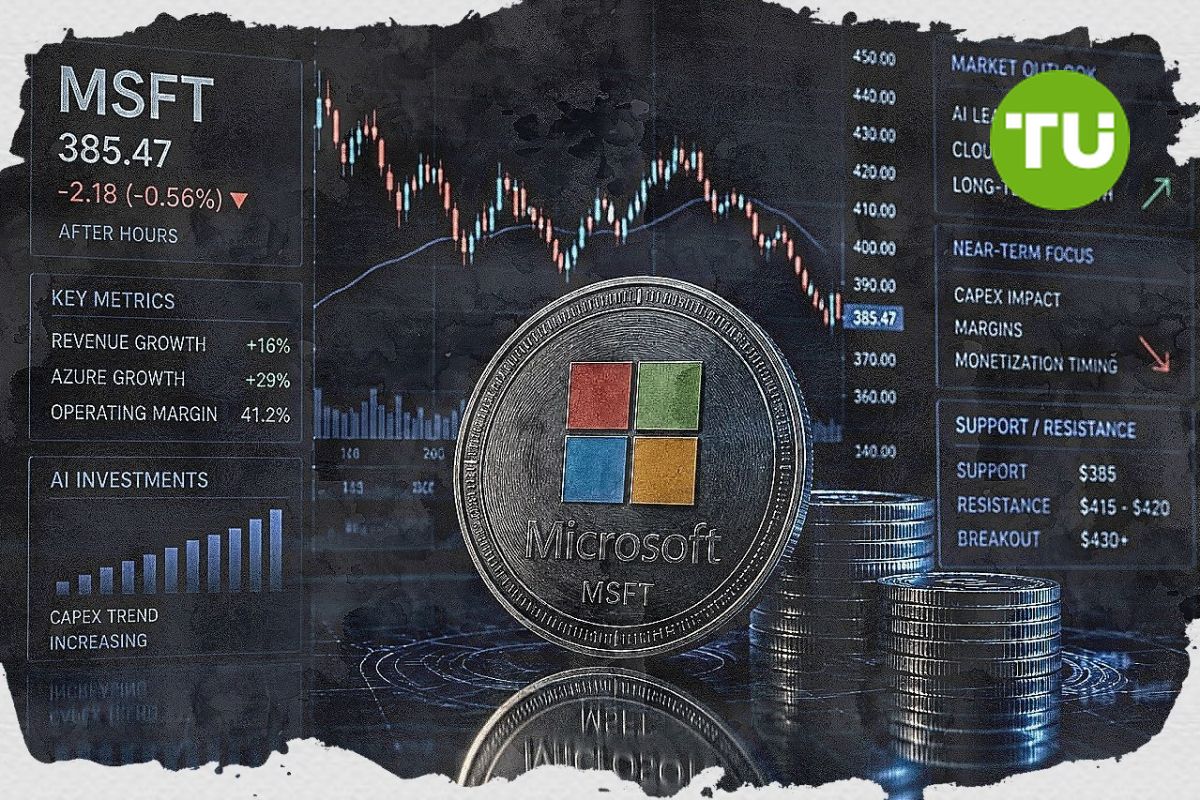
Microsoft shares remain under pressure and continue to lag several other mega-cap technology stocks this year. The latest pullback has been driven less by deteriorating operating performance and more by growing investor concerns over the scale of the company's artificial intelligence spending.

Markets are becoming increasingly demanding toward AI leaders, expecting not only strong growth but also clear evidence that massive investments in infrastructure and data centers will generate attractive returns.
Strong fundamentals versus spending concerns
Fundamentally, Microsoft continues to deliver solid results. Azure maintains robust growth, while the cloud and enterprise segments remain the company's primary revenue drivers. Microsoft is also reporting significant expansion in its AI business and continues to broaden the Copilot ecosystem across its product portfolio. However, investors remain concerned about margin pressure caused by heavy spending on AI infrastructure and computing capacity. Management has reiterated its commitment to aggressive investment, fueling an ongoing debate about the timing and scale of future monetization.
What triggered the recent correction
Additional pressure on the sector has come from broader concerns surrounding AI-related valuations. Following a mixed market reaction to Broadcom's outlook and renewed fears of overheating within the AI space, investors began reducing exposure to large-cap technology names. At the same time, reports of restructuring within Microsoft's Xbox division and a stronger focus on cost efficiency contributed to cautious sentiment. As a result, Microsoft became one of the more visible participants in the recent technology sector pullback.
Market remains sensitive to spending signals
Despite near-term weakness, the long-term investment case for Microsoft continues to be anchored in its leadership positions in cloud computing and artificial intelligence. The key catalyst for a sustained recovery will be the company's ability to demonstrate that its massive AI investments are translating into faster revenue and earnings growth. Until the next round of earnings results, investors are likely to remain highly sensitive to any signals regarding capital expenditures, Azure growth trends, and the commercial adoption of Copilot products.
Near-term outlook
Having found support near the $385 level, MSFT could extend its recovery toward the $415–420 area, where selling pressure may re-emerge. Only a decisive breakout above $430 would provide stronger evidence that a durable bottom is forming. Until then, as discussed previously in Microsoft slides again as capex continues to weigh on shares, the stock is likely to remain vulnerable to renewed bouts of selling pressure.



Latest Microsoft News






-
 Afghanistan
-
 Albania
-
 Algeria
-
 Angola
-
 Argentina
-
 Armenia
-
 Australia
-
 Austria
-
 Azerbaijan
-
 Bahamas
-
 Bahrain
-
 Bangladesh
-
 Belarus
-
 Belgium
-
 Bolivia
-
 Botswana
-
 Brazil
-
 Brunei
-
 Bulgaria
-
 Cambodia
-
 Cameroon
-
 Canada
-
 Chile
Chile
-
 China
China
-
 Colombia
-
 Congo
Congo
-
 Costa Rica
-
 Cote d'Ivoire
-
 Croatia
-
 Cuba
Cuba
-
 Cyprus
-
 Czechia
-
 DR Congo
-
 Denmark
-
 Dominican Republic
-
 Ecuador
-
 Egypt
Egypt
-
 El Salvador
-
 Estonia
-
 Eswatini
-
 Ethiopia
-
 Finland
-
 France
-
 Georgia
-
 Germany
-
 Ghana
Ghana
-
 Greece
-
 Haiti
Haiti
-
 Hong Kong
-
 Hungary
-
 India
India
-
 Indonesia
-
 Iran, Islamic republic
-
 Iraq
Iraq
-
 Ireland
-
 Israel
-
 Italy
Italy
-
 Jamaica
-
 Japan
Japan
-
 Jordan
-
 Kazakhstan
-
 Kenya
Kenya
-
 Korea
Korea
-
 Kuwait
-
 Kyrgyzstan
-
 Laos
Laos
-
 Latvia
-
 Lebanon
-
 Lesotho
-
 Libya
Libya
-
 Lithuania
-
 Luxembourg
-
 Madagascar
-
 Malaysia
-
 Malta
Malta
-
 Mauritius
-
 Mexico
-
 Moldova
-
 Mongolia
-
 Montenegro
-
 Morocco
-
 Mozambique
-
 Myanmar
-
 Namibia
-
 Nepal
Nepal
-
 Netherlands
-
 New Zealand
-
 Nigeria
-
 North Macedonia
-
 Norway
-
 Oman
Oman
-
 Pakistan
-
 Palestine
-
 Panama
-
 Papua New Guinea
-
 Paraguay
-
 Peru
Peru
-
 Philippines
-
 Poland
-
 Portugal
-
 Puerto Rico
-
 Qatar
Qatar
-
 Reunion
-
 Romania
-
 Rwanda
-
 Saudi Arabia
-
 Serbia
-
 Singapore
-
 Slovakia
-
 Slovenia
-
 Somalia
-
 South Africa
-
 Spain
Spain
-
 Sri Lanka
-
 Sweden
-
 Switzerland
-
 Syria
Syria
-
 Taiwan
-
 Tajikistan
-
 Tanzania
-
 Thailand
-
 Trinidad and Tobago
-
 Tunisia
-
 Turkey
-
 UAE
UAE
-
 Uganda
-
 Ukraine
-
 United Kingdom
-
United States
-
 Uruguay
-
 Uzbekistan
-
 Venezuela
-
 Vietnam
-
 Yemen
Yemen
-
 Zambia
-
 Zimbabwe
- Forex
- Crypto











