The tweet was deleted by the author.
But we saved everything 🙂.


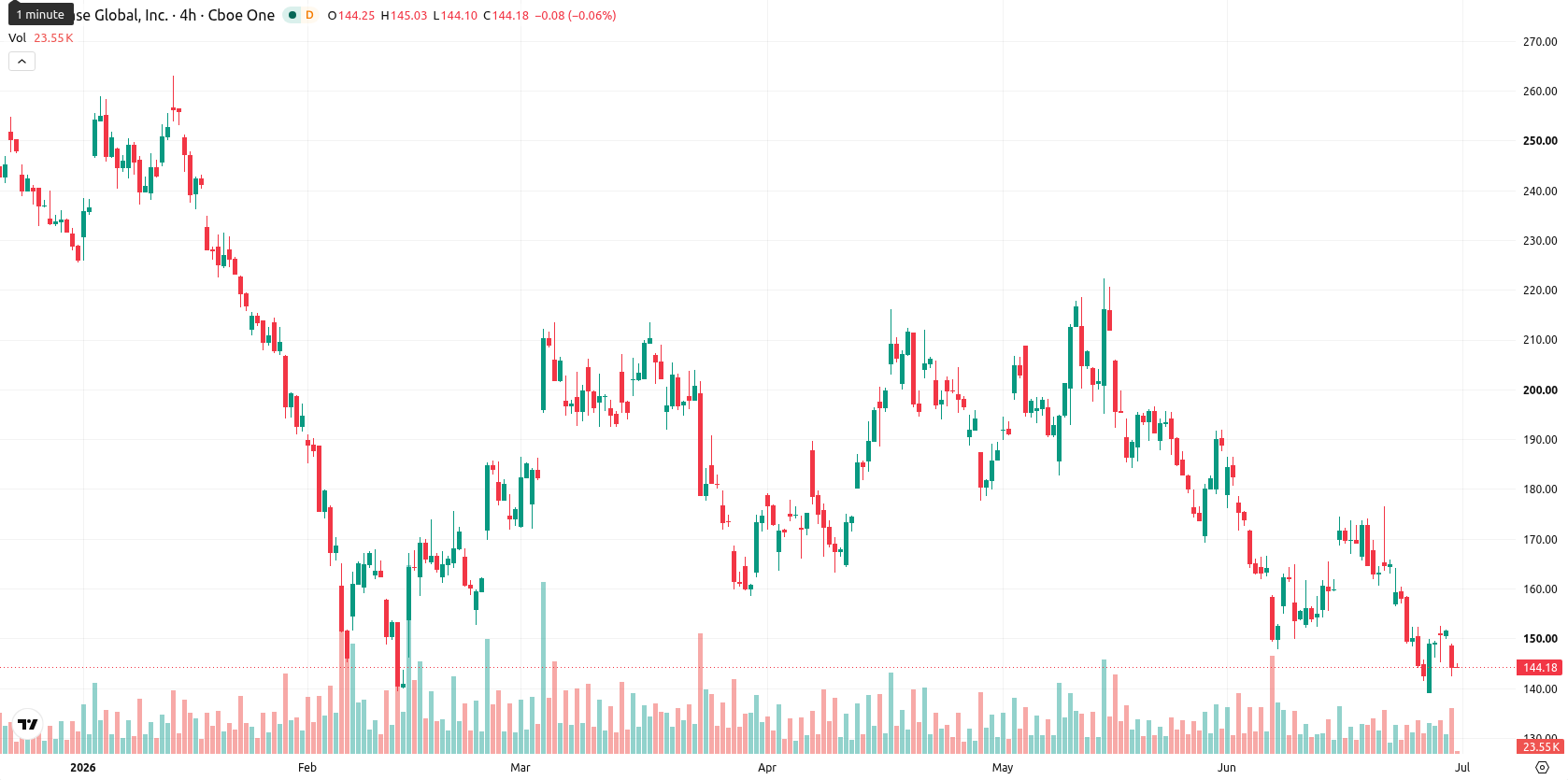
Coinbase Global, Inc. (COIN) is trading at $144.71, down sharply from the previous close, with a notable decline both in absolute terms and percentage, reflecting a pronounced intraday drop since the market open. The downtrend is underscored by substantial selling pressure and a gap down at the open, largely attributed to sustained weakness across all key moving averages and a dominant seller presence; while Brian Armstrong’s positive tweet on stablecoin adoption sets an upbeat tone, the market response is currently dominated by technical resistance and risk-off sentiment.
 184.17
192.72
184.17
192.72
Brian Armstrong’s tweet expresses enthusiasm for advancing stablecoin adoption and updating the financial system. This message is significant as it aims to boost long-term demand and ecosystem adoption, potentially strengthening Coinbase’s future revenue streams. However, despite the positive sentiment, the market is prioritizing a powerful technical downtrend and lingering concerns about adoption hurdles, regulatory issues, and cost management — recent actions such as the stablecoin infrastructure expansion in Europe and AI integration have yet to offset prevailing seller control.
View post on X Loading...
COIN is trading well below its MA-20 at $160.59, MA-50 at $181.69, and MA-200 at $233.48, confirming seller dominance across all timeframes and resistance at the Ichimoku Kijun of $168.10. Momentum remains negative, with MACD and other major signals pointing to weak intraday demand; the RSI implies mild oversold conditions, but stabilization is not yet confirmed. Over the next five days, the expected trading range is $130.00 to $150.00, with a less than 20% probability of a rebound and much higher risk of further downside. The fact that Armstrong’s positive stablecoin message has not been confirmed by price action adds caution to the short-term forecast.
Previously it was reported that Coinbase continued to face bearish momentum and heightened volatility despite positive regulatory and operational developments. Against this backdrop, traders should closely monitor for shifts in momentum or a breakout from current consolidation patterns, as these could quickly alter the near-term outlook.


 Afghanistan
 Albania
 Algeria
 Angola
 Argentina
 Armenia
 Australia
 Austria
 Azerbaijan
 Bahamas
 Bahrain
 Bangladesh
 Belarus
 Belgium
 Bolivia
 Botswana
 Brazil
 Brunei
 Bulgaria
 Cambodia
 Cameroon
 Canada
 Chile
Chile
 China
China
 Colombia
 Congo
Congo
 Costa Rica
 Cote d'Ivoire
 Croatia
 Cuba
Cuba
 Cyprus
 Czechia
 DR Congo
 Denmark
 Dominican Republic
 Ecuador
 Egypt
Egypt
 El Salvador
 Estonia
 Eswatini
 Ethiopia
 Finland
 France
 Georgia
 Germany
 Ghana
Ghana
 Greece
 Haiti
Haiti
 Hong Kong
 Hungary
 India
India
 Indonesia
 Iran, Islamic republic
 Iraq
Iraq
 Ireland
 Israel
 Italy
Italy
 Jamaica
 Japan
Japan
 Jordan
 Kazakhstan
 Kenya
Kenya
 Korea
Korea
 Kuwait
 Kyrgyzstan
 Laos
Laos
 Latvia
 Lebanon
 Lesotho
 Libya
Libya
 Lithuania
 Luxembourg
 Madagascar
 Malaysia
 Malta
Malta
 Mauritius
 Mexico
 Moldova
 Mongolia
 Montenegro
 Morocco
 Mozambique
 Myanmar
 Namibia
 Nepal
Nepal
 Netherlands
 New Zealand
 Nigeria
 North Macedonia
 Norway
 Oman
Oman
 Pakistan
 Palestine
 Panama
 Papua New Guinea
 Paraguay
 Peru
Peru
 Philippines
 Poland
 Portugal
 Puerto Rico
 Qatar
Qatar
 Reunion
 Romania
 Rwanda
 Saudi Arabia
 Serbia
 Singapore
 Slovakia
 Slovenia
 Somalia
 South Africa
 Spain
Spain
 Sri Lanka
 Sweden
 Switzerland
 Syria
Syria
 Taiwan
 Tajikistan
 Tanzania
 Thailand
 Trinidad and Tobago
 Tunisia
 Turkey
 UAE
UAE
 Uganda
 Ukraine
 United Kingdom
United States
United Kingdom
United States
 Uruguay
 Uzbekistan
 Venezuela
 Vietnam
 Yemen
Yemen
 Zambia
 Zimbabwe