

WTI is attempting to stabilize after a sharp correction as traders continue to scale back the geopolitical risk premium that drove prices sharply higher during the recent conflict between the U.S. and Iran. While the situation in the Middle East remains fragile and shipping through the Strait of Hormuz has not fully normalized, expectations for renewed diplomatic efforts have reduced fears of a prolonged supply disruption.
As a result, the market has shifted its focus back toward underlying supply and demand fundamentals.
Even so, geopolitical risks have not disappeared. Any renewed escalation involving Iran or disruptions to Gulf shipping could quickly restore volatility and lift crude prices, limiting the scope for a sustained bearish move.
OPEC+ output increase weighs on sentiment
Fundamentals have become less supportive after OPEC+ confirmed another 188,000 barrels per day production increase for August, extending its gradual rollback of voluntary supply cuts. The group also reiterated that future output adjustments will remain flexible and dependent on market conditions, but the decision reinforces expectations that global supply will continue to recover during the second half of the year.
At the same time, the latest EIA Short-Term Energy Outlook expects Middle East production and exports to recover progressively as oil flows normalize, while forecasting that the global market could return to oversupply later this year, creating additional downside pressure on crude prices.
Technical picture shows corrective rebound inside broader downtrend
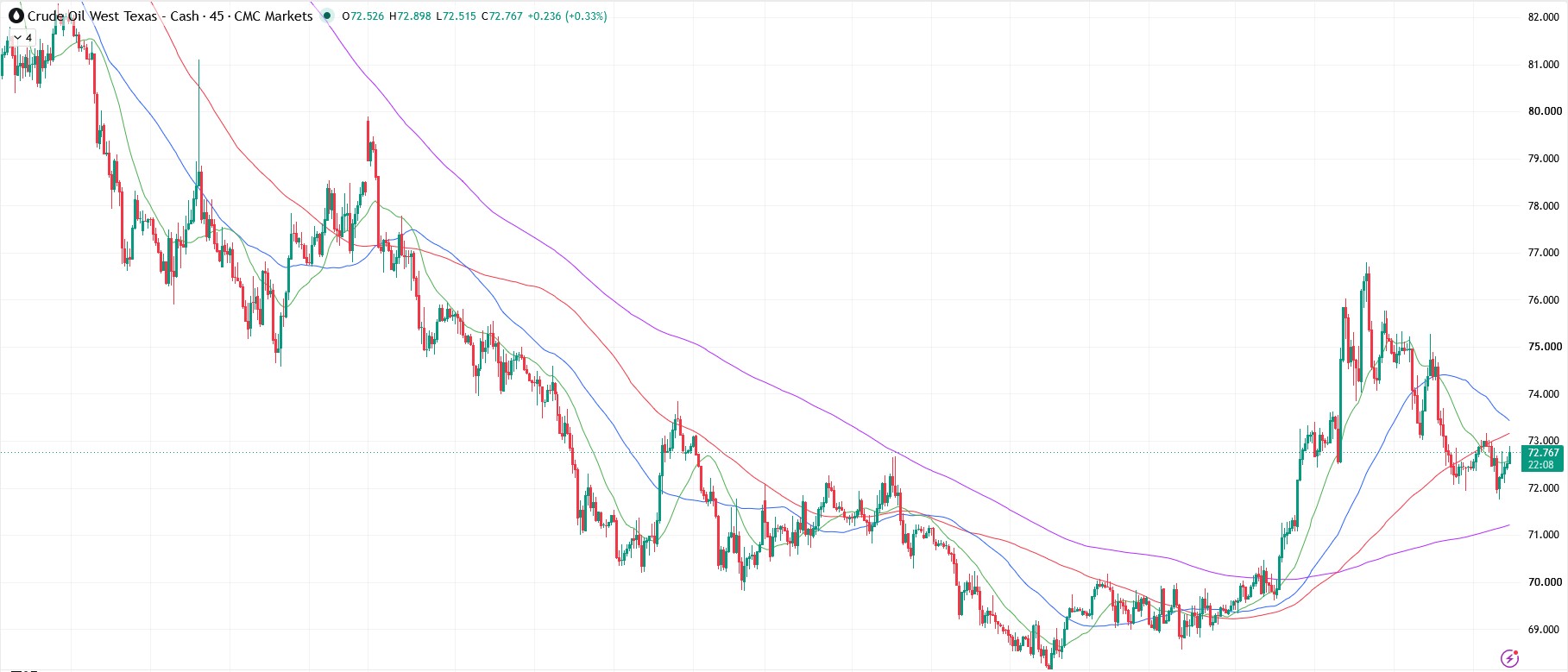
The intraday chart shows WTI attempting to stabilize near the $72-73 area after retreating from the recent spike above $76. Although prices have recovered modestly from the latest lows, they continue to trade below the declining medium-term moving averages, suggesting that bullish momentum remains limited following the sharp reversal.
A sustained move above $73.50-74.00 would improve the short-term outlook, while initial support remains near $72.00. A break below this area could expose $70.00, where buyers may attempt to slow the decline.
As I noted in the previous article, WTI rebounds as easing geopolitical tensions outweigh inventory draws, the near-term outlook for crude oil remains cautiously bearish, although a deeper pullback could begin to attract fresh buying interest as geopolitical risks continue to provide an underlying layer of support.
As I noted in the previous article, WTI remains elevated as geopolitical risks keep supply concerns in focus, developments in the Middle East will continue to influence WTI price action. Even so, the broader outlook remains bearish as improving supply expectations and easing geopolitical risk premiums continue to weigh on the market.










-
 Afghanistan
-
 Albania
-
 Algeria
-
 Angola
-
 Argentina
-
 Armenia
-
 Australia
-
 Austria
-
 Azerbaijan
-
 Bahamas
-
 Bahrain
-
 Bangladesh
-
 Belarus
-
 Belgium
-
 Bolivia
-
 Botswana
-
 Brazil
-
 Brunei
-
 Bulgaria
-
 Cambodia
-
 Cameroon
-
 Canada
-
 Chile
Chile
-
 China
China
-
 Colombia
-
 Congo
Congo
-
 Costa Rica
-
 Cote d'Ivoire
-
 Croatia
-
 Cuba
Cuba
-
 Cyprus
-
 Czechia
-
 DR Congo
-
 Denmark
-
 Dominican Republic
-
 Ecuador
-
 Egypt
Egypt
-
 El Salvador
-
 Estonia
-
 Eswatini
-
 Ethiopia
-
 Finland
-
 France
-
 Georgia
-
 Germany
-
 Ghana
Ghana
-
 Greece
-
 Haiti
Haiti
-
 Hong Kong
-
 Hungary
-
 India
India
-
 Indonesia
-
 Iran, Islamic republic
-
 Iraq
Iraq
-
 Ireland
-
 Israel
-
 Italy
Italy
-
 Jamaica
-
 Japan
Japan
-
 Jordan
-
 Kazakhstan
-
 Kenya
Kenya
-
 Korea
Korea
-
 Kuwait
-
 Kyrgyzstan
-
 Laos
Laos
-
 Latvia
-
 Lebanon
-
 Lesotho
-
 Libya
Libya
-
 Lithuania
-
 Luxembourg
-
 Madagascar
-
 Malaysia
-
 Malta
Malta
-
 Mauritius
-
 Mexico
-
 Moldova
-
 Mongolia
-
 Montenegro
-
 Morocco
-
 Mozambique
-
 Myanmar
-
 Namibia
-
 Nepal
Nepal
-
 Netherlands
-
 New Zealand
-
 Nigeria
-
 North Macedonia
-
 Norway
-
 Oman
Oman
-
 Pakistan
-
 Palestine
-
 Panama
-
 Papua New Guinea
-
 Paraguay
-
 Peru
Peru
-
 Philippines
-
 Poland
-
 Portugal
-
 Puerto Rico
-
 Qatar
Qatar
-
 Reunion
-
 Romania
-
 Rwanda
-
 Saudi Arabia
-
 Serbia
-
 Singapore
-
 Slovakia
-
 Slovenia
-
 Somalia
-
 South Africa
-
 Spain
Spain
-
 Sri Lanka
-
 Sweden
-
 Switzerland
-
 Syria
Syria
-
 Taiwan
-
 Tajikistan
-
 Tanzania
-
 Thailand
-
 Trinidad and Tobago
-
 Tunisia
-
 Turkey
-
 UAE
UAE
-
 Uganda
-
 Ukraine
-
 United Kingdom
-
United States
-
 Uruguay
-
 Uzbekistan
-
 Venezuela
-
 Vietnam
-
 Yemen
Yemen
-
 Zambia
-
 Zimbabwe
- Forex
- Crypto











