
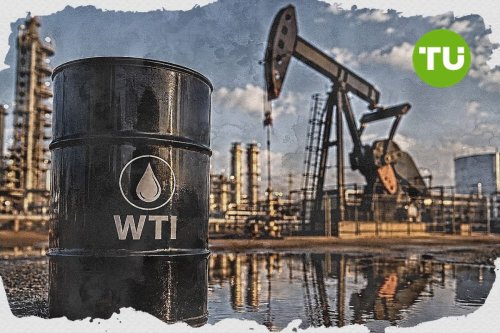
WTI crude steadies near $61 as traders await breakout from tightening triangle

WTI crude oil is trading around $61.3, consolidating near its critical support zone after a sharp pullback earlier this week. Price action has narrowed into a descending triangle structure, with a horizontal base around $61 and a series of lower highs pressing against declining resistance.
Highlights
- WTI crude consolidates near $61.3 within a descending triangle pattern.
- Israel-Hamas ceasefire talks ease risk premium, but U.S. sanctions on Iran add supply risks.
- OPEC+ restraint and mixed inventory data keep market direction uncertain.
This tightening formation signals that a decisive breakout is approaching, leaving traders on edge as fresh catalysts loom.
Technical setup signals mounting pressure
From a technical standpoint, the $61 region remains a key inflection point. A clear break below this level would expose the next supports at $60 and $58.5, potentially extending the recent downtrend and confirming renewed seller dominance. On the upside, a rebound through $62.5–$63.1, where the 50- and 200-period EMAs converge, would mark the first sign of recovery. If momentum builds beyond this zone, targets around $65 and $67 could come back into play, levels that have repeatedly capped rallies since mid-September.

WTI price dynamics (Source: TradingView)
Momentum readings reflect this equilibrium between opposing forces. The RSI sits near 41, suggesting muted bullish drive as buyers struggle to regain control. Price continues to hover just below short-term EMAs, underlining the need for a firm defense of the $61 floor to prevent the structure from tilting decisively bearish.
Geopolitics and supply trends shape sentiment
Fundamental factors remain mixed. The recent progress in Israel-Hamas ceasefire negotiations has reduced the geopolitical risk premium that previously buoyed prices, triggering short-term selling. However, new U.S. sanctions targeting over 50 Iranian entities and vessels involved in energy trade have reintroduced supply-side uncertainty. Meanwhile, OPEC+’s restrained production hike indicates that producers remain cautious amid fragile demand forecasts.
According to EIA data, U.S. crude inventories rose for a second consecutive week, suggesting softer refinery demand. Yet, inventories at Cushing and across refined products declined, keeping overall market balances tight. This push-and-pull dynamic between geopolitical risk and inventory shifts continues to anchor oil within its current range, with traders awaiting the next major catalyst to define direction.
Outlook
Overall, WTI crude sits at a crucial juncture. A clean break below $61 would likely accelerate bearish momentum toward $58.5, while a successful defense could pave the way for another rebound toward $63–$65. The interplay between technical compression and evolving fundamentals—particularly developments in Middle East diplomacy, U.S. sanctions enforcement, and inventory trends—will likely dictate near-term volatility.
In earlier coverage, the $61–$61.5 region was highlighted as a key zone where short-term buyers had repeatedly defended against deeper losses. That support remains vital in determining whether oil can sustain its broader consolidation or extend into a more prolonged correction.





Latest WTI News







-
 Afghanistan
-
 Albania
-
 Algeria
-
 Angola
-
 Argentina
-
 Armenia
-
 Australia
-
 Austria
-
 Azerbaijan
-
 Bahamas
-
 Bahrain
-
 Bangladesh
-
 Belarus
-
 Belgium
-
 Bolivia
-
 Botswana
-
 Brazil
-
 Brunei
-
 Bulgaria
-
 Cambodia
-
 Cameroon
-
 Canada
-
 Chile
Chile
-
 China
China
-
 Colombia
-
 Congo
Congo
-
 Costa Rica
-
 Cote d'Ivoire
-
 Croatia
-
 Cuba
Cuba
-
 Cyprus
-
 Czechia
-
 DR Congo
-
 Denmark
-
 Dominican Republic
-
 Ecuador
-
 Egypt
Egypt
-
 El Salvador
-
 Estonia
-
 Eswatini
-
 Ethiopia
-
 Finland
-
 France
-
 Georgia
-
 Germany
-
 Ghana
Ghana
-
 Greece
-
 Haiti
Haiti
-
 Hong Kong
-
 Hungary
-
 India
India
-
 Indonesia
-
 Iran, Islamic republic
-
 Iraq
Iraq
-
 Ireland
-
 Israel
-
 Italy
Italy
-
 Jamaica
-
 Japan
Japan
-
 Jordan
-
 Kazakhstan
-
 Kenya
Kenya
-
 Korea
Korea
-
 Kuwait
-
 Kyrgyzstan
-
 Laos
Laos
-
 Latvia
-
 Lebanon
-
 Lesotho
-
 Libya
Libya
-
 Lithuania
-
 Luxembourg
-
 Madagascar
-
 Malaysia
-
 Malta
Malta
-
 Mauritius
-
 Mexico
-
 Moldova
-
 Mongolia
-
 Montenegro
-
 Morocco
-
 Mozambique
-
 Myanmar
-
 Namibia
-
 Nepal
Nepal
-
 Netherlands
-
 New Zealand
-
 Nigeria
-
 North Macedonia
-
 Norway
-
 Oman
Oman
-
 Pakistan
-
 Palestine
-
 Panama
-
 Papua New Guinea
-
 Paraguay
-
 Peru
Peru
-
 Philippines
-
 Poland
-
 Portugal
-
 Puerto Rico
-
 Qatar
Qatar
-
 Reunion
-
 Romania
-
 Rwanda
-
 Saudi Arabia
-
 Serbia
-
 Singapore
-
 Slovakia
-
 Slovenia
-
 Somalia
-
 South Africa
-
 Spain
Spain
-
 Sri Lanka
-
 Sweden
-
 Switzerland
-
 Syria
Syria
-
 Taiwan
-
 Tajikistan
-
 Tanzania
-
 Thailand
-
 Trinidad and Tobago
-
 Tunisia
-
 Turkey
-
 UAE
UAE
-
 Uganda
-
 Ukraine
-
 United Kingdom
-
United States
-
 Uruguay
-
 Uzbekistan
-
 Venezuela
-
 Vietnam
-
 Yemen
Yemen
-
 Zambia
-
 Zimbabwe
- Forex
- Crypto











