

Climbing U.S. inflation keeps Shell on watch for potential energy demand and cost impacts

Shell (SHEL) stock is trading modestly higher. Rising U.S. inflation is in focus as a macro risk factor, with investors watching for potential impacts on demand and cost structure in the energy sector.
 3550.00
3605.00
Highlights
- U.S. personal consumption expenditures inflation rose to 3.8% annually in October 2026, raising macroeconomic uncertainty for Shell.
- Higher U.S. inflation can affect Shell through increased international fuel market costs and shifting consumer demand.
- Shell stock faces mixed technical signals, approaching resistance near GBX3,594 and support near GBX3,362, with prevailing downside risk if inflation persists.
U.S. inflation rise raises macro risk for energy companies
According to CNBC, U.S. personal consumption expenditures inflation increased to an annual rate of 3.8% in October 2026.
This uptick in U.S. inflation may signal higher energy input costs and potential adjustments in consumer demand, introducing macroeconomic uncertainty for global energy majors including Shell.
The connection to Shell lies in its broad exposure to international fuel markets, where both demand and operational expenses can be sensitive to U.S. inflation trends and subsequent policy responses.
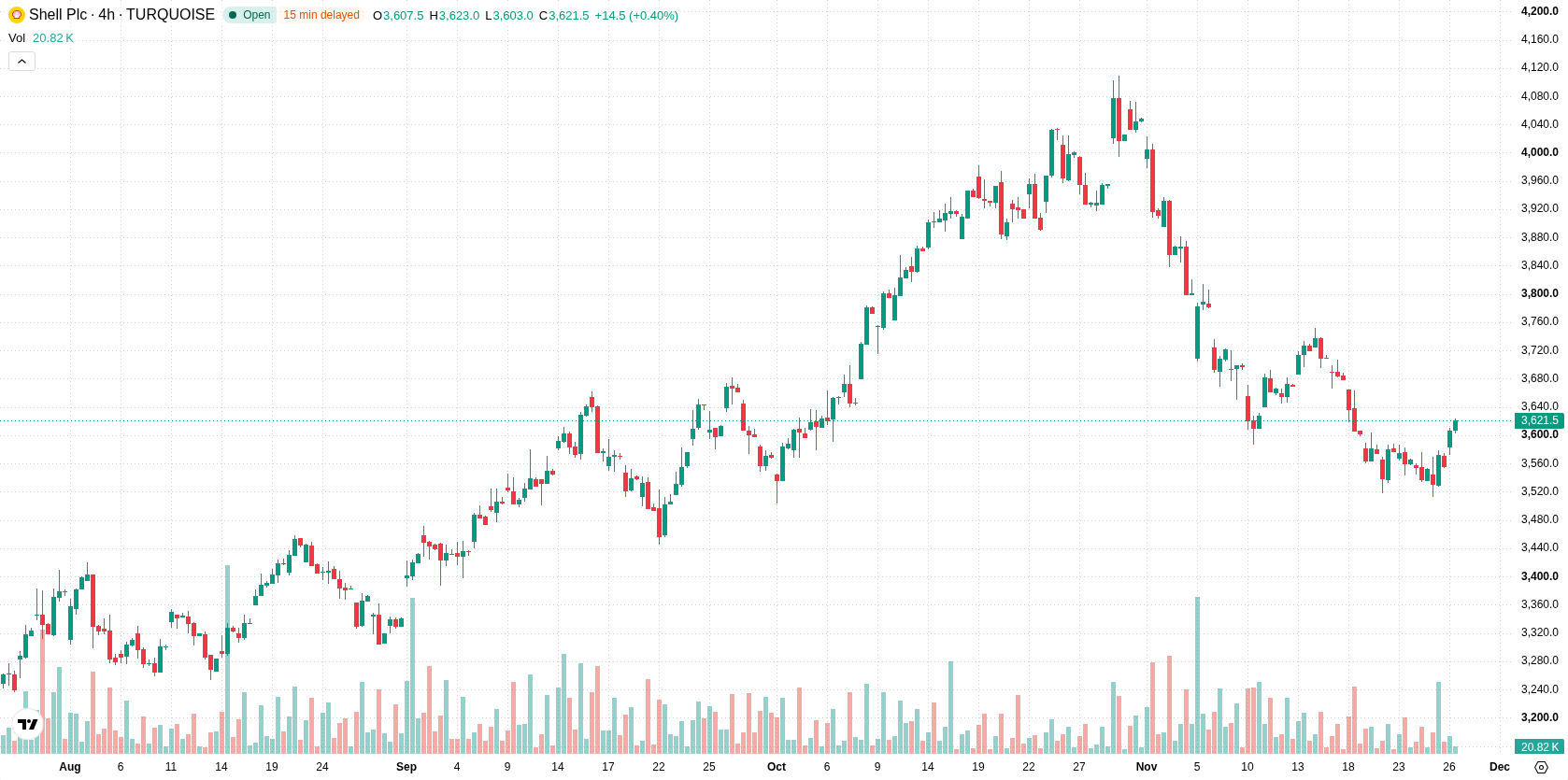
Mixed technical signs with key resistance overhead
On the 4H chart, SHEL remains below the D1 SMA-50 at GBX3,736, while trading above the D1 SMA-200 at GBX3,362. Short-term momentum is also limited, as the price sits just under the H4 SMA-20 at GBX3,581.
Technical signals are mixed: the MACD is in strong sell territory and the ADX also leans sell, while SHEL approaches resistance at the H4 Kijun level of GBX3,593.
Further moves hinge on inflation data and key chart levels
A sustained move above resistance around GBX3,594 could help stabilize the outlook despite ongoing macro risks. Conversely, a break below support near GBX3,362 would likely signal vulnerability to further downside, especially if inflationary pressures persist. Monitoring U.S. inflation data and related central bank responses remains key for the next directional move.
Previously it was reported that Shell faced ongoing downside risk despite capital returns and upstream diversification efforts. The current analysis adds the macroeconomic challenge of rising U.S. inflation, emphasizing the importance of monitoring inflation data and central bank policy for Shell's next directional move.










-
 Afghanistan
-
 Albania
-
 Algeria
-
 Angola
-
 Argentina
-
 Armenia
-
 Australia
-
 Austria
-
 Azerbaijan
-
 Bahamas
-
 Bahrain
-
 Bangladesh
-
 Belarus
-
 Belgium
-
 Bolivia
-
 Botswana
-
 Brazil
-
 Brunei
-
 Bulgaria
-
 Cambodia
-
 Cameroon
-
 Canada
-
 Chile
-
 China
-
 Colombia
-
 Congo
-
 Costa Rica
-
 Cote d'Ivoire
-
 Croatia
-
 Cuba
-
 Cyprus
-
 Czechia
-
 DR Congo
-
 Denmark
-
 Dominican Republic
-
 Ecuador
-
 Egypt
-
 El Salvador
-
 Estonia
-
 Eswatini
-
 Ethiopia
-
 Finland
-
 France
-
 Georgia
-
 Germany
-
 Ghana
-
 Greece
-
 Haiti
-
 Hong Kong
-
 Hungary
-
 India
-
 Indonesia
-
 Iran, Islamic republic
-
 Iraq
-
 Ireland
-
 Israel
-
 Italy
-
 Jamaica
-
 Japan
-
 Jordan
-
 Kazakhstan
-
 Kenya
-
 Korea
-
 Kuwait
-
 Kyrgyzstan
-
 Laos
-
 Latvia
-
 Lebanon
-
 Lesotho
-
 Libya
-
 Lithuania
-
 Luxembourg
-
 Madagascar
-
 Malaysia
-
 Malta
-
 Mauritius
-
 Mexico
-
 Moldova
-
 Mongolia
-
 Montenegro
-
 Morocco
-
 Mozambique
-
 Myanmar
-
 Namibia
-
 Nepal
-
 Netherlands
-
 New Zealand
-
 Nigeria
-
 North Macedonia
-
 Norway
-
 Oman
-
 Pakistan
-
 Palestine
-
 Panama
-
 Papua New Guinea
-
 Paraguay
-
 Peru
-
 Philippines
-
 Poland
-
 Portugal
-
 Puerto Rico
-
 Qatar
-
 Reunion
-
 Romania
-
 Rwanda
-
 Saudi Arabia
-
 Serbia
-
 Singapore
-
 Slovakia
-
 Slovenia
-
 Somalia
-
 South Africa
-
 Spain
-
 Sri Lanka
-
 Sweden
-
 Switzerland
-
 Syria
-
 Taiwan
-
 Tajikistan
-
 Tanzania
-
 Thailand
-
 Trinidad and Tobago
-
 Tunisia
-
 Turkey
-
 UAE
-
 Uganda
-
 Ukraine
-
 United Kingdom
-
United States
-
 Uruguay
-
 Uzbekistan
-
 Venezuela
-
 Vietnam
-
 Yemen
-
 Zambia
-
 Zimbabwe
- Forex
- Crypto












