
Jesse Livermore Biography, Career, Net Worth, and Key Insight


Jesse Livermore’s Profile Summary
|
Company
|
Self-employed |
|---|---|
|
Position
|
Jesse Livermore was a self-employed stock trader and speculator. He was known for his independent trading strategies |
|
Source of wealth
|
Trading profits from stock market speculation, short-selling during market crashes, authoring financial strategies. |
|
Also known as
|
Author, Market analyst, Trading mentor. |
|
Years of life
|
26.07.1877 - 28.11.1940 |
|
Education
|
No formal higher education; Jesse Livermore learned trading and financial markets through practical experience as a stock quotation board boy and self-study. |
|
Citizenship
|
United States |
|
Residence
|
New York City, United States |
|
Family
|
Jesse Livermore's family included his three wives (not simultaneously), two sons, and one daughter. |
|
Website, Social Media
|
https://jesse-livermore.com/ |
Biography
Jesse Livermore was born on July 26, 1877, in Shrewsbury, Massachusetts, and became one of the most famous stock market traders of the early 20th century. He started trading in stocks at a young age, working initially as a quotation board boy in stockbrokerage offices. Over time, he became known for his ability to predict market trends and made his fortune by short-selling during market crashes, including the Panic of 1907 and the 1929 stock market crash. Livermore's life was marked by both extraordinary gains and devastating losses, which earned him a reputation as a "Boy Plunger" or "Great Bear of Wall Street." Despite his financial brilliance, his personal life was tumultuous, and his career experienced several bankruptcies. Livermore authored a book titled "How to Trade in Stocks," which shared his trading insights. He passed away in 1940, leaving behind a complex legacy as one of Wall Street's most enigmatic figures.-
How did Jesse Livermore make money?
Jesse Livermore makes money in the following areas:
Trading profits from stock market speculation, short-selling during market crashes, authoring financial strategies.
-
What is Jesse Livermore net worth?
As of 2026, there is no publicly available and reliable information regarding Jesse Livermore’s net worth.
What is Jesse Livermore also known as?
Jesse Livermore was also known as an author, having written the book "How to Trade in Stocks" in 1940, which offered insights into his trading strategies and market philosophy. He was a market analyst, recognized for his ability to predict major market movements, including the crashes of 1907 and 1929, which solidified his reputation as a significant figure in stock market history. Additionally, he became a trading mentor, as many modern-day traders and investors study his principles and strategies, especially his risk management techniques, despite his personal financial downfalls.Prominent achievements
Jesse Livermore is most famous for his remarkable profits made during the Panic of 1907 and the 1929 stock market crash, where he reportedly made over $100 million. His book "How to Trade in Stocks" became a classic in the trading community. Though his financial life ended in tragedy, his achievements in trading set a foundation for modern market analysis and risk management strategies.What are Jesse Livermore’s key insights?
Jesse Livermore believed in the importance of market timing and psychological discipline in trading. His famous principles included cutting losses early, letting profits run, and the necessity of patience and waiting for the right market conditions before making trades. He emphasized learning from failures and consistently stressed the importance of managing risk above all else.
Personal life
Jesse Livermore was married three times. His first wife was Nettie Jordan, followed by Dorothy Wendt, with whom he had two sons, Jesse Jr. and Paul. His third wife was Harriet Metz Noble. Livermore’s family life was tumultuous, with significant strains due to his financial ups and downs. His son, Jesse Livermore Jr., also pursued a career in finance but faced similar difficulties as his father.
Useful insights
Advanced investment strategies

For those who have mastered the basics, the next step is exploring advanced investment strategies. These books delve into the complexities of portfolio management and alternative asset classes, offering sophisticated approaches to building wealth.
-
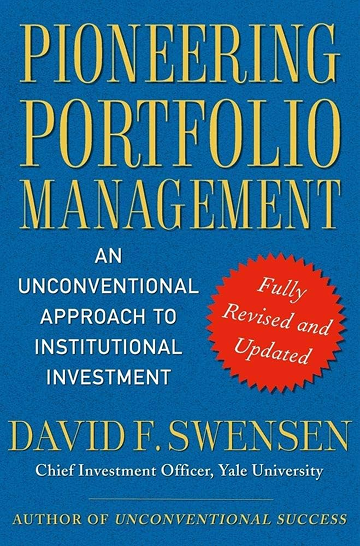
David Swensen - "Pioneering Portfolio Management"
-
Summary:
In this book, Swensen, who successfully managed Yale's endowment fund, outlines his investment philosophy, emphasizing diversification, a long-term perspective, and the inclusion of alternative asset classes such as hedge funds, private equity, and real estate. This approach aims to balance risk and reward to maximize returns for institutional investors.
-
Why read it:
Swensen’s methods are widely regarded as groundbreaking and have been adopted by many large institutional investors. His book is essential for anyone looking to build a robust, diversified portfolio with a focus on steady, long-term growth.
-
-
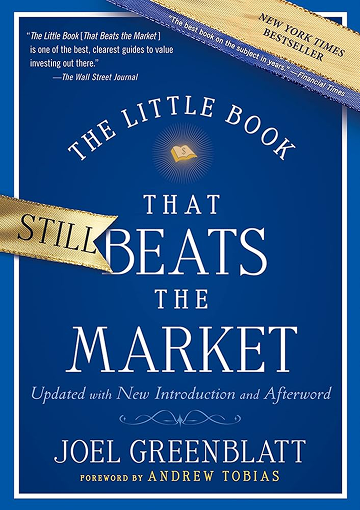
Joel Greenblatt - "The Little Book That Still Beats the Market"
-
Summary:
Greenblatt presents a simple yet effective formula for investing in value stocks. His "magic formula" identifies companies that are both undervalued and have high earnings yields, providing a clear strategy for beating the market. Greenblatt simplifies complex financial concepts for individual investors, making the book accessible to both beginners and experienced traders.
-
Why read it:
Greenblatt’s formula has consistently outperformed the market, making this book a practical guide for investors looking for a straightforward, effective strategy. It’s particularly useful for those who prefer a hands-on approach to stock selection without the need for deep financial expertise.
-
Other profiles in category
Popular Financial Guides
Editors' Top Picks and Insights






Latest Financial News

Menara Asia launches construction procurement platform to address quality and compliance gaps in Malaysia

Astaka Padu, Kimlun expand joint venture for RM450 million serviced apartment project in Johor Bahru

South African executive incentive payouts surge in JSE Top 200 pay review

-
 Afghanistan
-
 Albania
-
 Algeria
-
 Angola
-
 Argentina
-
 Armenia
-
 Australia
-
 Austria
-
 Azerbaijan
-
 Bahamas
-
 Bahrain
-
 Bangladesh
-
 Belarus
-
 Belgium
-
 Bolivia
-
 Botswana
-
 Brazil
-
 Brunei
-
 Bulgaria
-
 Cambodia
-
 Cameroon
-
 Canada
-
 Chile
Chile
-
 China
China
-
 Colombia
-
 Congo
Congo
-
 Costa Rica
-
 Cote d'Ivoire
-
 Croatia
-
 Cuba
Cuba
-
 Cyprus
-
 Czechia
-
 DR Congo
-
 Denmark
-
 Dominican Republic
-
 Ecuador
-
 Egypt
Egypt
-
 El Salvador
-
 Estonia
-
 Eswatini
-
 Ethiopia
-
 Finland
-
 France
-
 Georgia
-
 Germany
-
 Ghana
Ghana
-
 Greece
-
 Haiti
Haiti
-
 Hong Kong
-
 Hungary
-
 India
India
-
 Indonesia
-
 Iran, Islamic republic
-
 Iraq
Iraq
-
 Ireland
-
 Israel
-
 Italy
Italy
-
 Jamaica
-
 Japan
Japan
-
 Jordan
-
 Kazakhstan
-
 Kenya
Kenya
-
 Korea
Korea
-
 Kuwait
-
 Kyrgyzstan
-
 Laos
Laos
-
 Latvia
-
 Lebanon
-
 Lesotho
-
 Libya
Libya
-
 Lithuania
-
 Luxembourg
-
 Madagascar
-
 Malaysia
-
 Malta
Malta
-
 Mauritius
-
 Mexico
-
 Moldova
-
 Mongolia
-
 Montenegro
-
 Morocco
-
 Mozambique
-
 Myanmar
-
 Namibia
-
 Nepal
Nepal
-
 Netherlands
-
 New Zealand
-
 Nigeria
-
 North Macedonia
-
 Norway
-
 Oman
Oman
-
 Pakistan
-
 Palestine
-
 Panama
-
 Papua New Guinea
-
 Paraguay
-
 Peru
Peru
-
 Philippines
-
 Poland
-
 Portugal
-
 Puerto Rico
-
 Qatar
Qatar
-
 Reunion
-
 Romania
-
 Rwanda
-
 Saudi Arabia
-
 Serbia
-
 Singapore
-
 Slovakia
-
 Slovenia
-
 Somalia
-
 South Africa
-
 Spain
Spain
-
 Sri Lanka
-
 Sweden
-
 Switzerland
-
 Syria
Syria
-
 Taiwan
-
 Tajikistan
-
 Tanzania
-
 Thailand
-
 Trinidad and Tobago
-
 Tunisia
-
 Turkey
-
 UAE
UAE
-
 Uganda
-
 Ukraine
-
 United Kingdom
-
United States
-
 Uruguay
-
 Uzbekistan
-
 Venezuela
-
 Vietnam
-
 Yemen
Yemen
-
 Zambia
-
 Zimbabwe
- Forex
- Crypto












