Matt Huang Biography, Career, Net Worth, and Key Insight


Matt Huang’s Profile Summary
|
Company
|
Paradigm |
|---|---|
|
Position
|
Co-Founder and Managing Partner |
|
Source of wealth
|
Management and performance fees from Paradigm's investment strategies, returns on early-stage venture investments from Sequoia Capital |
|
Also known as
|
Matt Huang is also known as an angel investor and a board member of Stripe |
|
Age
|
Unknown |
|
Education
|
Massachusetts Institute of Technology (MIT) - Bachelor of Science in Mathematics. |
|
Citizenship
|
United States |
|
Residence
|
San Francisco, California, USA |
|
Family
|
No public information is available regarding his family. |
|
Website, Social Media
|
https://www.paradigm.co/ |
Biography
Matt Huang is a prominent figure in the venture capital and cryptocurrency space, known for his leadership at Paradigm, a major investment firm focused on cryptocurrency and blockchain technologies. Before co-founding Paradigm with Fred Ehrsam, Huang was a partner at Sequoia Capital, where he played a key role in leading the firm's cryptocurrency investments. His early career included founding Hotspots, a Y Combinator-backed analytics company that was acquired by Twitter in 2012. Huang’s educational background is rooted in mathematics, as he holds a Bachelor of Science degree in Mathematics from the Massachusetts Institute of Technology (MIT). He has also been active as an angel investor, with notable investments in companies such as ByteDance and Instacart. His involvement in cryptocurrency dates back to 2012, when he purchased his first Bitcoin from MtGox, positioning him as an early adopter and advocate of the crypto movementIn 2025, became the first CEO of Tempo, a payments-first blockchain launched by Stripe and Paradigm, while continuing as managing partner at Paradigm.
-
How did Matt Huang make money?
Matt Huang makes money in the following areas:
Management and performance fees from Paradigm's investment strategies, returns on early-stage venture investments from Sequoia Capital
-
What is Matt Huang net worth?
As of 2026, there is no publicly available and reliable information regarding Matt Huang’s net worth.
What is Matt Huang also known as?
Matt Huang has built a reputation as a successful angel investor, having invested in several high-profile technology startups such as ByteDance and Instacart. His expertise in early-stage investments spans both traditional tech companies and cryptocurrency ventures. Additionally, Huang serves on the board of directors for Stripe, where his knowledge of cryptocurrency is helping the company explore new avenues for crypto-related productsProminent achievements
Co-founded Paradigm, a leading crypto investment firm with $2.5 billion under management, early investor in major tech companies such as ByteDance and Instacart, previously led cryptocurrency investments at Sequoia Capital, recognized as a key thought leader in the crypto investment landscapeAppointed first CEO of Tempo, a blockchain platform optimized for stablecoins and real-world payments launched by Stripe and Paradigm (2025).
What are Matt Huang’s key insights?
Matt Huang emphasizes the importance of long-term vision in disruptive technologies like cryptocurrency. His philosophy centers around investing in the early stages of innovation, with a strong belief in crypto’s potential to transform global financial systems. He advocates for the development of open-source infrastructure and scalability in blockchain to support real-world applications.
Personal life
Matt Huang keeps his personal life very private, and there are no publicly available detailed records about his family.
Useful insights
Community and ecosystem growth

Crypto Angel Investors often highlight the importance of community when evaluating the potential of a crypto project. A strong, engaged community can fuel a project’s success. Here’s what to look for.
-
Measure the project’s community engagement
Platforms like Telegram, Discord, and Twitter are essential for assessing a project’s community. Look for a project that has an active, supportive community that engages with the developers and marketing team. Projects with loyal communities tend to fare better in the long run.
-
Check the ecosystem’s development
A growing ecosystem with third-party applications and services built around the project is a positive sign. Look at the number of developers building on the platform and whether the project encourages external contributions. This kind of organic growth indicates the project's potential for long-term adoption.
-
Look for governance and decentralization
Strong governance mechanisms, such as Decentralized Autonomous Organizations (DAOs), show that the community has a say in the project’s development. Projects with decentralized governance are often seen as more trustworthy and resilient, as they rely on the broader community rather than a centralized authority.
Latest Matt Huang News
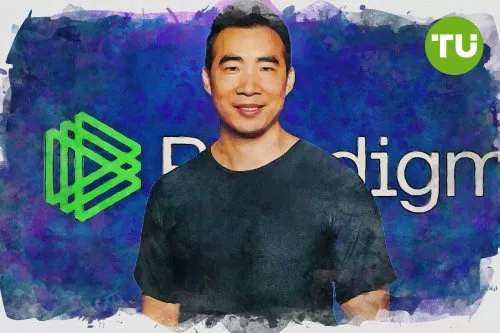
Matt Huang: Instinct launch uses stablecoins on Tempo and Stripe Link for seamless payments

Real-world stablecoin credit use expands on Tempo, Matt Huang notes

Matt Huang: Privacy will become essential for stablecoin use in real-world cases

OUSD stablecoin launches with $400 million liquidity, Matt Huang notes
Matt Huang: Privacy presents major challenge for crypto as real-world applications expand
Tempo secures Coinbase support in new collaboration, Matt Huang confirms
Other profiles in category
Editors' Top Picks and Insights






Popular Crypto Guides

-
 Afghanistan
-
 Albania
-
 Algeria
-
 Angola
-
 Argentina
-
 Armenia
-
 Australia
-
 Austria
-
 Azerbaijan
-
 Bahamas
-
 Bahrain
-
 Bangladesh
-
 Belarus
-
 Belgium
-
 Bolivia
-
 Botswana
-
 Brazil
-
 Brunei
-
 Bulgaria
-
 Cambodia
-
 Cameroon
-
 Canada
-
 Chile
-
 China
-
 Colombia
-
 Congo
-
 Costa Rica
-
 Cote d'Ivoire
-
 Croatia
-
 Cuba
-
 Cyprus
-
 Czechia
-
 DR Congo
-
 Denmark
-
 Dominican Republic
-
 Ecuador
-
 Egypt
-
 El Salvador
-
 Estonia
-
 Eswatini
-
 Ethiopia
-
 Finland
-
 France
-
 Georgia
-
 Germany
-
 Ghana
-
 Greece
-
 Haiti
-
 Hong Kong
-
 Hungary
-
 India
-
 Indonesia
-
 Iran, Islamic republic
-
 Iraq
-
 Ireland
-
 Israel
-
 Italy
-
 Jamaica
-
 Japan
-
 Jordan
-
 Kazakhstan
-
 Kenya
-
 Korea
-
 Kuwait
-
 Kyrgyzstan
-
 Laos
-
 Latvia
-
 Lebanon
-
 Lesotho
-
 Libya
-
 Lithuania
-
 Luxembourg
-
 Madagascar
-
 Malaysia
-
 Malta
-
 Mauritius
-
 Mexico
-
 Moldova
-
 Mongolia
-
 Montenegro
-
 Morocco
-
 Mozambique
-
 Myanmar
-
 Namibia
-
 Nepal
-
 Netherlands
-
 New Zealand
-
 Nigeria
-
 North Macedonia
-
 Norway
-
 Oman
-
 Pakistan
-
 Palestine
-
 Panama
-
 Papua New Guinea
-
 Paraguay
-
 Peru
-
 Philippines
-
 Poland
-
 Portugal
-
 Puerto Rico
-
 Qatar
-
 Reunion
-
 Romania
-
 Rwanda
-
 Saudi Arabia
-
 Serbia
-
 Singapore
-
 Slovakia
-
 Slovenia
-
 Somalia
-
 South Africa
-
 Spain
-
 Sri Lanka
-
 Sweden
-
 Switzerland
-
 Syria
-
 Taiwan
-
 Tajikistan
-
 Tanzania
-
 Thailand
-
 Trinidad and Tobago
-
 Tunisia
-
 Turkey
-
 UAE
-
 Uganda
-
 Ukraine
-
 United Kingdom
-
United States
-
 Uruguay
-
 Uzbekistan
-
 Venezuela
-
 Vietnam
-
 Yemen
-
 Zambia
-
 Zimbabwe
- Forex
- Crypto












