
Robert Rhea Biography, Career, Net Worth, and Key Insight



Robert Rhea’s Profile Summary
|
Company
|
Self-employed |
|---|---|
|
Position
|
Independent Financial Analyst and Trader |
|
Source of wealth
|
Profits from market speculation, subscription revenue from his investment newsletter (Dow Theory Comments), and book sales from "The Dow Theory." |
|
Also known as
|
Author, market theorist, financial newsletter publisher. |
|
Years of life
|
01.01.1877 - 01.01.1939 |
|
Education
|
No confirmed details available on his formal education. |
|
Citizenship
|
United States |
|
Residence
|
No data |
|
Family
|
No publicly available information. |
|
Website, Social Media
|
https://www.amazon.com/Dow-Theory-Robert-Rhea/dp/160796628X |
Biography
Robert Rhea (1877-1939) was a pioneering financial analyst and trader who played a pivotal role in developing and popularizing the Dow Theory. Born in the late 19th century, Rhea initially worked in the finance industry, but his true mark came when he began to focus on the works of Charles Dow and William Peter Hamilton, refining their theories on market trends. In 1932, Rhea authored "The Dow Theory," a book that systematized these ideas and provided clear guidelines for identifying market trends. His work proved immensely influential during the Great Depression, particularly when he correctly called the market bottom in 1932 and again identified a top in 1937. His publication, Dow Theory Comments, further cemented his reputation as a sharp market prognosticator, and his subscribers benefitted from his insights. Tragically, Rhea passed away in 1939, leaving behind a legacy as one of the early pioneers of technical analysis-
How did Robert Rhea make money?
Robert Rhea makes money in the following areas:
Profits from market speculation, subscription revenue from his investment newsletter (Dow Theory Comments), and book sales from "The Dow Theory."
-
What is Robert Rhea net worth?
As of 2026, there is no publicly available and reliable information regarding Robert Rhea’s net worth.
What is Robert Rhea also known as?
Robert Rhea was well-known as the author of "The Dow Theory", which became a cornerstone of technical analysis literature. His analysis not only made him a prominent market theorist but also allowed him to build a strong following through his investment newsletter, Dow Theory Comments, where he provided insights that helped numerous investors navigate the stock market during volatile timesProminent achievements
Authored "The Dow Theory" (1932), one of the foundational texts in technical analysis, successfully predicted the market bottom in 1932 and the top in 1937, widely respected for his Dow Theory Comments newsletter, which helped investors during the Great Depression.What are Robert Rhea’s key insights?
Robert Rhea is best known for formalizing and expanding upon Dow Theory, viewing the market as a reflection of collective psychology expressed in trends. In The Dow Theory, he identifies three key market movements: the primary trend (major bull or bear market), the secondary reaction (counter-moves lasting weeks to months), and the daily fluctuations (noise). Rhea emphasized that traders should focus on the primary trend, as it carries the greatest profit potential and psychological clarity.
One of his core insights is that confirmation between the Dow Industrials and the Dow Transports is essential—if both make new highs or lows, the primary trend is considered intact. Conversely, divergence is a warning signal. Rhea also highlighted the importance of volume as a confirming indicator, particularly during breakouts or breakdowns in trend.
He advocated patience, emotional discipline, and waiting for the market to "confirm" a new trend before acting. Rhea’s writing distilled complex price behavior into a practical, rules-based approach, making Dow Theory one of the first systematic frameworks for trend-following. His legacy underscores that understanding market structure, timing, and confirmation is key to aligning with major moves and avoiding emotional errors.
Personal life
There is no detailed or publicly available information about his family.
Useful insights
Foundational knowledge for investors

Whether you're an aspiring financial author or a seasoned investor, understanding the core principles of finance and investing is essential. These books provide the foundational knowledge needed to succeed in both writing and investing.
-
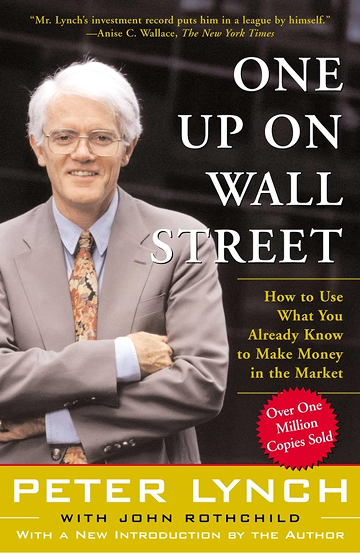
Peter Lynch - "One Up on Wall Street"
-
Summary:
Peter Lynch, one of the most successful mutual fund managers, shares his strategy of investing in what you know. Lynch explains how individual investors can use their own knowledge and observations to identify winning stocks before Wall Street discovers them. The book offers practical advice on how to pick stocks and interpret financial statements.
-
Why read it:
It’s a great resource for both investors and financial authors who want to gain insights into stock picking from one of the most respected figures in the industry. Lynch’s straightforward approach makes complex investing strategies easy to understand.
-
-
Robert Kiyosaki - "Rich Dad Poor Dad"

-
Summary:
Kiyosaki’s book presents the differences in mindset between the wealthy ("Rich Dad") and the middle-class ("Poor Dad"). The author shares lessons about financial independence, investments, and entrepreneurship, emphasizing the importance of understanding assets and liabilities. It’s a guide to shifting your mindset towards wealth creation.
-
Why read it:
This book is invaluable for investors who want to rethink their financial habits and for authors seeking inspiration in personal finance writing. Kiyosaki’s straightforward storytelling makes complex financial concepts accessible to all, offering insights into how to achieve financial independence.
-
Other profiles in category
Popular Financial Guides
Editors' Top Picks and Insights

Trading thin air: Why Binance is closing its NFT marketplace

Bitcoin without investors: Why IPOs are winning attention

Bitcoin price prediction based on MACD: Bearish momentum gains strength

Ethereum's identity crisis: Between Wall Street and cypherpunk

Europe and U.S. prepare crypto taxes: How their approaches differ

Faucets, testnets and airdrops: Does free cryptocurrency really exist?
Latest Financial News

JPMorgan Chase stock price forecast: $320.41 resistance in view as JPM climbs 3.11%

DOE funding shift ruled unlawful in clean energy appropriations dispute

House Armed Services Committee advances FY27 NDAA ISO print with added support for U.S. special operations and intelligence

-
 Afghanistan
-
 Albania
-
 Algeria
-
 Angola
-
 Argentina
-
 Armenia
-
 Australia
-
 Austria
-
 Azerbaijan
-
 Bahamas
-
 Bahrain
-
 Bangladesh
-
 Belarus
-
 Belgium
-
 Bolivia
-
 Botswana
-
 Brazil
-
 Brunei
-
 Bulgaria
-
 Cambodia
-
 Cameroon
-
 Canada
-
 Chile
Chile
-
 China
China
-
 Colombia
-
 Congo
Congo
-
 Costa Rica
-
 Cote d'Ivoire
-
 Croatia
-
 Cuba
Cuba
-
 Cyprus
-
 Czechia
-
 DR Congo
-
 Denmark
-
 Dominican Republic
-
 Ecuador
-
 Egypt
Egypt
-
 El Salvador
-
 Estonia
-
 Eswatini
-
 Ethiopia
-
 Finland
-
 France
-
 Georgia
-
 Germany
-
 Ghana
Ghana
-
 Greece
-
 Haiti
Haiti
-
 Hong Kong
-
 Hungary
-
 India
India
-
 Indonesia
-
 Iran, Islamic republic
-
 Iraq
Iraq
-
 Ireland
-
 Israel
-
 Italy
Italy
-
 Jamaica
-
 Japan
Japan
-
 Jordan
-
 Kazakhstan
-
 Kenya
Kenya
-
 Korea
Korea
-
 Kuwait
-
 Kyrgyzstan
-
 Laos
Laos
-
 Latvia
-
 Lebanon
-
 Lesotho
-
 Libya
Libya
-
 Lithuania
-
 Luxembourg
-
 Madagascar
-
 Malaysia
-
 Malta
Malta
-
 Mauritius
-
 Mexico
-
 Moldova
-
 Mongolia
-
 Montenegro
-
 Morocco
-
 Mozambique
-
 Myanmar
-
 Namibia
-
 Nepal
Nepal
-
 Netherlands
-
 New Zealand
-
 Nigeria
-
 North Macedonia
-
 Norway
-
 Oman
Oman
-
 Pakistan
-
 Palestine
-
 Panama
-
 Papua New Guinea
-
 Paraguay
-
 Peru
Peru
-
 Philippines
-
 Poland
-
 Portugal
-
 Puerto Rico
-
 Qatar
Qatar
-
 Reunion
-
 Romania
-
 Rwanda
-
 Saudi Arabia
-
 Serbia
-
 Singapore
-
 Slovakia
-
 Slovenia
-
 Somalia
-
 South Africa
-
 Spain
Spain
-
 Sri Lanka
-
 Sweden
-
 Switzerland
-
 Syria
Syria
-
 Taiwan
-
 Tajikistan
-
 Tanzania
-
 Thailand
-
 Trinidad and Tobago
-
 Tunisia
-
 Turkey
-
 UAE
UAE
-
 Uganda
-
 Ukraine
-
 United Kingdom
-
United States
-
 Uruguay
-
 Uzbekistan
-
 Venezuela
-
 Vietnam
-
 Yemen
Yemen
-
 Zambia
-
 Zimbabwe
- Forex
- Crypto












