Vivek Ramaswamy Biography, Career, Net Worth, and Key Insight


Vivek Ramaswamy’s Profile Summary
|
Company
|
Roivant Sciences |
|---|---|
|
Position
|
entrepreneur, investor, and politician |
|
Source of wealth
|
Biotechnology entrepreneurship, founder of Roivant Sciences, author, and investor. |
|
Also known as
|
Political figure |
|
Age
|
41 |
|
Education
|
Bachelor’s degree in Biology from Harvard University (2007); Juris Doctor from Yale Law School (2013) |
|
Citizenship
|
USA |
|
Residence
|
Columbus, Ohio, USA |
|
Family
|
Married to Apoorva Tewari; has two children |
|
Website, Social Media
|
https://x.com/vivekgramaswamy |
Biography
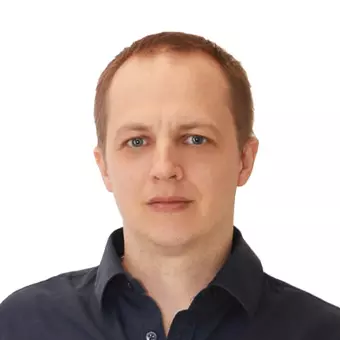
Vivek Ramaswamy is an American entrepreneur, author, and political figure, best known as the founder of Roivant Sciences, a biopharmaceutical company focused on developing and commercializing innovative medicines. Established in 2014, Roivant created a portfolio of subsidiaries, or “Vants,” each dedicated to specific therapeutic areas, positioning the company as a disruptive force in the pharmaceutical industry.Ramaswamy began his career in finance, working at hedge fund QVT Financial, where he specialized in biotech investments. His background in both science and law—he studied biology at Harvard University and later earned a law degree from Yale—shaped his approach to combining business strategy with medical innovation. Through Roivant and its subsidiaries, he oversaw multiple drug development programs, partnerships, and licensing deals.
In addition to his work in biotechnology, Ramaswamy has gained recognition as an author and commentator on business and society. He has published books addressing capitalism, identity politics, and corporate governance, arguing for a renewed focus on free markets and meritocracy. His visibility increased further in 2023 when he ran as a Republican candidate in the U.S. presidential primaries, promoting a platform centered on deregulation and national identity.
Through his ventures in biotechnology, publishing, and politics, Vivek Ramaswamy has become a well-known figure in both business and public life. His prominence reflects a diverse career across industries, though he is not regarded as an authoritative or dominant voice beyond his sector.
-
How did Vivek Ramaswamy make money?
Vivek Ramaswamy makes money in the following areas:
Biotechnology entrepreneurship, founder of Roivant Sciences, author, and investor.
-
What is Vivek Ramaswamy net worth?
As of 2026, Vivek Ramaswamy’s net worth is estimated to be $1.2 B.
What is Vivek Ramaswamy also known as?
Vivek Ramaswamy is recognized as an entrepreneur, author, and political figure. He is best known as the founder of Roivant Sciences in biotechnology and gained further recognition through his books and his 2023 U.S. presidential campaign.Prominent achievements
Founder of Roivant SciencesAuthor of books on business, politics, and capitalism
2023 U.S. presidential candidate in Republican primaries
X (Twitter) followers: ~3,6М+
Trading Strategy
Not a trader
What are Vivek Ramaswamy’s key insights?
Vivek Ramaswamy advocates for meritocracy, free-market capitalism, and challenging corporate orthodoxy. His philosophy reflects a belief that business leaders should focus on innovation and shareholder value rather than engaging in political or social activism.
Personal life
Vivek Ramaswamy is married to Apoorva Tewari, a physician specializing in otolaryngology. The couple has two sons, and his wife has occasionally been referenced in media coverage related to his business and political career.
Useful insights
Advanced investment strategies
For those who have mastered the basics, the next step is exploring advanced investment strategies. These books delve into the complexities of portfolio management and alternative asset classes, offering sophisticated approaches to building wealth.
-
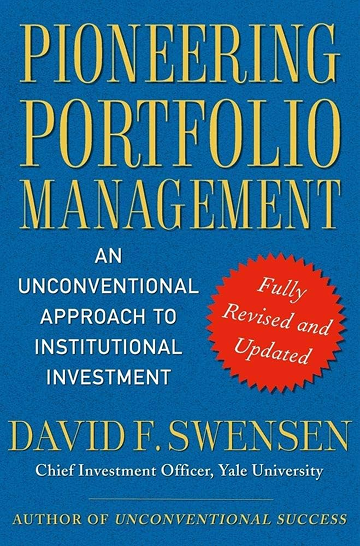
David Swensen - "Pioneering Portfolio Management"
-
Summary:
In this book, Swensen, who successfully managed Yale's endowment fund, outlines his investment philosophy, emphasizing diversification, a long-term perspective, and the inclusion of alternative asset classes such as hedge funds, private equity, and real estate. This approach aims to balance risk and reward to maximize returns for institutional investors.
-
Why read it:
Swensen’s methods are widely regarded as groundbreaking and have been adopted by many large institutional investors. His book is essential for anyone looking to build a robust, diversified portfolio with a focus on steady, long-term growth.
-
-
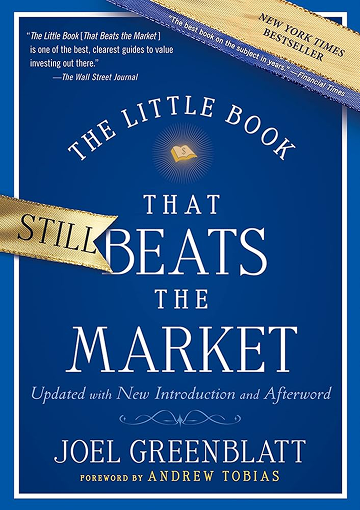
Joel Greenblatt - "The Little Book That Still Beats the Market"
-
Summary:
Greenblatt presents a simple yet effective formula for investing in value stocks. His "magic formula" identifies companies that are both undervalued and have high earnings yields, providing a clear strategy for beating the market. Greenblatt simplifies complex financial concepts for individual investors, making the book accessible to both beginners and experienced traders.
-
Why read it:
Greenblatt’s formula has consistently outperformed the market, making this book a practical guide for investors looking for a straightforward, effective strategy. It’s particularly useful for those who prefer a hands-on approach to stock selection without the need for deep financial expertise.
-
Latest Vivek Ramaswamy News
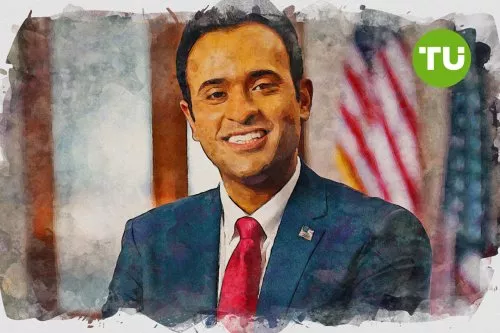
Vivek Ramaswamy: Property taxes and energy costs among key issues in state decision
Vivek Ramaswamy notes concerns about suitability for U.S. public office
Vivek Ramaswamy: Ohio State Medical Association endorsement shapes healthcare debate in U.S. election
Vivek Ramaswamy confirms commitment to skilled trades expansion in Ohio
Vivek Ramaswamy: Data center growth in Ohio raises concerns about local impact
Vivek Ramaswamy: Shift from protester to supporter at U.S. event in Wooster
Other profiles in category
Editors' Top Picks and Insights





Popular Financial Guides

-
 Afghanistan
-
 Albania
-
 Algeria
-
 Angola
-
 Argentina
-
 Armenia
-
 Australia
-
 Austria
-
 Azerbaijan
-
 Bahamas
-
 Bahrain
-
 Bangladesh
-
 Belarus
-
 Belgium
-
 Bolivia
-
 Botswana
-
 Brazil
-
 Brunei
-
 Bulgaria
-
 Cambodia
-
 Cameroon
-
 Canada
-
 Chile
Chile
-
 China
China
-
 Colombia
-
 Congo
Congo
-
 Costa Rica
-
 Cote d'Ivoire
-
 Croatia
-
 Cuba
Cuba
-
 Cyprus
-
 Czechia
-
 DR Congo
-
 Denmark
-
 Dominican Republic
-
 Ecuador
-
 Egypt
Egypt
-
 El Salvador
-
 Estonia
-
 Eswatini
-
 Ethiopia
-
 Finland
-
 France
-
 Georgia
-
 Germany
-
 Ghana
Ghana
-
 Greece
-
 Haiti
Haiti
-
 Hong Kong
-
 Hungary
-
 India
India
-
 Indonesia
-
 Iran, Islamic republic
-
 Iraq
Iraq
-
 Ireland
-
 Israel
-
 Italy
Italy
-
 Jamaica
-
 Japan
Japan
-
 Jordan
-
 Kazakhstan
-
 Kenya
Kenya
-
 Korea
Korea
-
 Kuwait
-
 Kyrgyzstan
-
 Laos
Laos
-
 Latvia
-
 Lebanon
-
 Lesotho
-
 Libya
Libya
-
 Lithuania
-
 Luxembourg
-
 Madagascar
-
 Malaysia
-
 Malta
Malta
-
 Mauritius
-
 Mexico
-
 Moldova
-
 Mongolia
-
 Montenegro
-
 Morocco
-
 Mozambique
-
 Myanmar
-
 Namibia
-
 Nepal
Nepal
-
 Netherlands
-
 New Zealand
-
 Nigeria
-
 North Macedonia
-
 Norway
-
 Oman
Oman
-
 Pakistan
-
 Palestine
-
 Panama
-
 Papua New Guinea
-
 Paraguay
-
 Peru
Peru
-
 Philippines
-
 Poland
-
 Portugal
-
 Puerto Rico
-
 Qatar
Qatar
-
 Reunion
-
 Romania
-
 Rwanda
-
 Saudi Arabia
-
 Serbia
-
 Singapore
-
 Slovakia
-
 Slovenia
-
 Somalia
-
 South Africa
-
 Spain
Spain
-
 Sri Lanka
-
 Sweden
-
 Switzerland
-
 Syria
Syria
-
 Taiwan
-
 Tajikistan
-
 Tanzania
-
 Thailand
-
 Trinidad and Tobago
-
 Tunisia
-
 Turkey
-
 UAE
UAE
-
 Uganda
-
 Ukraine
-
 United Kingdom
-
United States
-
 Uruguay
-
 Uzbekistan
-
 Venezuela
-
 Vietnam
-
 Yemen
Yemen
-
 Zambia
-
 Zimbabwe
- Forex
- Crypto












