
Wee Cho Yaw Biography, Career, Net Worth, and Key Insight



Wee Cho Yaw’s Profile Summary
|
Company
|
United Overseas Bank |
|---|---|
|
Position
|
Wee Cho Yaw holds the title of Chairman Emeritus and Honorary Adviser at United Overseas Bank. |
|
Source of wealth
|
Banking and financial services, property investments, stockbroking, fund management |
|
Also known as
|
Philanthropist, community leader, and influential figure in the Chinese business community. |
|
Years of life
|
28.01.1929 - 03.02.2024 |
|
Education
|
Anglo-Chinese School - High School Degree, Nanyang University - Bachelor's Degree in Commerce |
|
Citizenship
|
Singapore |
|
Residence
|
Singapore |
|
Family
|
Wee Cho Yaw is survived by his five children, including his eldest son Wee Ee Cheong, who succeeded him as the CEO of United Overseas Bank. Survived by spouse Chuang Yong Eng and five children: Wee Ee Cheong, Ee-Chao Wee, Wee Wei Ling, Ee Lim Wee, and Wee Wei Chi. |
|
Website, Social Media
|
https://www.uobgroup.com/ |
Biography
Wee Cho Yaw is a renowned figure in the banking industry, recognized for his pivotal role in transforming United Overseas Bank (UOB) into a regional powerhouse. Born in 1929, Wee began his career in his family's business before joining UOB’s board in 1958. By 1974, he was appointed the bank’s Chairman and CEO, a role in which he served for decades. Under his leadership, UOB expanded its footprint significantly, growing from a single branch to a network of over 500 branches and offices globally. Notably, his acquisition of Overseas Union Bank in 2001 for S$10 billion was one of the largest deals in Singapore’s banking history. Beyond banking, Wee was active in Singapore’s business and philanthropic sectors. He chaired several organizations, including the Singapore Chinese Chamber of Commerce and Industry, and received numerous accolades, including Singapore's Distinguished Service Order. In 2018, he retired from the UOB board after more than 60 years, but continued to serve as Chairman Emeritus and Honorary Adviser until his passing in 2024Died on 3 February 2024 at age 95.
-
How did Wee Cho Yaw make money?
Wee Cho Yaw makes money in the following areas:
Banking and financial services, property investments, stockbroking, fund management
-
What is Wee Cho Yaw net worth?
As of 2026, Wee Cho Yaw’s net worth is estimated to be $6.8B.
What is Wee Cho Yaw also known as?
Wee Cho Yaw is widely recognized for his philanthropic efforts and community leadership. He has made significant contributions to education, notably through the establishment of the $50 million Wee Cho Yaw Future Leaders Award scholarship to support underprivileged students. Additionally, he was a key figure in Singapore’s Chinese business community, serving as the founding president of the Singapore Federation of Chinese Clan Associations from 1985 to 2010, and leading the Hokkien Huay Kuan from 1972 to 2010. His efforts helped bridge cultural and business ties between Singapore and China. Wee’s impact extends to civic society, where his leadership in these organizations has left a lasting legacyProminent achievements
Wee Cho Yaw was awarded the Distinguished Service Order, the ASEAN Business Advisory Council Legacy Award, named Singapore Businessman of the Year twice, credited with growing UOB's assets from $2.8 billion to over $253 billion, and recognized with honorary doctorates from both the National University of Singapore and Nanyang Technological UniversityInstrumental in establishing the S$50 million Wee Cho Yaw Future Leaders Award to support disadvantaged students.
What are Wee Cho Yaw’s key insights?
Wee Cho Yaw’s business philosophy centers around hard work, long-term vision, and integrity. He is known for advocating a conservative approach to banking, emphasizing sustainable growth and risk management. His leadership was marked by the principle that banking should always serve the community, and he often highlighted the importance of deep, lasting relationships with clients. His focus on maintaining Asian values in business helped him steer UOB through decades of expansion
Personal life
Wee Cho Yaw's family consists of his three sons and two daughters. His eldest son, Wee Ee Cheong, currently serves as CEO and Deputy Chairman of United Overseas Bank. His other children, while not as publicly involved in the banking business, are also active in various business and philanthropic endeavors. The Wee family has remained influential in Singapore’s financial and corporate sectors
Estate transferred about S$10.4 billion to beneficiaries (≈S$9b in UOB shares and S$1.4b in UOL shares).
Useful insights
Fundamental principles of investing
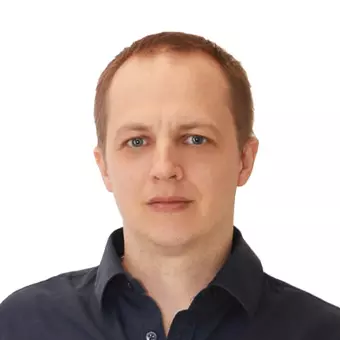
As someone deeply immersed in the world of finance, I firmly believe that learning the fundamental principles of investing is the cornerstone of financial literacy. The books I recommend here have shaped modern investment strategies, offering timeless wisdom that can benefit both beginners and seasoned investors. These are not just texts, but essential tools to help you navigate the complexities of the financial markets with confidence and insight.
-
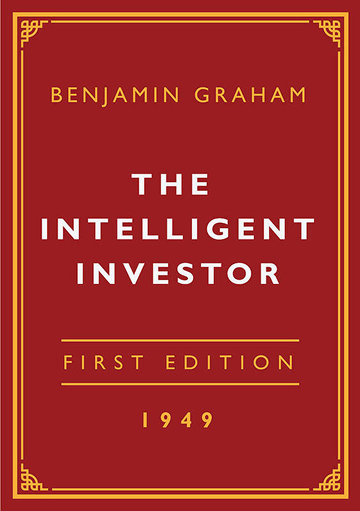
Benjamin Graham - "The Intelligent Investor"
-
Summary:
Written by one of the most influential investment thinkers, this book outlines the principles of value investing. Graham emphasizes the importance of analyzing a company’s intrinsic value, long-term investment strategies, and avoiding emotional decisions driven by market fluctuations. The book also discusses defensive investing, focusing on preservation of capital and minimizing risk.
-
Why read it:
This is a must-read for anyone looking to understand the core philosophy behind successful long-term investing. Graham’s principles influenced generations of investors, including Warren Buffett, making it an essential guide to navigating stock market risks with a focus on minimizing losses.
-
-
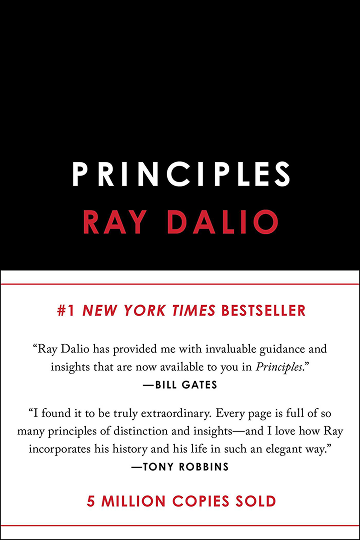
Ray Dalio - "Principles"
-
Summary:
Ray Dalio, founder of one of the world’s largest hedge funds, shares the life and work principles that led to his immense success. The book covers Dalio’s unique management and investment strategies, focusing on radical transparency, truth-seeking, and the importance of learning from mistakes. It also provides practical insights into organizational behavior and personal growth, making it valuable beyond just investing.
-
Why read it:
Dalio's "Principles" is a treasure trove of wisdom for investors and business leaders who wish to improve their decision-making. It’s a guide on how to align personal and professional life through well-defined, actionable rules.
-
Other profiles in category
Popular Financial Guides
Editors' Top Picks and Insights

Bitcoin price prediction based on RSI: Is BTC poised for a new rally?

Toncoin becomes Gram: Why Durov restored token's original name

Why Tether flipping Ethereum is a pivotal moment for crypto

MiCA deadline: Why crypto companies are leaving Europe
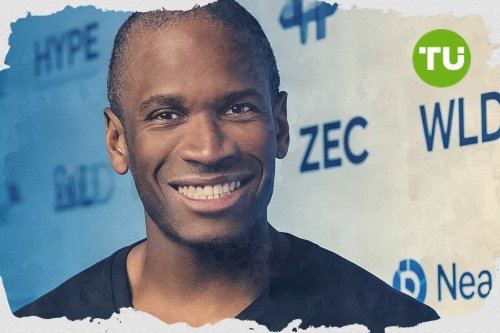
From “Holy Trinity” to WLD crash: How Arthur Hayes became a market-moving seller
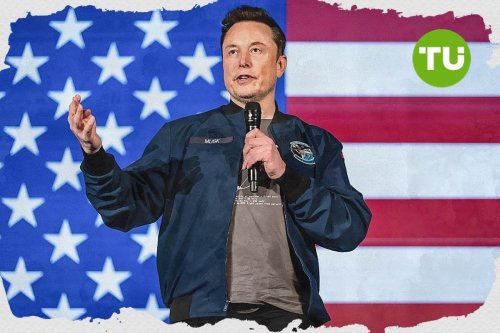
The world's first trillionaire: How Musk built his fortune on electric cars, space and AI
Latest Financial News

Reckitt Benckiser stock holds steady as CEO Kris Licht increases equity stake
Regulatory confirmation of public exit drags BT Group stock lower

UK Labour leadership uncertainty raises risks for Wes Streeting

-
 Afghanistan
-
 Albania
-
 Algeria
-
 Angola
-
 Argentina
-
 Armenia
-
 Australia
-
 Austria
-
 Azerbaijan
-
 Bahamas
-
 Bahrain
-
 Bangladesh
-
 Belarus
-
 Belgium
-
 Bolivia
-
 Botswana
-
 Brazil
-
 Brunei
-
 Bulgaria
-
 Cambodia
-
 Cameroon
-
 Canada
-
 Chile
Chile
-
 China
China
-
 Colombia
-
 Congo
Congo
-
 Costa Rica
-
 Cote d'Ivoire
-
 Croatia
-
 Cuba
Cuba
-
 Cyprus
-
 Czechia
-
 DR Congo
-
 Denmark
-
 Dominican Republic
-
 Ecuador
-
 Egypt
Egypt
-
 El Salvador
-
 Estonia
-
 Eswatini
-
 Ethiopia
-
 Finland
-
 France
-
 Georgia
-
 Germany
-
 Ghana
Ghana
-
 Greece
-
 Haiti
Haiti
-
 Hong Kong
-
 Hungary
-
 India
India
-
 Indonesia
-
 Iran, Islamic republic
-
 Iraq
Iraq
-
 Ireland
-
 Israel
-
 Italy
Italy
-
 Jamaica
-
 Japan
Japan
-
 Jordan
-
 Kazakhstan
-
 Kenya
Kenya
-
 Korea
Korea
-
 Kuwait
-
 Kyrgyzstan
-
 Laos
Laos
-
 Latvia
-
 Lebanon
-
 Lesotho
-
 Libya
Libya
-
 Lithuania
-
 Luxembourg
-
 Madagascar
-
 Malaysia
-
 Malta
Malta
-
 Mauritius
-
 Mexico
-
 Moldova
-
 Mongolia
-
 Montenegro
-
 Morocco
-
 Mozambique
-
 Myanmar
-
 Namibia
-
 Nepal
Nepal
-
 Netherlands
-
 New Zealand
-
 Nigeria
-
 North Macedonia
-
 Norway
-
 Oman
Oman
-
 Pakistan
-
 Palestine
-
 Panama
-
 Papua New Guinea
-
 Paraguay
-
 Peru
Peru
-
 Philippines
-
 Poland
-
 Portugal
-
 Puerto Rico
-
 Qatar
Qatar
-
 Reunion
-
 Romania
-
 Rwanda
-
 Saudi Arabia
-
 Serbia
-
 Singapore
-
 Slovakia
-
 Slovenia
-
 Somalia
-
 South Africa
-
 Spain
Spain
-
 Sri Lanka
-
 Sweden
-
 Switzerland
-
 Syria
Syria
-
 Taiwan
-
 Tajikistan
-
 Tanzania
-
 Thailand
-
 Trinidad and Tobago
-
 Tunisia
-
 Turkey
-
 UAE
UAE
-
 Uganda
-
 Ukraine
-
 United Kingdom
-
United States
-
 Uruguay
-
 Uzbekistan
-
 Venezuela
-
 Vietnam
-
 Yemen
Yemen
-
 Zambia
-
 Zimbabwe
- Forex
- Crypto












