
How To Use The Reverse Martingale Strategy For Binary Options


Editorial Note: While we adhere to strict Editorial Integrity, this post may contain references to products from our partners. Here's an explanation for How We Make Money. None of the data and information on this webpage constitutes investment advice according to our Disclaimer.
The reverse martingale strategy in binary options works by pressing harder only when the market is already in your favor. Instead of chasing losses, you increase your stake after each win and reset to the base size after a loss. The edge comes from catching a strong move while it still has momentum. If you hesitate, the streak is gone. Success with this approach is about reading the pulse quickly, compounding while it runs, and knowing when to stop before greed erases gains.
Most people think reverse martingale just means doubling when you win but that mindset misses the point. In binary options you are not just stacking wins. You are trying to catch the market while it is still running hot. This only works if your setup hits fast and the move is still alive. If you hesitate or guess you miss the edge. This is not about luck. It is about catching a pulse and leaning into it while it lasts.
Risk warning: Binary options trading is highly risky and may result in a total loss of funds. These speculative instruments often lack strong regulation, with over 80% of traders losing their capital. Invest only what you can afford to lose and seek professional advice.
Introduction to the reverse martingale approach
The reverse martingale strategy binary options method, also called the anti-martingale strategy binary options, is a money management technique that flips the traditional martingale system on its head. Instead of doubling down after a loss, traders increase position size after a win and scale back after a loss. This risk-controlled style appeals to binary options traders who want to compound profits while limiting downside risk.
What is the reverse martingale strategy?
The reverse martingale strategy works on a simple principle; let winners grow and cut losers quickly. After every successful trade, the trader reinvests part or all of the profit into the next position. After a losing trade, the bet size returns to the original small stake.
This approach ensures that losing streaks do not escalate losses, while winning streaks can multiply returns. In binary options, where trades often settle quickly, this creates opportunities to build momentum without exposing too much capital at once.
Why binary options traders use it
Binary options traders turn to the anti-martingale binary options strategy because it suits short-term markets where streaks happen frequently. A series of wins can snowball into a significant profit, while a string of losses does not wipe out the account.
Key advantages include:
Risk remains limited during losing streaks since bet sizes shrink back to the base amount.
Profitable streaks are maximized by reinvesting gains quickly.
The system encourages discipline, as traders stop increasing stake size after a loss.
This style offers psychological relief too, since traders do not chase losses but instead focus on compounding wins.
Difference between martingale and reverse martingale
The main distinction lies in when the stake size is increased. Traditional martingale doubles the trade size after each loss, which can quickly exhaust account balance during bad runs. Reverse martingale does the opposite: it increases size only after wins and shrinks after losses.
| Strategy | After a win | After a loss | Risk profile |
|---|---|---|---|
| Martingale | Reset to base | Double stake | High risk of drawdown |
| Reverse martingale (anti-martingale) | Increase stake | Reset to base | Lower risk, profit-focused |
This difference makes the reverse martingale binary options strategy more sustainable for traders who value capital protection.
How the strategy works in binary options
The reverse martingale binary options strategy creates a balance where losses are small and wins are allowed to compound.
Core principle of increasing bets after wins
The heart of the system is simple: only scale up when the market rewards you. After a profitable trade, the next stake size is raised using part or all of the winnings. If the next trade is also successful, the process repeats, creating exponential growth in a winning streak.
When a losing trade appears, position size resets back to the original base amount. This protects capital by ensuring that losing streaks never spiral out of control.
Step-by-step breakdown of a trade cycle
Here’s an example of how a four-trade cycle might look using the reverse martingale binary options strategy with an initial $10 stake.
| Trade number | Outcome | Stake size | Result | Next step |
|---|---|---|---|---|
| 1 | Win | $10 | +$9 (90% payout) | Increase stake to $19 |
| 2 | Win | $19 | +$17.1 | Exit and start afresh or Increase stake to $36.1 |
| 3 | Loss | $36.1 | -$36.1 | Reset to $10 |
| 4 | Win | $10 | +$9 | Increase again to $19 |
This example shows how wins are compounded while a loss simply resets the stake back to the starting point.
Risk vs reward logic in this strategy
The logic behind the anti martingale binary options strategy is that losses stay controlled while winning streaks bring outsized rewards.
Risk side. The main risk is losing after a few compounded wins, which means giving back some profit. However, you never risk more than the profits gained plus the base stake.
Reward side. When two or three consecutive wins occur, profits grow quickly without increasing exposure during losing streaks.
This asymmetric balance is why many traders prefer the reverse martingale strategy binary options approach for capital preservation and profit growth.
Comparing reverse martingale and anti-martingale
The reverse martingale binary options strategy and the anti-martingale binary options strategy are two names for the same principle, but traders sometimes use them to highlight different styles of application. Both approaches revolve around growing profits after wins rather than chasing losses, yet the way they are applied can vary based on risk appetite and market conditions.
Situations where each approach performs better
In practice, traders interpret reverse and anti-martingale slightly differently. The reverse martingale usually refers to compounding aggressively after each win, while the anti-martingale version may focus more on moderate scaling with tighter control.
| Market condition | Reverse martingale style | Anti-Martingale style |
|---|---|---|
| Strong trending moves | Compounds profits quickly as wins follow each other | Uses smaller increments to stay in sync with the move |
| Volatile choppy markets | Risk of giving back profits on sudden reversals | Better suited as position size resets faster |
| Short winning streaks | Works best if 2–3 consecutive wins occur | More balanced, safer when streaks are rare |
This comparison shows that both styles rely on the same logic, but the pace of compounding differs.
Why some traders prefer anti martingale systems
Many traders lean toward the anti martingale strategy because it feels safer and more disciplined. Instead of doubling aggressively, they scale up gradually and reset quickly after a loss. This way, capital is protected while still allowing profits to grow when the market moves in their favor.
Psychologically, this system is easier to follow. Traders avoid the stress of chasing losses and instead focus on building gains. For binary options, where streaks of wins and losses are common, the anti martingale mindset helps maintain control and consistency.
Key indicators to pair with the strategy
The reverse martingale binary options strategy works as a money management method, but its effectiveness improves when paired with technical indicators. By combining it with tools like moving averages, RSI, stochastic, or candlestick patterns, traders can choose better entries and avoid wasting capital during poor market conditions.
Moving averages and trend filters
Moving averages help define the broader market direction. When used with the reverse martingale strategy, they act as a filter to ensure that compounding only happens within strong trends.
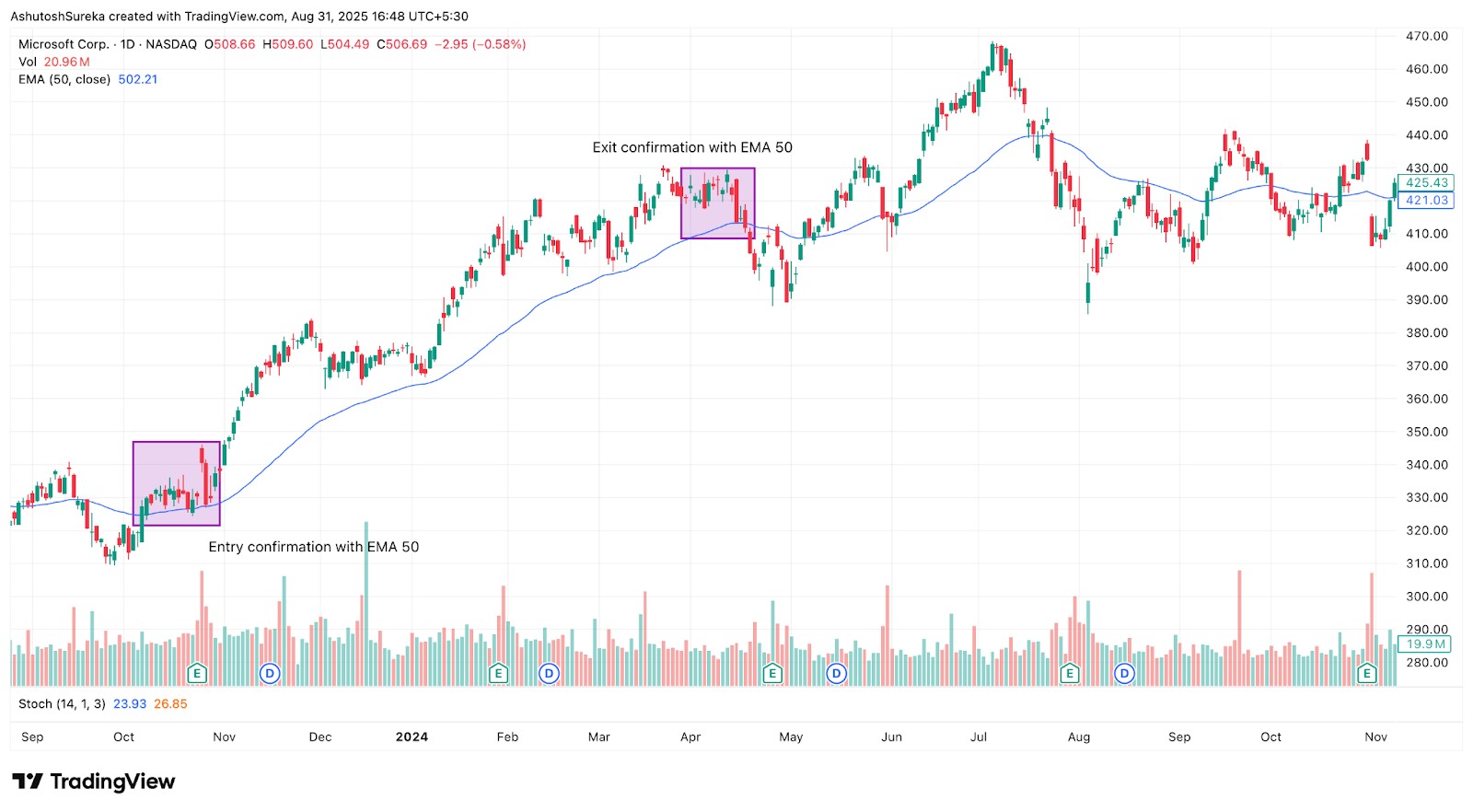
For example, a trader might only apply the system when price is above the 50-period moving average for calls or below it for puts. This reduces the risk of starting a compounding cycle against the dominant market flow.
RSI or stochastic for entry confirmation
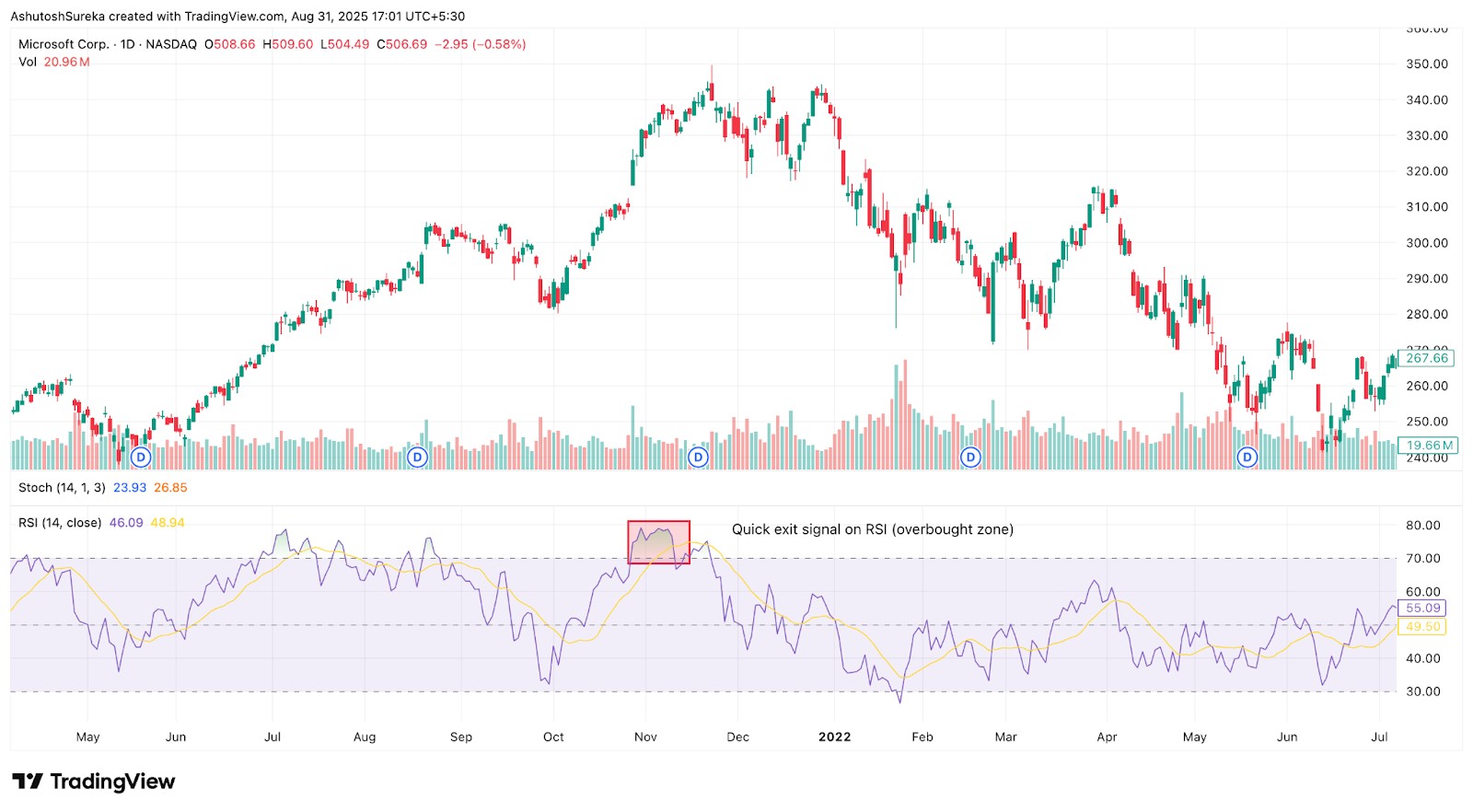
Momentum indicators such as RSI or stochastic are commonly used to confirm entry points. They help traders avoid beginning a compounding sequence at weak spots in the chart.
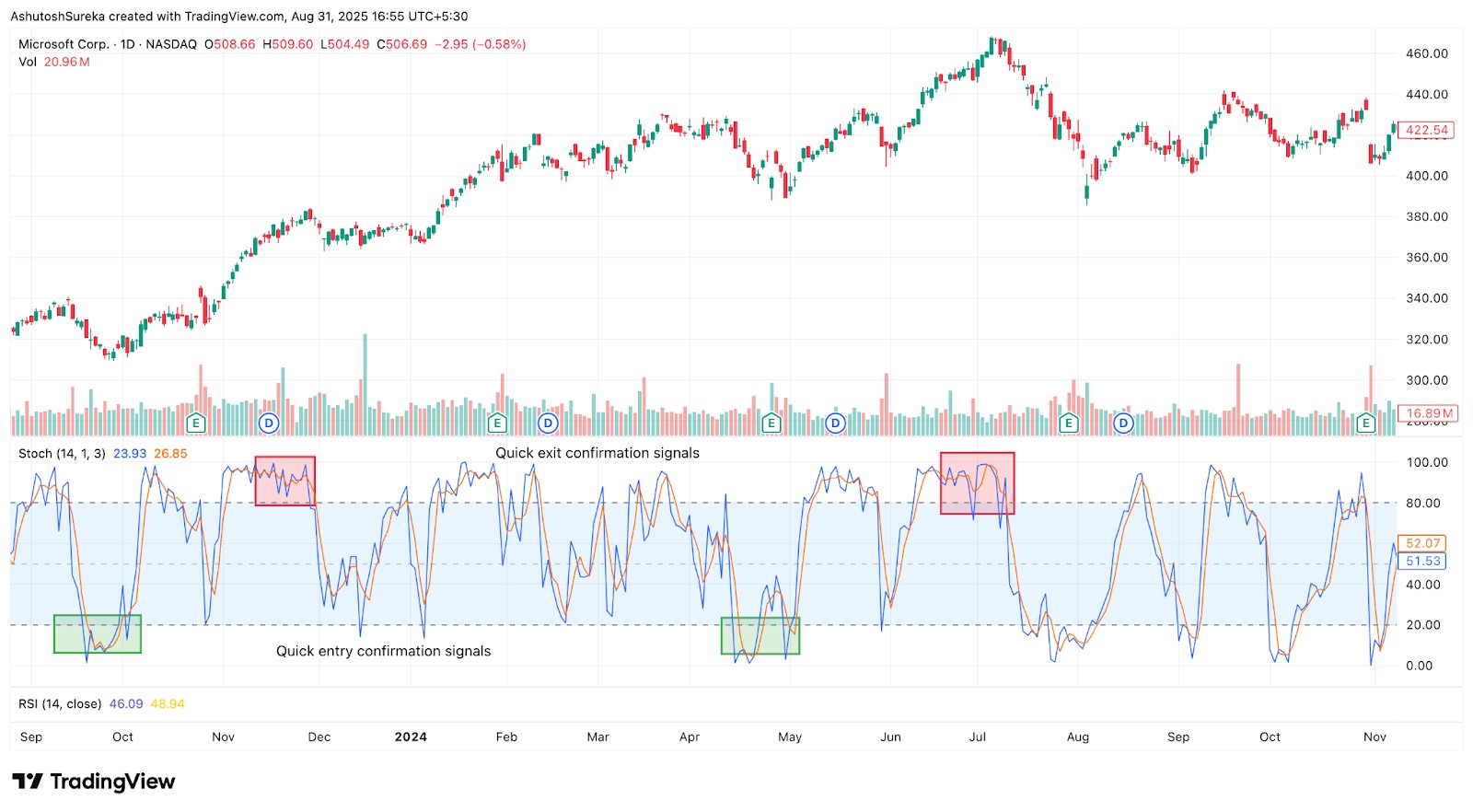
| Indicator | How it helps with reverse martingale |
|---|---|
| RSI | Confirms overbought and oversold areas, making entries more selective |
| Stochastic | Highlights quick momentum shifts, ideal for short-duration binaries |
By combining momentum confirmation with the anti martingale binary options strategy, traders improve accuracy and protect capital.
Using price action patterns with the system
Candlestick formations and chart patterns add another layer of confidence to the strategy. A bullish engulfing candle forming at support or a bearish pin bar at resistance can serve as the starting point for a compounding cycle.
Since the reverse martingale method relies on streaks, aligning entries with strong price action improves the chances of sustaining a profitable sequence. Traders who blend the system with candlesticks or chart structure often find it easier to manage risk and maintain consistency.
Optimal market conditions for reverse martingale
The reverse martingale binary options strategy relies heavily on timing and consistency. Since the approach compounds wins, it works best in conditions where trends last long enough to support streaks of profitable trades. Traders who apply this strategy need to carefully choose market phases and expiry times to get the best results.
Trending markets vs ranging markets
The strategy performs differently depending on market type. In trending markets, winning streaks are easier to capture since momentum pushes price in one direction for several candles. In ranging markets, however, reversals happen too often, cutting streaks short.
| Market type | Reverse martingale effect |
|---|---|
| Trending market | Higher chance of multiple wins in a row, ideal for compounding |
| Ranging market | Short streaks, more resets, reduced profit potential |
For this reason, most traders apply the system when a strong directional bias is visible.
Avoiding false signals during high volatility
One risk with the reverse martingale strategy is compounding wins during highly volatile periods. Sudden spikes caused by economic news or low liquidity can break streaks quickly.
To manage this, traders often:
avoid major news release times;
trade only during sessions with steady liquidity, such as London and New York overlaps;
use filters like moving averages or RSI to confirm market stability before starting a compounding cycle.
This keeps the focus on smoother conditions where streaks are more predictable.
Best expiry timeframes for compounding wins
Expiry time selection plays a crucial role in this method. Too short, and trades may end before the trend develops; too long, and sudden reversals can spoil the sequence.
For most traders, 5-minute and 15-minute expiries strike the right balance. They allow enough time for momentum to play out while still keeping trades within a short cycle. Longer expiries like 30 minutes can be used in trending markets, but they carry greater risk of reversals.
By matching expiry times with market rhythm, traders improve the consistency of their compounding runs.
The reverse martingale strategy works best on platforms that combine reliable execution with strong risk-management tools. Below you’ll find brokers that offer the technical features needed to apply this approach with precision.
| Currency pairs | Crypto | Stocks | Min. deposit, $ | Max. leverage | TradingView | MT5 | cTrader | Regulation | TU overall score | Open an account | |
|---|---|---|---|---|---|---|---|---|---|---|---|
| 120 | Yes | Yes | 1 | 1:30 | Yes | Yes | Yes | CNMV | 5.46 | Study review | |
| 90 | Yes | Yes | No | 1:500 | Yes | Yes | Yes | ASIC, FCA, DFSA, BaFin, CMA, SCB, CySec | 9.25 | Go to broker Your capital is at risk.
|
|
| 90 | Yes | Yes | 1 | 1:500 | Yes | Yes | Yes | ASIC, VFSC, FSA | 9.2 | Go to broker Your capital is at risk. |
|
| 70 | Yes | Yes | 100 | 1:500 | No | Yes | Yes | FCA, CYSEC, FSCA, SCB, FSA (Seychelles) | 8.6 | Go to broker Your capital is at risk. |
|
| 61 | Yes | Yes | 200 | 1:500 | Yes | Yes | Yes | ASIC, CySEC, FSA (Seychelles), The Financial Commission | 8.05 | Go to broker Your capital is at risk. |
The signals that make or break a reverse martingale

If you are using reverse martingale the smartest move is to decide upfront how far you will go before you cut it. Let’s say two wins in a row and then stop. That tiny rule stops you from getting pulled into greedy territory. Most people lose not on the first or second trade but on the third one they should have skipped.
Also do not use this strategy on setups that are slow or unclear. Only apply it when the chart shows clear momentum and strong price push. If you see a breakout backed by volume and the price is still moving cleanly you can lean in. But if the candles are choppy or hesitant, step away. This method is about taking advantage when the market is moving fast, not forcing trades that are not ready.
Conclusion
Reverse martingale in binary options is not about chasing heat. It is about knowing when to press and when to pause. If your trades are built on clean momentum and your head is clear on when to stop the strategy becomes a powerful amplifier. But without a plan for when to exit or a system to tell you when the move is slowing it will turn on you. Treat it like a sharp tool. Use it only when the market says yes and step away the moment that voice goes quiet.
FAQs
Can I use the reverse martingale strategy on Forex binary options?
Yes, the reverse martingale strategy can be used on Forex binary options by increasing your stake after each win. It aims to maximize profits during winning streaks while keeping initial risk low.
Does this strategy work during news events?
Using reverse martingale during news events is risky, as price movements can be highly volatile and unpredictable. It's better to apply the strategy in more stable conditions with controlled setups.
How much capital do I need to trade this strategy safely?
To trade it safely, you should have enough capital to handle at least 5 to 7 trade cycles without emotional pressure. Starting with 1% of your bankroll per base trade is a conservative approach.
What is the best win streak length to stop using reverse martingale?
Most traders stop after 2 or 3 consecutive wins to lock in profits and reset risk. Extending beyond that can lead to giving back gains if the next trade fails.
Editors' Top Picks and Insights

U.S. Bitcoin reserve: Trump’s unrealized crypto promise

Aiming for leadership: Payment giants prepare a new stablecoin

Proof of Reserves: the new standard for cryptocurrency exchanges

Three trends that could reshape the crypto market over the next decade

Trump financial disclosure: How the president's crypto income became a U.S. ethics issue

Code red: What's behind Bitcoin’s sharp selloff?
Related Articles
Team that worked on the article
Emilio is a futures trader and financial writer who specializes in technical analysis, market news, and trading psychology. He began his career by completing the Cornerstone Traders Qualification under the mentorship of a gold futures veteran from Bank of America on Wall Street.
Dan Blystone began his trading career in 1998 as an arbitrage clerk on the floor of the Chicago Mercantile Exchange (CME). He later traded bond and Eurex futures at proprietary firms such as Altea Trading, gaining valuable experience in high-frequency trading and risk management.
Risk management is a risk management model that involves controlling potential losses while maximizing profits. The main risk management tools are stop loss, take profit, calculation of position volume taking into account leverage and pip value.
Volatility refers to the degree of variation or fluctuation in the price or value of a financial asset, such as stocks, bonds, or cryptocurrencies, over a period of time. Higher volatility indicates that an asset's price is experiencing more significant and rapid price swings, while lower volatility suggests relatively stable and gradual price movements.
Copy trading is an investing tactic where traders replicate the trading strategies of more experienced traders, automatically mirroring their trades in their own accounts to potentially achieve similar results.
Day trading involves buying and selling financial assets within the same trading day, with the goal of profiting from short-term price fluctuations, and positions are typically not held overnight.
Ranging markets are a type of market characterized by short-term movement between apparent asset price highs and lows.

-
 Afghanistan
-
 Albania
-
 Algeria
-
 Angola
-
 Argentina
-
 Armenia
-
 Australia
-
 Austria
-
 Azerbaijan
-
 Bahamas
-
 Bahrain
-
 Bangladesh
-
 Belarus
-
 Belgium
-
 Bolivia
-
 Botswana
-
 Brazil
-
 Brunei
-
 Bulgaria
-
 Cambodia
-
 Cameroon
-
 Canada
-
 Chile
Chile
-
 China
China
-
 Colombia
-
 Congo
Congo
-
 Costa Rica
-
 Cote d'Ivoire
-
 Croatia
-
 Cuba
Cuba
-
 Cyprus
-
 Czechia
-
 DR Congo
-
 Denmark
-
 Dominican Republic
-
 Ecuador
-
 Egypt
Egypt
-
 El Salvador
-
 Estonia
-
 Eswatini
-
 Ethiopia
-
 Finland
-
 France
-
 Georgia
-
 Germany
-
 Ghana
Ghana
-
 Greece
-
 Haiti
Haiti
-
 Hong Kong
-
 Hungary
-
 India
India
-
 Indonesia
-
 Iran, Islamic republic
-
 Iraq
Iraq
-
 Ireland
-
 Israel
-
 Italy
Italy
-
 Jamaica
-
 Japan
Japan
-
 Jordan
-
 Kazakhstan
-
 Kenya
Kenya
-
 Korea
Korea
-
 Kuwait
-
 Kyrgyzstan
-
 Laos
Laos
-
 Latvia
-
 Lebanon
-
 Lesotho
-
 Libya
Libya
-
 Lithuania
-
 Luxembourg
-
 Madagascar
-
 Malaysia
-
 Malta
Malta
-
 Mauritius
-
 Mexico
-
 Moldova
-
 Mongolia
-
 Montenegro
-
 Morocco
-
 Mozambique
-
 Myanmar
-
 Namibia
-
 Nepal
Nepal
-
 Netherlands
-
 New Zealand
-
 Nigeria
-
 North Macedonia
-
 Norway
-
 Oman
Oman
-
 Pakistan
-
 Palestine
-
 Panama
-
 Papua New Guinea
-
 Paraguay
-
 Peru
Peru
-
 Philippines
-
 Poland
-
 Portugal
-
 Puerto Rico
-
 Qatar
Qatar
-
 Reunion
-
 Romania
-
 Rwanda
-
 Saudi Arabia
-
 Serbia
-
 Singapore
-
 Slovakia
-
 Slovenia
-
 Somalia
-
 South Africa
-
 Spain
Spain
-
 Sri Lanka
-
 Sweden
-
 Switzerland
-
 Syria
Syria
-
 Taiwan
-
 Tajikistan
-
 Tanzania
-
 Thailand
-
 Trinidad and Tobago
-
 Tunisia
-
 Turkey
-
 UAE
UAE
-
 Uganda
-
 Ukraine
-
 United Kingdom
-
United States
-
 Uruguay
-
 Uzbekistan
-
 Venezuela
-
 Vietnam
-
 Yemen
Yemen
-
 Zambia
-
 Zimbabwe
- Forex
- Crypto











